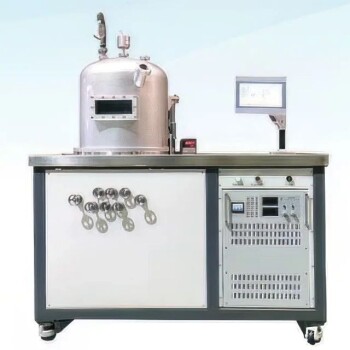
An Ultra-High Vacuum (UHV) annealing system provides an ultra-clean environment that isolates the intrinsic thermal behavior of Co/TiO2 catalysts from atmospheric interference. By operating at extremely low pressures, these systems allow researchers to observe the spontaneous chemical evolution and phase transformations of cobalt nanoparticles directly. Crucially, the UHV environment enables the study of how oxygen vacancies on the titanium dioxide surface drive the re-reduction of oxidized cobalt without the need for external reducing gases.
Core Takeaway: UHV annealing systems act as a "clean slate" for catalyst study, allowing scientists to pinpoint exactly how temperature and support surface defects—rather than environmental contaminants—dictate the chemical state and stability of cobalt nanoparticles.
Eliminating Environmental Interference
Preventing Unwanted Oxidation
In a standard atmosphere, cobalt is highly susceptible to oxidation, which can mask its true catalytic properties. UHV annealing eliminates oxygen and moisture, ensuring that the observed chemical changes are a result of the material's internal dynamics rather than reactions with the air.
Maintaining Surface Purity
The high-vacuum environment prevents the adsorption of environmental impurities that could poison the catalyst surface. This level of purity is essential for identifying the exact temperature thresholds at which cobalt particles begin to transition between different chemical phases.
Mechanics of Chemical Evolution in Co/TiO2
The Role of Oxygen Vacancies
One of the most significant discoveries made possible by UHV systems is the influence of the $TiO_2$ support. Research shows that oxygen vacancies on the titanium dioxide surface act as active participants in the catalyst's evolution.
These vacancies facilitate the thermal-induced re-reduction of oxidized cobalt particles. Because there are no external reducing gases present in the vacuum, this process proves that the $TiO_2$ support itself can drive the return of cobalt to a metallic state.
Phase Transformation and Decomposition
UHV systems, particularly those with rapid thermal annealing (RTA) capabilities, allow for the precise tracking of phase changes. For instance, researchers can observe the decomposition of cobalt nitride (CoN) precursors into metallic cobalt.
This capability is vital for determining the stability of thin films. It allows for the identification of the specific temperature at which metallic cobalt begins to precipitate, providing a roadmap for synthesizing stable catalyst structures.
Understanding the Trade-offs
The Pressure Gap Challenge
While UHV systems provide unparalleled clarity, they operate under conditions far removed from industrial catalytic reactors. This is known as the "pressure gap," where the behavior of a catalyst in a vacuum may differ from its behavior at high atmospheric pressures.
System Complexity and Scale
UHV annealing is a highly specialized technique that requires sophisticated equipment and significant time to achieve vacuum levels. Consequently, it is better suited for fundamental materials research rather than high-throughput testing of industrial catalyst batches.
Applying UHV Insights to Your Research
Making the Right Choice for Your Goal
To maximize the value of UHV annealing in your study of Co/TiO2 systems, consider the specific objective of your analysis.
- If your primary focus is fundamental surface science: Use UHV annealing to isolate the interaction between cobalt particles and $TiO_2$ surface defects without external chemical noise.
- If your primary focus is phase stability and decomposition: Utilize the controlled heating of UHV to map the precise temperature-driven transitions from precursors to metallic cobalt.
- If your primary focus is industrial performance testing: Use UHV results as a baseline to understand the "clean" behavior of the catalyst before introducing complex gas mixtures in a high-pressure reactor.
By leveraging the purity of an Ultra-High Vacuum environment, you can transform your understanding of catalyst stability from an educated guess into a precise chemical map.
Summary Table:
| Feature of UHV Annealing | Impact on Co/TiO2 Catalyst Study | Key Benefit |
|---|---|---|
| Ultra-Clean Environment | Prevents unwanted oxidation and surface poisoning. | Isolates intrinsic thermal behavior. |
| Oxygen Vacancy Control | Facilitates thermal-induced re-reduction via $TiO_2$ support. | Proves support-driven chemical evolution. |
| Phase Tracking | Monitors decomposition of precursors (e.g., CoN). | Maps precise temperature stability thresholds. |
| Surface Purity | Eliminates environmental contaminants/moisture. | Ensures accurate surface science analysis. |
Elevate Your Materials Research with KINTEK Precision
Unlock the full potential of your catalyst studies with KINTEK’s advanced high-temperature solutions. Whether you are investigating fundamental surface science or complex phase transformations, our specialized laboratory equipment provides the purity and control your research demands.
KINTEK specializes in a comprehensive range of high-temperature furnaces, including:
- Vacuum & Atmosphere Furnaces for ultra-clean processing.
- Tube, Muffle, & Rotary Furnaces for versatile thermal treatment.
- CVD & Induction Melting Systems for advanced material synthesis.
- Customizable Dental & Lab Furnaces tailored to your unique specifications.
Don’t let environmental interference compromise your data. Contact KINTEK today to discuss your specific needs and discover how our customizable high-temperature systems can drive your next scientific breakthrough.
References
- Chengwu Qiu, Andrew M. Beale. Compositional Evolution of Individual CoNPs on Co/TiO<sub>2</sub> during CO and Syngas Treatment Resolved through Soft XAS/X-PEEM. DOI: 10.1021/acscatal.3c03214
This article is also based on technical information from Kintek Furnace Knowledge Base .
Related Products
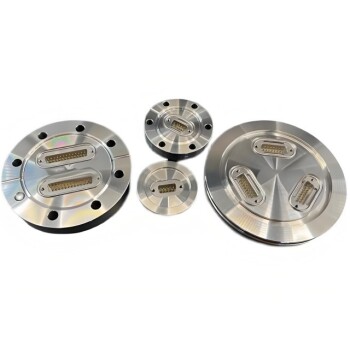
- Ultra-High Vacuum Flange Aviation Plug Glass Sintered Airtight Circular Connector for KF ISO CF
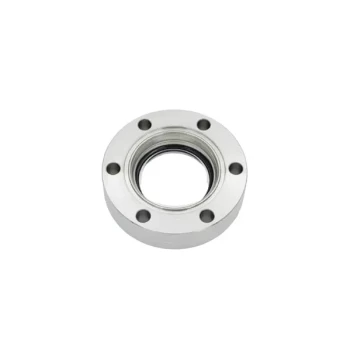
- Ultra High Vacuum CF Observation Window Flange with High Borosilicate Glass Sight Glass
- Ultra High Vacuum Observation Window Stainless Steel Flange Sapphire Glass Sight Glass for KF
- Controlled Inert Nitrogen Hydrogen Atmosphere Furnace
- HFCVD Machine System Equipment for Drawing Die Nano Diamond Coating
People Also Ask
- Why is an Ultra-High Vacuum (UHV) System Required for In2Se3? Achieving Atomic-Level Ferroelectric Clarity
- What is the function of PTFE sealing rings in plastic pyrolysis? Ensure Safe, Anaerobic Material Decomposition
- Why is a PTFE-lined stainless steel autoclave used for Ni12P5 synthesis? Key Benefits for Nanomaterial Production
- What is the function of a Teflon-lined stainless steel autoclave in the hydrothermal synthesis of Bi2O3 precursors?
- Why is a stainless steel autoclave with a Teflon liner necessary for BiVO4? Ensure Purity & High Performance