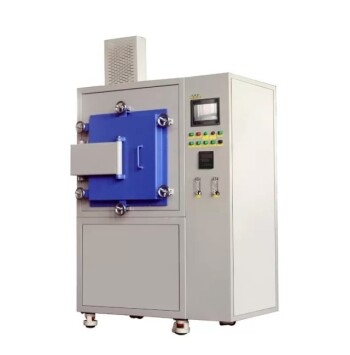
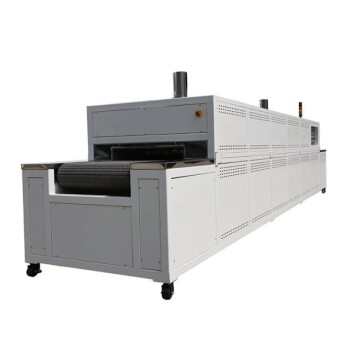
The high-temperature laboratory atmosphere furnace is the central processing tool. Its role extends far beyond simple heating—it provides the precise thermal and atmospheric environment that makes the fabrication of aluminum matrix composites (AMCs) reinforced with ceramic fibers or hard particles physically possible. These furnaces enable the controlled solid-state sintering of powder mixtures, the uniform preheating of billets to prevent fiber fragmentation, the liquid-phase incorporation of particles, and the exact post-consolidation heat treatments that unlock the material’s final mechanical performance.
The deep value of these furnaces lies in their ability to decouple temperature from degradation. By maintaining a chemically inert or vacuum environment while executing exact thermal profiles, they prevent oxidation, enable atomic-level diffusion bonding at fiber-matrix interfaces, and allow researchers to engineer the composite’s microstructure—from the consolidation of raw materials to the final precipitation of strengthening phases.
The Furnace as the Architect of Composite Integrity
Fabricating a high-performance AMC is a multi-stage challenge. The reinforcement phase—alumina fibers, silicon carbide particles, or even ash-derived ceramics—must be integrated into the aluminum without damage, while the soft matrix must be metallurgically bonded and then strengthened. A high-temperature laboratory atmosphere furnace is the only equipment that provides the necessary control across all these thermal events.
Solid-State Sintering: The Foundation of Powder Metallurgy Composites
For powder-based routes, the furnace’s primary role is solid-state sintering. The aluminum matrix powder and ceramic reinforcement are compacted and heated to a temperature just below the aluminum melting point. In this window, atomic diffusion activates across particle boundaries, consolidating the green body into a dense, load-bearing solid.
Maintaining an inert gas flow or vacuum is non-negotiable. Without it, the large surface area of the aluminum powder would oxidize instantly at sintering temperatures, forming a brittle oxide skin that prevents metal-to-metal bonding and weakens the composite. The furnace’s atmosphere control system sweeps away oxygen and water vapor, allowing nascent metal surfaces to fuse directly. Simultaneously, it prevents degradation of the ceramic fibers, which can experience surface reactions in air.
The result is an interphase diffusion bond—a clean, continuous transition between the aluminum matrix and the ceramic, optimized for stress transfer.
Liquid-Phase Processing: Dispersing Particles in the Melt
Not all AMCs are built in the solid state. For liquid-metal stir-casting routes, the aluminum alloy must be heated to approximately 700°C to achieve the proper fluidity. A high-temperature box or muffle furnace provides the stable thermal plateau needed to hold the molten metal while reinforcement particles are stirred in. Temperature uniformity here prevents localized solidification, which would agglomerate the particles and ruin the distribution.
The Thermal Toolkit: Preheating, Solutionizing, and Aging
The furnace’s role doesn’t end at initial consolidation. To produce a component that can survive high-stress applications, the composite blank must undergo further precisely controlled thermal treatments.
Preheating to Optimize Extrusion and Minimize Fiber Damage
When an AMC billet is hot-extruded, the ceramic fibers are vulnerable to severe fragmentation and shortening. Processing at an elevated temperature (e.g., 500°C instead of 400°C) lowers the matrix flow stress, effectively “lubricating” the deformation. The fibers experience less shear force, preserving their aspect ratio—and thus the composite’s specific strength.
A high-temperature atmosphere furnace ensures uniform and exact preheating of the entire billet. Uniformity prevents cold spots that would increase extrusion pressure locally, causing die-wear and catastrophic fiber breakage. The inert atmosphere again guards against surface oxidation on the preheated billet, preserving the fiber-matrix adhesion necessary for grain-boundary-level load transfer.
Solutionizing: Forcing Hardening Elements into the Matrix
Many aluminum alloy matrices—such as the Al-Cu-Mg-Si system—rely on precipitation hardening. The first furnace-driven step is solution heat treatment. The composite is held at a precise temperature, often 500°C for 2 hours (or 530°C for 1 hour in some alloys), to dissolve intermetallic compounds of copper, magnesium, and silicon. This creates a supersaturated solid solution within the aluminum grains.
Thermal uniformity is critical here. A local hot spot could cause incipient melting of copper-rich phases (over-burning), while a cold region would leave undissolved particles that drain hardenability. The furnace’s ability to hold the entire workload within a tight tolerance—followed by rapid water quenching—directly governs the potential for subsequent strengthening.
Artificial Aging: Precipitating Strength
After quenching, the composite is moved back into the furnace for artificial aging. At a lower temperature, typically 190°C for 3 hours, the supersaturated solution decomposes in a controlled manner. Nanoscale precipitates such as beta-double-prime, beta-prime, and Al₂CuMg nucleate and grow. These particles impede dislocation motion, transforming the soft quenched matrix into a hard, wear-resistant material.
Experimental data for extruded Al-Cu-Mg-Si composites show that matrix hardness is governed by this heat treatment, not by fiber volume fraction. Across fiber contents from 2.5% to 10%, hardness values cluster tightly around 125–129 HB for certain base matrices and ~111 HB for others containing nickel. Without a laboratory furnace capable of repeating these exact time-temperature profiles, the final mechanical properties would be unpredictable. This is a furnace-dependent process.
Creating the Reinforcement Itself: A Surprising Role
In novel composite development, the furnace can also synthesize the reinforcement phase. Agricultural waste like mustard husks can be processed at a steady 600°C to remove carbonaceous material and volatiles. The controlled thermal environment of a muffle furnace converts the husks into high-purity Mustard Husk Ash (MHA)—a low-cost, hard ceramic particle ready to reinforce an aluminum matrix. This underscores the furnace’s flexibility as a material-processing platform, not just a heating device.
The Non-Negotiable: Atmosphere and Temperature Uniformity
Oxide-Free Interfaces
Every heating step shares a common enemy: oxidation. Aluminum’s affinity for oxygen is immense. At any temperature above a few hundred degrees, a non-oxide forming atmosphere (argon, nitrogen, or vacuum) is mandatory. A high-temperature atmosphere furnace physically isolates the work from ambient air. This is the foundational requirement for achieving diffusion bonding and effective stress transfer across grain boundaries.
Avoiding Thermal Runaway and Localized Melting
Aluminum alloys have a narrow processing window between their solidus temperature and the point where rapid oxidation or melting occurs. Furnaces with multi-zone heating and advanced PID control suppress overshoot. For liquid-phase sintering processes that involve a small fraction of transient liquid, temperature precision is what separates full densification from slumping or total dimensional collapse.
Understanding the Trade-offs in Furnace Processing
Temperature vs. Fiber Integrity
Higher preheat temperatures reduce fiber fracture but increase the risk of chemical reactions at the fiber-matrix interface. While 500°C may save fibers from mechanical fragmentation, it can accelerate the formation of brittle interfacial products like spinel on alumina fibers if the atmosphere isn’t perfectly inert. The operator must balance flow stress reduction against the kinetic risk of degradation, a decision only possible with a furnace that delivers the exact setpoint and holds it.
Throughput vs. Precision
A muffle furnace is robust and often used for heating workpieces to 700°C for stir casting or for high-volume aging treatments. However, rapid thermal response and vacuum capability are typically limited. In contrast, true laboratory atmosphere/vacuum furnaces with retorts offer superior oxygen exclusion and faster cooling/quenching integration, but at higher cost and with smaller batch sizes. The choice depends on whether your primary need is prototype-level purity and microstructural control or reproducible production of medium-sized batches.
Making the Right Choice for Your Goal
The furnace is not just a source of heat; it is a programmable environment. How you use it depends on your specific phase of fabrication:
- If your primary focus is preserving ceramic fiber aspect ratio during extrusion: Prioritize a furnace with high-temperature uniformity and inert gas preheat capability. Use the upper end of the preheating window (e.g., 500°C) to reduce matrix flow stress and minimize fiber fragmentation.
- If your primary focus is maximizing composite hardness and wear resistance: Ensure your furnace can hold tight tolerances at both solutionizing (~500°C) and aging (~190°C) temperatures for extended periods. The resulting precipitate distribution, not the fiber content, will dictate matrix hardness.
- If your primary focus is exploring liquid-phase processing for particle-reinforced AMCs: A high-temperature box furnace able to stably maintain 700°C with a protective atmosphere will allow you to add reinforcement particles into a molten bath with excellent dispersion and minimal dross formation.
- If your primary focus is developing novel, low-cost reinforcement from waste materials: A reliable muffle furnace capable of holding 600°C in an oxygen-rich or controlled environment is sufficient to calcine biomass into high-purity ceramic ash for your composite.
Ultimately, the high-temperature laboratory atmosphere furnace converts the complex physical chemistry of composite fabrication into a repeatable, controllable process—allowing you to design the material, not just mix it.
Summary Table:
| Process Stage | Key Furnace Function | Thermal/Atmospheric Requirement | Primary Composite Benefit |
|---|---|---|---|
| Solid-State Sintering | Enables atomic diffusion bonding | Vacuum or inert gas (Ar/N₂) | Prevents matrix oxidation; forms clean interphase bond |
| Liquid-Phase Stir Casting | Holds stable melt plateau (~700°C) | Uniform temperature distribution | Ensures homogeneous particle dispersion, prevents agglomeration |
| Extrusion Preheating | Uniform billet heating (~500°C) | Tight thermal control + inert flow | Lowers matrix flow stress, minimizing ceramic fiber fracture |
| Solutionizing & Aging | Dissolves phases & precipitates | Precise setpoints (e.g., 500°C / 190°C) | Controls matrix hardness (up to ~129 HB) and wear resistance |
Ready to optimize your advanced composite fabrication? KINTEK specializes in premium laboratory equipment and consumables, delivering a comprehensive range of high-temperature furnaces—including atmosphere, vacuum, muffle, tube, CVD, rotary, and induction melting furnaces—all fully customizable to meet your specific research and production requirements. Ensure flawless thermal precision and oxide-free processing for your AMCs. Contact KINTEK today to consult with our technical specialists!
Related Products
- 1400℃ Controlled Inert Nitrogen Atmosphere Furnace
- 1400℃ High Temperature Laboratory Tube Furnace with Alumina Tube
- 1700℃ Controlled Inert Nitrogen Atmosphere Furnace
- 1700℃ High Temperature Laboratory Tube Furnace with Alumina Tube
- 1800℃ High Temperature Muffle Oven Furnace for Laboratory
People Also Ask
- How does nitrogen atmosphere control in high-temperature furnaces prevent the decomposition of silicon nitride during sintering?
- How does oxygen partial pressure control affect ceramic sintering? Master Defect Chemistry
- Why is controlled-atmosphere heating required for functional ceramics and sensors? Master Defect Engineering
- Why is thorough binder burnout necessary before sintering advanced ceramics? Ensure Peak Density & Zero Defects
- How do controlled-atmosphere furnaces support polymer pyrolysis? Master SiC & Si3N4 Ceramic Conversion