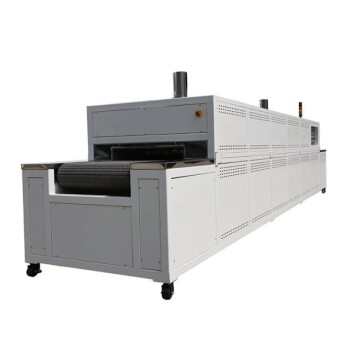
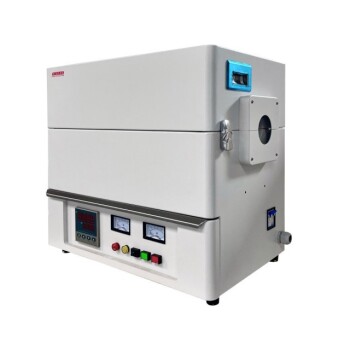
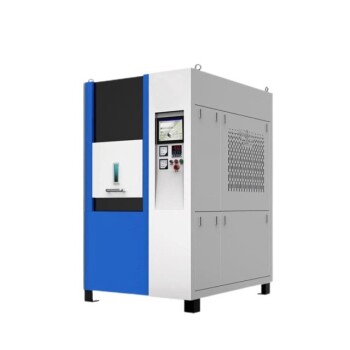
Sintered iron preforms exhibit a unique plastic deformation surface directly dictated by their relative density. High-temperature atmosphere sintering furnaces empower metallurgists to precisely control that density, and thus the material's yield locus, by providing the uniform thermal fields and environmental purity needed to eliminate structural defects and achieve targeted shrinkage without distortion. In essence, these furnaces convert loose iron powder into a predictable, formable solid where the onset of plastic flow is a known function of its porosity.
The core challenge in cold working porous iron preforms is that their yield surface collapses as density drops, making them prone to fracture. A high-temperature atmosphere sintering furnace solves this by enabling the exact thermal and atmospheric conditions required to hit a target relative density that renders the preform safely workable, while also delivering the microstructural integrity needed for consistent plastic flow.
The Critical Link Between Density and Deformation Behavior
How Porosity Defines the Yield Surface
The plastic yield surface of a compressible porous metal like sintered iron is not fixed; it is a function of the material's density. Lower initial relative densities severely compress the yield limit, meaning the material will permanently deform or fracture under much lower stresses than a fully dense counterpart. This makes cold plastic working, such as extrusion or forging, inherently risky if porosity is not tightly controlled.
Every void acts as a stress concentrator and a potential site for crack initiation. The instantaneous density during deformation further modifies the yield surface, creating a moving target for process engineers. To model rigid-plastic behavior accurately, you must know the exact starting density and how it evolves. Only a precisely sintered preform with a uniform, predictable density can serve as a reliable starting point for such models.
Workability as a Function of Structural Integrity
Workability goes beyond simple yield strength. It encompasses the material's ability to undergo plastic deformation without failure. In sintered iron, this means the pore network must be discontinuous, grain boundaries must be clean, and internal stress gradients must be absent. A poorly sintered preform with density variations or residual oxides will exhibit localized necking and premature cracking during secondary forming.
The furnace's role, therefore, is not merely to heat the powder. It must orchestrate the thermal and chemical environment so that diffusion bonding creates a robust, interparticle skeleton while closing porosity to a predetermined level. This structural integrity is the hidden variable behind every successful cold-working operation.
Precision Density Control: The Furnace’s Primary Role
Temperature Uniformity Dictates Shrinkage Consistency
Non-uniform heating leads to differential shrinkage. Alternative rapid heating methods, like direct electric field or microwave sintering, often create severe thermal gradients in complex geometries. This causes some areas to densify faster than others, introducing internal stress gradients and component distortion that degrade workability and dimensional accuracy.
High-temperature atmosphere furnaces mitigate this through multi-zone heating elements and advanced insulation that bathe the entire preform in a uniform radiant heat field. The entire cross-section heats simultaneously and evenly, ensuring that particle bonding and pore closure proceed at the same rate throughout the part. This thermal homogeneity directly translates into a preform with a consistent relative density from core to surface.
Soak Time Stabilizes the Porous Scaffold
Reaching the sintering temperature is only half the battle. Adequate soak time at the peak temperature is required for diffusion to complete neck formation between particles and for isolated pores to smooth out. Rushing this process can leave behind weak interparticle bonds that will fail during subsequent forming.
Controlled-atmosphere furnaces allow operators to program precise thermal profiles with defined dwell periods. This time-at-temperature control ensures that the diffusion bonding process goes to completion, resulting in a stable metal skeleton that behaves predictably under applied stress. Without it, the yield surface remains ill-defined and unreliable.
Uniform Thermal Fields Eliminate Distortion
Eliminating Internal Stress Reservoirs
When thermal gradients exist, the material yielding on the hotter side will be constrained by the cooler side during cooling, locking in residual stresses. These stresses add to the applied forming loads, making the apparent yield surface unpredictable and often leading to sudden cracking.
By providing uniform heating and controlled cooling rates, atmosphere furnaces minimize these thermal stress gradients. The part emerges with a stress-free or low-stress condition, so its plastic deformation behavior is governed solely by its density and the external load, not by hidden internal tensions. This is critical for verifying constitutive yield functions used in finite element simulations of forming processes.
Maintaining Dimensional Tolerances
Distortion is the enemy of workability. A warped preform will experience non-uniform contact with forming dies, leading to unstable deformation and potential buckling. The consistent shrinkage delivered by uniform radiant heat ensures that the preform retains its near-net shape, a prerequisite for successful automated handling and forming.
This dimensional fidelity means less post-sinter machining and more predictable metal flow during subsequent cold working. The furnace thus directly impacts the economic viability of the powder metallurgy route by preserving the geometric accuracy needed for high-throughput forming lines.
Atmosphere Mastery: Protecting Chemistry and Grain Boundaries
Preventing Oxidation and Preserving Surface Energy
At elevated temperatures, iron rapidly oxidizes, forming scale that weakens interparticle bonds and contaminates grain boundaries. An inert or reducing atmosphere, such as argon or hydrogen, in the furnace chamber actively prevents this surface degradation. Clean, oxide-free particle surfaces sinter together with high interfacial strength.
This atmospheric purity directly controls the surface energy of the iron powder, which governs the capillary driving force for sintering. A reducing hydrogen atmosphere, for example, reduces surface oxides and can alter interfacial energy anisotropy, promoting the type of clean, strong boundaries that tolerate plastic flow without decohesion.
Controlling Grain Growth and Pore Stability
During final-stage sintering, residual pores must remain attached to moving grain boundaries to be eliminated. If the temperature is too high or uncontrolled, rapid grain growth can cause boundaries to break away from pores, isolating them inside grains. These trapped pores then coarsen via vacancy diffusion, with larger ones growing at the expense of smaller ones.
Precise temperature control in a high-temperature atmosphere furnace prevents this runaway grain growth. It keeps grain boundary mobility tied to pore drag, enabling pore annihilation rather than coarsening. The result is a finer, more uniform grain structure with minimal residual porosity, which directly enhances ductility and workability in the sintered preform.
Understanding the Trade-offs and Pitfalls
The Cost of Extreme Precision
The very capabilities that make these furnaces invaluable—multi-zone uniformity, gas-flow control, slow controlled ramps—also make them capital-intensive and slower than alternative rapid-sintering methods. For high-volume production of simple geometries, the extended cycle time may impact throughput. This is not a limitation for research or high-value net-shape parts but must be weighed against manufacturing speed.
Sacrificing temperature uniformity for speed will reintroduce gradients, negating the precise yield-surface control you sought in the first place. The trade-off is always between process speed and the predictability of the final preform's plastic deformation behavior.
Sensitivity to Impurities and Gas Flow
The ideal atmosphere only works if it is truly controlled. Trace oxygen or moisture leaks, fluctuating gas flow rates, or impure gas supplies can introduce subtle chemistry changes that alter diffusion kinetics. Even minor shifts can lead to dimensional variations exceeding strict tolerance bands like ±0.2%.
This places a burden on facility maintenance, gas purity verification, and furnace sealing. A high-temperature atmosphere furnace demands rigorous process discipline; otherwise, the very advantages it offers in theory are lost to variability in practice.
Making the Right Choice for Your Sintering Goals
The decision to use a high-temperature atmosphere sintering furnace is a strategic one, rooted in the required workability and dimensional precision of your iron preforms.
- If your primary focus is cold-working low-ductility components: Prioritize a furnace with hydrogen capability and tight thermal uniformity to maximize density and grain boundary cleanliness, yielding a ductile preform that tolerates large plastic strains without fracture.
- If your primary focus is dimensional repeatability in net-shape parts: Select a furnace with proven multi-zone control and precise cooling ramps to eliminate distortion and internal stress, ensuring every preform deforms identically during subsequent forming.
- If your primary focus is verifying constitutive material models: Use a furnace that provides the highest level of atmosphere purity and thermal stability, so that the sintered density is homogeneous and matches the theoretical value used in your yield function, enabling accurate rigid-plastic simulations.
Ultimately, the high-temperature atmosphere sintering furnace is not just a heating device—it is the instrument that sets the very foundation of density and microstructure upon which all reliable plastic deformation predictions are built.
Summary Table:
| Furnace Parameter | Physical Mechanism | Impact on Workability & Yield Surface |
|---|---|---|
| Multi-Zone Thermal Uniformity | Eliminates internal thermal gradients and differential shrinkage | Prevents component distortion and locked-in residual stress, ensuring predictable plastic flow |
| Controlled Atmosphere (H2/Ar) | Reduces surface oxides and lowers surface energy barriers | Enhances interparticle diffusion bonding, preventing premature crack initiation during forming |
| Dwell Time & Ramp Control | Facilitates pore closure and completes metal scaffolding | Stabilizes the porous scaffold to achieve target relative density without yield surface collapse |
| Grain Mobility Drag Control | Keeps residual pores anchored to moving grain boundaries | Prevents pore trapping and grain coarsening, maximizing material ductility under cold working |
Master Powder Metallurgy & Material Deformation with KINTEK
Achieving precise relative density, oxide-free grain boundaries, and distortion-free preforms requires uncompromised thermal and atmospheric control. KINTEK specializes in laboratory equipment and advanced high-temperature furnaces—offering a comprehensive range of atmosphere, vacuum, muffle, tube, CVD, and induction melting systems, all fully customizable to your unique sintering and forming requirements.
Whether you are verifying constitutive yield models or scaling up high-precision net-shape production, our engineering team is here to support your process.
Contact KINTEK today to consult with our high-temperature heating experts and optimize your material workability!
Related Products
- 1700℃ Controlled Inert Nitrogen Atmosphere Furnace
- 1400℃ Controlled Inert Nitrogen Atmosphere Furnace
- 2200 ℃ Tungsten Vacuum Heat Treat and Sintering Furnace
- High Temperature Muffle Oven Furnace for Laboratory Debinding and Pre Sintering
- 2200 ℃ Graphite Vacuum Heat Treat Furnace
People Also Ask
- Why is thorough binder burnout necessary before sintering advanced ceramics? Ensure Peak Density & Zero Defects
- How does real-time dilatometric analysis in a controlled-atmosphere furnace optimize PZT ceramic sintering?
- How do controlled-atmosphere furnaces support polymer pyrolysis? Master SiC & Si3N4 Ceramic Conversion
- How does oxygen partial pressure control affect ceramic sintering? Master Defect Chemistry
- Why is controlled-atmosphere heating required for functional ceramics and sensors? Master Defect Engineering