The transformation from a loose ceramic powder into a dense, high-performance component hinges on precise control of microstructural evolution. During ceramic processing, three primary microstructural changes occur: grain size increases as individual particles bond together, pore shapes and sizes alter, and overall porosity decreases dramatically. High-temperature laboratory furnaces provide the thermal energy required for atomic diffusion, turning a weak, compacted powder (the green body) into a strong, dense ceramic with tailored properties.
The core challenge of ceramic processing is managing a fundamental trade-off: densification that eliminates porosity and grain growth that can coarsen the microstructure. High-temperature laboratory furnaces give you the control knobs—temperature, time, and atmosphere—to tilt this balance in your favor and achieve the exact microstructure your application demands.
What Actually Changes Inside a Ceramic During Sintering
When a compacted ceramic powder is heated, its internal architecture undergoes a complete overhaul. The changes are measurable, predictable, and directly responsible for the final material’s strength, hardness, and electrical behavior.
Grain Growth: From Individual Particles to a Continuous Network
Grain growth is the enlargement of single-crystalline regions within the material. Initially, the green body consists of tiny, loosely touching particles. Thermal energy drives atomic diffusion across particle boundaries, fusing them together. As neighboring grains merge, the number of grains decreases while their average size increases, reducing the total grain boundary area and lowering the system’s energy. The final grain size is a critical predictor of both mechanical and functional properties.
Porosity Reduction: The Engine of Densification
Porosity is the enemy of strength and reliability. In the green state, a typical powder compact might be 40–60% porous. During firing, atomic mass transport moves material into the voids. Pores shrink, become more spherical, and eventually disappear, raising the component’s relative density toward 100%. This densification is what transforms a chalk-like compact into a solid ceramic part.
Pore Morphology Evolution: The Path to Full Density
Pores don’t just vanish; they change shape and connectivity. Initially, irregular inter-particle voids form a continuous network. As sintering progresses, the pore channels pinch off into isolated, rounded pores. The final stage of sintering—where the sample is already 97% dense—is the most sensitive. Here, pore-to-grain size ratios and grain boundary mobility determine whether the last 3% of porosity can be removed or becomes permanently trapped inside grains.
Why the Furnace Is Your Primary Tool for Microstructural Control
A high-temperature laboratory furnace is not merely an oven; it is a precision instrument for engineering microstructures. Every degree of temperature, every minute of dwell time, and every gas molecule in the atmosphere influences how atoms move and how the ceramic builds itself.
Thermal Energy Drives Atomic Diffusion
Sintering is a diffusion-controlled process. The furnace supplies the heat that allows atoms and ions to overcome activation barriers and migrate. The dominant diffusion pathways—grain boundary diffusion and volume diffusion—are both exponentially dependent on temperature. By setting the furnace temperature, you are directly dialing in the rate at which material moves to eliminate pores and grow grains.
The Three Furnace Levers: Temperature, Time, and Atmosphere
Sintering temperature and holding time set the total thermal budget. Higher temperatures accelerate mass transport, but they also speed up grain coarsening. Heating rate is equally critical: a slow ramp can inadvertently promote non-densifying mechanisms, while a rapid ramp can bypass them. The gaseous atmosphere (inert, oxidizing, reducing, or vacuum) alters the ceramic’s defect chemistry and stoichiometry, affecting diffusion rates and even suppressing unwanted grain growth in some systems. All three levers must be coordinated to achieve a specific target microstructure.
Fast Firing: Bypassing Non-Densifying Mechanisms
Fast firing is a thermal profile that ramps the green body to peak temperature (e.g., 1800–1900°C) extremely quickly and holds it for only a few minutes. This approach minimizes the time spent in intermediate temperature ranges where surface diffusion and vapor transport dominate. These mechanisms coarsen particles and grow necks without any densification. Fast firing starves them of time, while the short, hot spike activates grain boundary diffusion that delivers both high density and fine grain size.
Understanding the Trade-offs: Densification vs. Grain Growth
Your furnace can accelerate densification, but it also fuels grain growth. Achieving perfection means understanding these competing forces and the pitfalls that can derail your final part.
The Competing Mechanisms: Grain Boundary Diffusion vs. Surface Diffusion
Densifying mechanisms (like grain boundary diffusion) move material from grain boundaries into pore surfaces, shrinking porosity. Non-densifying mechanisms (like surface diffusion and coarsening) merely rearrange material on existing surfaces, growing necks but eliminating no pores. The thermal profile you choose decides which mechanism dominates. Often, a deliberate fast ramp through the low-temperature regime is your best defense against wasted coarsening.
Final-Stage Sintering Pitfalls: Pore Breakaway and Abnormal Growth
The last few percent of porosity are the hardest to remove. If grain boundaries move too rapidly during final-stage sintering, they can detach from pores, leaving spherical voids stranded inside grains. These intragranular pores are practically impossible to eliminate. Temperature fluctuations in the furnace amplify this risk, causing premature pore-grain boundary separation and preventing the ceramic from reaching maximum density. Uniform, stable furnace control is non-negotiable.
Atmosphere and Pressure: Additional Knobs with Inherent Limits
Modifying the atmosphere can radically change diffusion behavior, but it also alters stoichiometry and may create secondary phases. Applying external pressure (hot pressing) drives densification at lower temperatures, yielding finer grain sizes, but it limits part geometry and adds cost. Every adjustment brings a trade-off between process complexity, final grain size, residual porosity, and property reproducibility.
Making the Right Choice for Your Ceramic Application
The “best” furnace profile isn’t universal. It depends entirely on what you need from the finished ceramic. Let your performance goal dictate your sintering strategy.
- If your primary focus is maximum mechanical strength and fracture resistance: Aim for a fully dense body with the finest possible grain structure. Use precisely controlled heating rates—or fast firing—to suppress coarsening while driving densification through grain boundary diffusion.
- If your primary focus is tailored dielectric or electrical properties: Pay obsessive attention to atmospheric control during sintering. The stoichiometry and grain boundary chemistry set by your furnace atmosphere directly govern conductivity and dielectric loss.
- If your primary focus is process robustness and cost: A conventional sintering cycle with a moderate ramp and extended hold may be more forgiving of powder variability. While grain size will be larger, the process is simpler and easier to scale.
- If your primary focus is achieving absolute maximum density for a critical application: Implement a two-step or fast firing profile, but invest in a furnace with exceptional thermal uniformity at the final dwell temperature. Even minor fluctuations can trap pores and cap your achievable density.
The furnace is not just a heat source—it is the architect of your ceramic’s microstructure. By understanding exactly how temperature, time, and atmosphere interact with the fundamental mechanisms of densification and grain growth, you can move beyond trial-and-error and engineer the exact material your design demands.
Summary Table:
| Process / Feature | Key Microstructural Mechanism | Furnace Control Strategy |
|---|---|---|
| Grain Growth | Boundary movement merges grains, reducing total surface area. | Control heating rates to prevent excessive grain coarsening. |
| Porosity Reduction | Mass transport fills internal voids, pushing density toward 100%. | Maintain precise peak temperatures to drive atomic diffusion. |
| Pore Morphology | Interconnected channels pinch off into isolated, spherical pores. | Ensure stable dwell times and atmosphere to avoid intragranular trapped pores. |
| Fast Firing | Suppresses surface diffusion while driving grain boundary diffusion. | Execute rapid thermal ramps to high temperatures for short holds. |
Engineer Superior Ceramic Microstructures with KINTEK
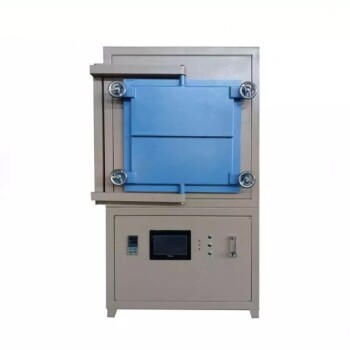
Achieving full densification while controlling grain growth demands precise, reliable thermal processing. KINTEK specializes in high-performance laboratory equipment and customizable high-temperature furnaces—including muffle, tube, rotary, vacuum, CVD, atmosphere, dental, and induction melting furnaces tailored to your exact research and production needs.
Whether you need ultra-stable atmosphere control or rapid high-temperature heating, our engineering team is here to help. Contact KINTEK today to discuss your material requirements and find the perfect furnace for your lab.
Related Products
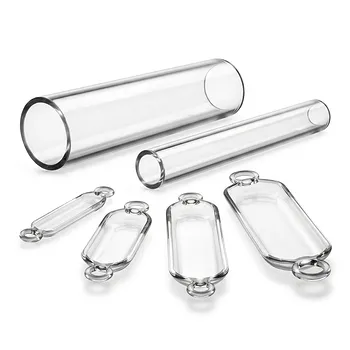
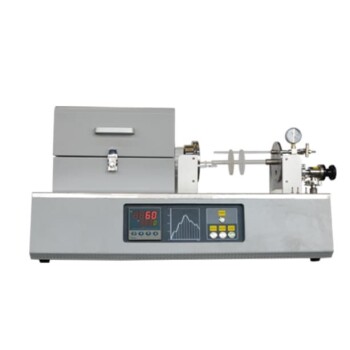
- 1400℃ High Temperature Laboratory Tube Furnace with Alumina Tube
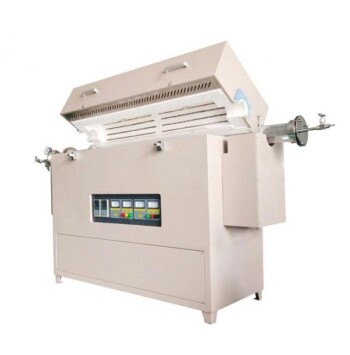
- 1700℃ High Temperature Laboratory Tube Furnace with Alumina Tube
- 1800℃ High Temperature Muffle Oven Furnace for Laboratory
- 1700℃ High Temperature Muffle Oven Furnace for Laboratory
- 1200℃ Muffle Oven Furnace for Laboratory
People Also Ask
- How does zone-melting in tube furnaces synthesize bismuth micro-wires? Master Single-Crystal Thermoelectric Growth
- How are high-temperature laboratory tube furnaces applied in long-term vacuum homogenization heat treatments for intermetallic samples?
- How do high-temperature laboratory tube furnaces ensure environmental stability? Precision Thermal Reduction Tips
- How are high-temp tube furnaces used to measure diffusion coefficients per Fick's law? Master Precision Annealing
- How are high-temperature tube furnaces applied in testing ceramic-supported alloy membranes? Insights