High-temperature metal extrusion fundamentally demands a lubricant engineered into a sacrificial, multifunctional barrier. It must maintain sufficient viscosity under extreme pressures to prevent metal-to-metal contact, form a continuous protective layer to lower friction, and critically, provide thermal insulation to stop the heated billet from chilling against the cooler tooling. For example, hot steel extrusion uses a blend of flake graphite and vegetable oil, while hot titanium relies on liquid glass or glass cloth. The precise preparation and validation of these coatings happens inside high-temperature laboratory furnaces, which provide the exact, stable thermal regimes needed to test coating fusion, thermal resistance, and phase transitions before they ever enter a production press.
The core challenge isn't just reducing friction—it's insulating the workpiece. A lubricant that fails thermally will cause the billet skin to chill, crack, or seize instantly. Laboratory furnaces are therefore not just ovens; they are thermal simulators that validate whether a coating can fuse into a continuous glassy shield and remain stable at the process temperature, ensuring performance in the split second it's needed.
The Triple Role of a Hot Extrusion Lubricant
Understanding the requirements means dissecting the lubricant's job during the violent, high-pressure forming process. It’s a material that must perform perfectly under conditions that would instantly destroy a standard oil or grease.
Thermal Insulation is the Primary Function
The immediate, deep need in hot metal extrusion is thermal management. A heated billet (often steel at over 1100°C or titanium near 900°C) loses heat rapidly upon contact with a colder die. This "chilling" effect creates a hard, unmovable skin on the billet.
The lubricant's film acts as a thermal barrier. By preventing rapid heat transfer, it keeps the billet's surface ductile and flowable. Without this insulation, extrusion pressure spikes dramatically, and surface defects like cracks become inevitable.
Forming a Continuous, Plastic Melt Layer
At process temperatures, the ideal lubricant doesn't just sit there; it melts into a viscous, glassy layer. This film must be continuous and self-healing to separate the workpiece from the die.
For hot titanium, liquid glass is a perfect example. It fuses into a molten film that provides a slippery interface under immense pressure. This melt layer is what directly lowers the coefficient of friction, preventing galling and material pickup on the tooling.
Staying Viscous Under Extreme Pressure
The final hurdle is pressure. The lubricant layer experiences crushing forces that can squeeze a low-viscosity fluid out of the deforming zone. The medium must be viscous enough not to flow out like water while still being able to shear easily. This balance is achieved by materials that form complex, high-strength films, like large flake graphite interlocked in a carrier, or a glass that maintains a specific viscosity at the working temperature.
The Laboratory Furnace as a Thermal Proving Ground
You cannot test these lubricants on a prayer. The deep need here is predictable performance validation. High-temperature laboratory furnaces are the analytical tools that create the exact thermal conditions a lubricant coating will face, allowing you to observe its behavior in a controlled, measurable way.
Testing Coating Fusion and Wetting
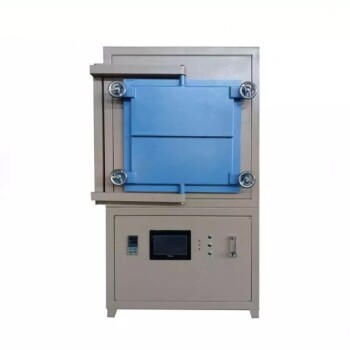
The first step in lab-based lubricant preparation is testing how a coating melts and wets the metal surface. A muffle or atmosphere furnace brings a coated metal coupon to the exact extrusion temperature in a controlled atmosphere.
This reveals the fusion temperature and flow characteristics of the lubricant. Does the graphite-and-oil mix form a uniform, adherent layer, or does it burn off and leave bare spots? For a glass lubricant, does it melt into a smooth, continuous, non-reactive shield? The furnace provides the stable thermal environment to make this critical visual and physical assessment.
Validating Thermal Resistance and Stability
The furnace is used to measure a coating's thermal endurance. By holding a prepared sample at a defined high temperature for a set dwell time, you can quantify mass loss, oxidation, or degradation.
This step directly simulates the billet's heat history. If the lubricant's carrier evaporates too early or the protective glass devitrifies (crystallizes), it will fail. A precisely controlled furnace lets you determine the maximum safe working temperature and lifespan of the lubricant.
Analyzing Phase Transitions Under Exact Regimes
Sophisticated testing uses programmable furnaces to study the lubricant’s physical and chemical changes as it heats up. Key phase transitions, like the melting point of a glass powder, must occur at the right moment to match the billet's cooling curve.
A lab furnace with a programmable temperature controller can ramp and soak temperatures to map these transformations. This technique ensures the coating doesn't just melt, but melts into the correct phase with the right viscosity at the precise moment it enters the deformation zone.
Understanding the Trade-offs and Pitfalls
A purely theoretical approach to lubricant selection often fails. The deep need is to understand where the process can go wrong and how lab validation uncovers these hidden risks.
The Contamination Problem in Powder Metallurgy
A critical lesson comes from related high-temperature processes like powder metallurgy for titanium. The supplementary reference shows that internal lubricants mixed into powder are a disaster for purity.
When these mixed-in lubricants decompose during high-temperature furnace sintering, they leave behind interstitial contaminants like oxygen and carbon. This severely degrades the alloy's static, dynamic, and corrosion properties. The solution—die-wall lubrication with stearates or waxes—provides friction reduction without the volatile contamination risk. A lab furnace test simulating the sintering cycle would quickly reveal this mass loss and contamination, guiding you away from a catastrophic choice for an extrusion billet as well.
Material Compatibility of Furnace Hardware
Validating these lubricants yourself means your furnace hardware must survive the process. The lubricants you test can release volatile compounds. Furnace tubes for high-temperature work are typically constructed from high heat-resistant stainless steel like grade H25N20S2, which maintains oxidation resistance and mechanical strength up to 1200°C. Using the wrong furnace tube material with a reactive glass lubricant could cause premature failure, compromising safety and data.
Matching the Furnace to the Material System
Finally, the type of furnace you use is non-negotiable. Sintering a simple oxide ceramic in air is a radically different process from preparing a lubricant for a refractory metal like tungsten.
- For lubricants on oxidizing materials: Standard high-temperature muffle furnaces operating in air are often sufficient for initial fusion and stability tests.
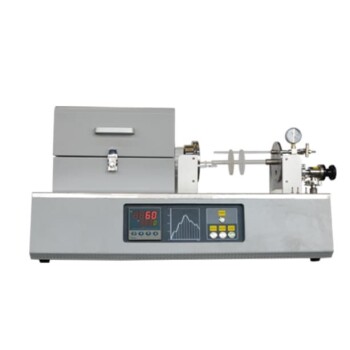
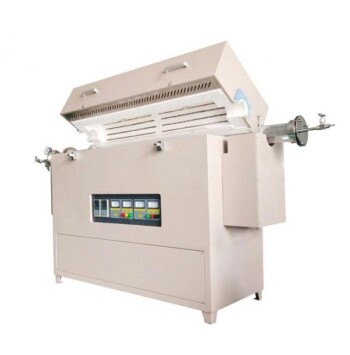
- For lubricants on reactive materials (titanium, tungsten): You need a vacuum furnace or a controlled atmosphere tube/box furnace. These systems maintain an inert argon or reducing hydrogen environment, preventing the lubricant-coated reactive metal from oxidizing during the test itself, which would skew all results.
Making the Right Choice for Your Validation Process
Your approach to using a laboratory furnace for lubricant development should be dictated by your specific end-goal material and performance requirement.
- If your primary focus is validating a glass lubricant for hot titanium extrusion: Prioritize a vacuum or inert atmosphere tube furnace. You must evaluate the glass's fusion and wetting on titanium without forming a brittle alpha-case oxide layer, while precisely mapping its viscosity curve up to 900°C.
- If your primary focus is testing graphite-based coatings for steel: A high-temperature muffle furnace capable of reaching 1200°C is a robust starting point. Your key test is measuring the burn-off rate of the oil carrier and the adhesion of the residual graphite flake layer under programmable, rapid heating slopes.
- If your primary focus is avoiding process carryover to high-purity materials: Use the furnace to pre-qualify any lubricant for thermal degradation. Run a controlled heating cycle and analyze for volatile condensates or mass loss to rule out any medium that would contaminate the workpiece or the furnace itself.
The laboratory high-temperature furnace transforms lubricant selection from a risky production trial into a predictable science, giving you the confidence to control friction and heat flow at the extreme edge of metal forming.
Summary Table:
| Material System | Recommended Lubricant | Furnace Type Required | Key Lab Testing Purpose |
|---|---|---|---|
| Hot Steel Extrusion | Flake Graphite + Vegetable Oil | High-Temp Muffle Furnace | Measure oil carrier burn-off rate and residual graphite layer adhesion up to 1200°C. |
| Hot Titanium Extrusion | Liquid Glass / Glass Cloth | Vacuum or Atmosphere Tube Furnace | Evaluate glass fusion, surface wetting, and prevent brittle alpha-case oxidation. |
| Reactive / Refractory Metals | Inert Synthesized Glass Coatings | Inert Atmosphere / Vacuum Furnace | Map exact phase transitions, analyze viscosity curves, and rule out volatile contamination. |
Elevate Your Lubricant Testing & Material Processing with KINTEK
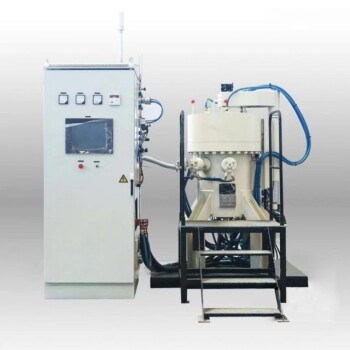
Accurate thermal simulation is critical to validating high-temperature extrusion lubricants, protecting expensive dies, and avoiding catastrophic production flaws. KINTEK specializes in premium laboratory equipment and consumables, offering a complete range of high-temperature furnaces—including muffle, tube, atmosphere, vacuum, rotary, CVD, dental, and induction melting furnaces—all fully customizable to meet your unique experimental and process parameters.
Whether you are analyzing glass melt viscosity, measuring graphite coating burn-off, or processing heat-sensitive reactive alloys in inert environments, KINTEK provides the precise, reliable thermal control your lab demands.
Ready to enhance your thermal validation capabilities? Contact KINTEK today to discuss your custom lab furnace solution!
Related Products
- 1400℃ High Temperature Laboratory Tube Furnace with Alumina Tube
- 1700℃ High Temperature Laboratory Tube Furnace with Alumina Tube
- 1800℃ High Temperature Muffle Oven Furnace for Laboratory
- 1700℃ High Temperature Muffle Oven Furnace for Laboratory
- 1200℃ Muffle Oven Furnace for Laboratory
People Also Ask
- How does zone-melting in tube furnaces synthesize bismuth micro-wires? Master Single-Crystal Thermoelectric Growth
- How are high-temp tube furnaces used to measure diffusion coefficients per Fick's law? Master Precision Annealing
- How do high-temperature laboratory tube furnaces ensure environmental stability? Precision Thermal Reduction Tips
- How are high-temperature laboratory tube furnaces applied in long-term vacuum homogenization heat treatments for intermetallic samples?
- How are high-temperature tube furnaces applied in testing ceramic-supported alloy membranes? Insights