Optimal densification and microstructural control during sintering are achieved by precisely regulating five interconnected furnace variables: sintering temperature, dwell time, chamber pressure, furnace atmosphere, and heating/cooling rates. These parameters collectively dictate atomic diffusion rates, pore elimination efficiency, and the extent of grain growth. By managing each one through programmable high-temperature laboratory furnaces, you can steer the material’s final density, grain size, and mechanical integrity.
Sintering is a race between densification and grain coarsening, both driven by the same thermodynamic force—the reduction of total interfacial energy. Your control over temperature–time–pressure–atmosphere–rate profiles determines which outcome dominates, directly shaping the material’s microstructure and performance.
The Thermodynamic Driver of Sintering
All sintering processes aim to minimize the system’s excess energy. Powder particles possess high surface area and interfacial energy; the furnace environment supplies the activation energy for mass transport that converts this energy into densification and grain growth.
What Actually Happens at the Particle Level
- Small sinter bonds form between adjacent particles as temperature rises, growing into interconnecting necks.
- Pores round, shrink, and ideally vanish, while grains coarsen as curved boundaries migrate toward their center of curvature.
- The net effect is volumetric shrinkage, increased density, and a coarser but more stable microstructure.
Process Variables as Kinetic Levers
- Temperature determines the dominant diffusion mechanism (surface vs. grain boundary vs. lattice diffusion).
- Time controls the total extent of mass transport.
- Pressure adds an additional driving force, collapsing porosity mechanically.
- Atmosphere preserves chemistry and can alter surface diffusion rates.
- Heating/cooling rates set the path microstructural evolution takes along the time–temperature continuum.
Key Process Variables and Their Impact
Each variable’s role must be understood individually, yet they never act in isolation. Here is how precise control translates to performance.
Sintering Temperature: The Primary Diffusion Switch
- Selecting the correct peak temperature ensures that solid-state diffusion mechanisms enabling pore elimination become dominant.
- Too low, and no significant densification occurs. Too high, and uncontrolled grain growth or unwanted liquid-phase formation compromises properties.
- The target is usually 0.7–0.9 of the material’s melting point in Kelvin.
Dwell Time: The Balance Between Bonding and Coarsening
- Holding at the sintering temperature for an adequate duration allows mass transport to fully connect particles and close pores.
- Excessive dwell time rapidly coarsens the microstructure, degrading mechanical strength even though density may be high.
- The optimal time depends on particle size, temperature, and diffusion coefficients — it is often determined empirically for a specific powder system.
Chamber Pressure: Intensifying Consolidation
- Many laboratory furnaces can apply applied pressure (hot pressing, spark plasma sintering) to superimpose a mechanical force on capillary driving forces.
- Pressure-assisted sintering accelerates pore removal in the final stage, enabling full density at lower temperatures and shorter times.
- Even modest pressures can compensate for poor sinterability in materials with high vapor pressures or low self-diffusivity.
Furnace Atmosphere: Chemical Guardian and Process Catalyst
- Inert gases (Ar, N₂) protect reactive metals from oxidation; vacuum removes volatile impurities and prevents gas entrapment in closed pores.
- Reducing atmospheres (H₂, forming gas) strip surface oxides from particles, improving neck formation and densification.
- Active atmospheres can modify stoichiometry (e.g., oxygen partial pressure in oxide ceramics) or promote vapor-phase transport, influencing grain shape and pore distribution.
Heating and Cooling Rates: Programming the Thermal History
- Heating rate determines how much particle rearrangement and neck growth occur before reaching the isothermal hold. Fast rates can trap porosity; slower rates may promote pre-sintering grain growth.
- Cooling rate freezes the final microstructure. Rapid cooling retains fine grains but risks thermal shock; controlled slow cooling relieves stress and can tune precipitate distributions.
Understanding the Trade-offs
No single variable can be optimized in a vacuum — they interact, often with opposing effects.
Densification vs. Grain Growth Higher temperatures and longer times drive both; the processing window is the narrow region where densification outpaces coarsening. Pressure-assisted methods widen this window by boosting densification more than grain growth.
Atmosphere Compatibility A reducing atmosphere excellent for metals may destabilize a ceramic’s stoichiometry. High vacuum avoids contamination but can cause loss of volatile species (e.g., alkali elements), altering composition.
Heating Rate and Uniformity Fast thermal cycles are productive but risk non-uniform temperature distribution, resulting in density gradients. Slower cycles improve homogeneity at the expense of throughput.
Pressure vs. Equipment Complexity Applying uniaxial pressure yields exceptional density but is limited to simple geometries and requires costly tooling. Pressureless sintering is more versatile but demands tighter control of all other parameters.
Making the Right Choice for Your Goal
The art of sintering in high-temperature laboratory furnaces lies in prioritizing variables for your specific material and performance target.
- If your primary focus is maximum density: Combine a sintering temperature at the upper end of the safe range, minimal dwell time, and apply moderate pressure if your furnace allows. Use a gas atmosphere that eliminates surface oxides.
- If your primary focus is fine, uniform grain size: Use the lowest temperature that still achieves closed porosity, a short dwell, and a rapid cooling rate. Avoid long holds that trigger coarsening.
- If your primary focus is reproducibility and simplicity: Favor carefully mapped temperature–time cycles in a well-controlled inert or vacuum atmosphere, documenting the exact heating profile. Add pressure only if densification remains inadequate.
- If your primary focus is a specific stoichiometry or phase composition: Select an active atmosphere (e.g., controlled oxygen partial pressure) and precise dwell times to avoid decomposition. Monitor volatile element loss, especially under vacuum.
You succeed at sintering not by blind trial and error, but by treating these five variables as a single, integrated thermal profile — each knob turned with intent to balance densification against microstructural stability.
Summary Table:
| Process Variable | Primary Role & Mechanism | Microstructural Impact |
|---|---|---|
| Sintering Temperature | Activates solid-state atomic diffusion | Controls pore elimination vs. uncontrolled grain growth |
| Dwell Time | Sets duration for mass transport | Balances inter-particle bond formation and grain coarsening |
| Chamber Pressure | Applies mechanical consolidation force | Accelerates pore removal at lower temperatures and shorter times |
| Furnace Atmosphere | Prevents oxidation and alters surface diffusion | Protects stoichiometry, removes oxides, and avoids trapped gas |
| Heating & Cooling Rates | Sets thermal profile history | Controls pre-sintering coarsening and relieves thermal stress |
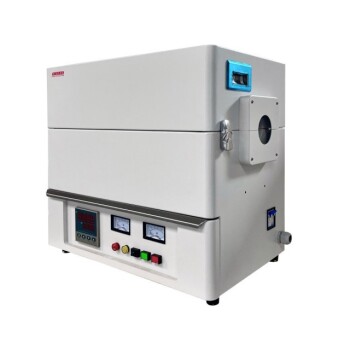
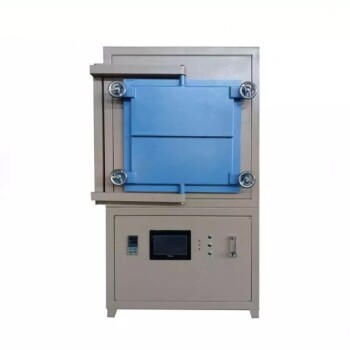
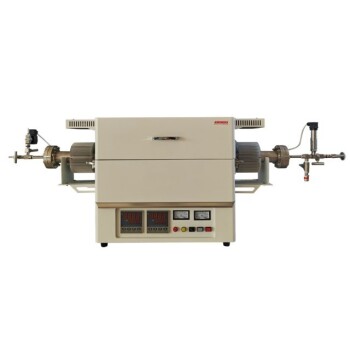
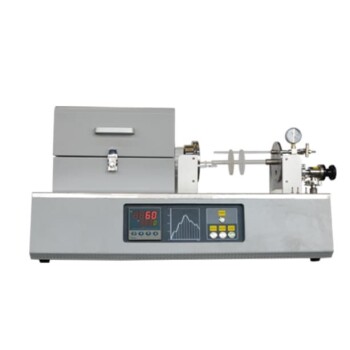
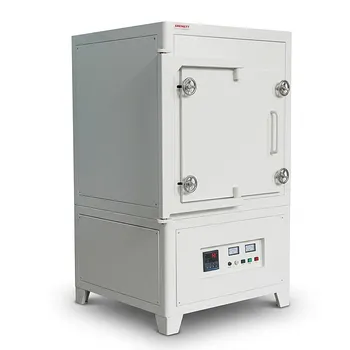
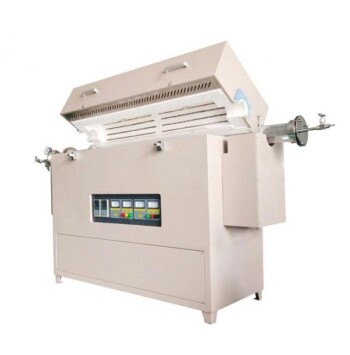
Achieve precise thermal and microstructural control in your research with KINTEK. As experts in laboratory equipment and consumables, KINTEK provides a comprehensive range of high-temperature furnaces—including muffle, tube, rotary, vacuum, CVD, atmosphere, dental, and induction melting furnaces—all fully customizable to meet your specific sintering needs. Enhance your lab's efficiency, density targets, and process repeatability by customizing your thermal system. Contact us today to speak with our engineering specialists!
Related Products
- 1400℃ High Temperature Laboratory Tube Furnace with Alumina Tube
- 1700℃ High Temperature Laboratory Tube Furnace with Alumina Tube
- 1800℃ High Temperature Muffle Oven Furnace for Laboratory
- 1700℃ High Temperature Muffle Oven Furnace for Laboratory
- 1200℃ Muffle Oven Furnace for Laboratory
People Also Ask
- How does zone-melting in tube furnaces synthesize bismuth micro-wires? Master Single-Crystal Thermoelectric Growth
- How are high-temp tube furnaces used to measure diffusion coefficients per Fick's law? Master Precision Annealing
- How are high-temperature laboratory tube furnaces applied in long-term vacuum homogenization heat treatments for intermetallic samples?
- How do high-temperature laboratory tube furnaces ensure environmental stability? Precision Thermal Reduction Tips
- How are high-temperature tube furnaces applied in testing ceramic-supported alloy membranes? Insights