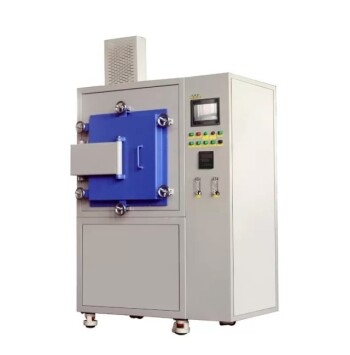
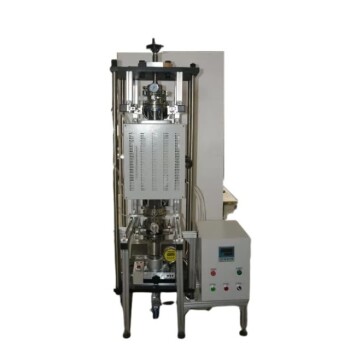
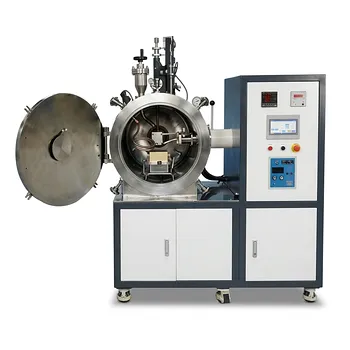
Microwave sintering doesn't just heat a sample—it heats through it.
The fundamental operational advantage is volumetric energy absorption: electromagnetic fields couple directly with the material’s dielectric molecules, causing the bulk to generate heat from the inside out. This eliminates the slow, external-to-internal conduction step inherent in resistance furnaces, enabling ramp rates exceeding 1000°C/min, dramatically shorter cycles, and reduced energy consumption. For precise temperature control, however, microwave furnaces must abandon ordinary thermocouples and instead rely on optical pyrometry or microwave-transparent sensing assemblies that monitor the sample’s true core temperature, actively suppressing the localized thermal runaway that volumetric heating can otherwise trigger.
Conventional furnaces push heat inward; microwave furnaces pull it out from within. This reversal slashes processing time and density barriers, but it demands a completely different approach to temperature metrology—one that measures the sample, not the chamber, to turn a potential uniformity nightmare into a tool for microstructural perfection.
Why the Heating Mechanism Changes Everything
The Inside-Out Thermal Profile
In a resistance-heated furnace, nichrome or silicon carbide elements radiate heat to the sample’s outer surface. The surface must conduct that energy inward, layer by layer, until the core finally reaches the target temperature. This external heat source creates a temperature gradient from surface to core that depends heavily on the material’s thermal conductivity. A dense, insulating ceramic can sit in a glowing furnace for hours before its center catches up.
A microwave furnace flips this model. Electromagnetic waves in the 0.3–300 GHz range penetrate the entire volume and interact with atomic dipoles, ions, and space charges. Heating starts everywhere at once, not at the perimeter. The core can actually become hotter than the surface, provided the field couples uniformly. This is why microwave sintering can achieve near‑theoretical density in minutes instead of hours.
The Kinetic Knock-On Effects
Volumetric heating unlocks a string of operational advantages that cascade from one another:
- Extreme heating rates (often > 1000°C/min) reduce the total thermal budget—the time-at-temperature that drives grain coarsening.
- Lower dwell temperatures (often 50–100°C below a conventional cycle) further suppress grain-boundary migration.
- Enhanced diffusion kinetics from the electromagnetic field itself accelerate densification, so a compact can reach 98–99% density even during the ramp.
- No need for massive furnace insulation or heating elements to be pre‑heated, which saves energy and eliminates the thermal inertia that makes conventional furnaces sluggish.
The result is a tightly controlled process where you can freeze a fine-grained, nano‑structured microstructure before it has a chance to grow.
The Temperature Control Imperative
Why Standard Thermocouples Fail
In a conventional furnace, a thermocouple positioned near the heating element or sample surface provides a reasonable proxy for the sample’s temperature once the furnace is soaked. In a microwave furnace, the sample generates its own heat and can easily become hundreds of degrees hotter than the surrounding cavity air. A thermocouple touching the surface or inserted into the cavity will read a dangerously low temperature, causing the controller to apply more power and trigger uncontrolled thermal runaway.
Even worse, a metallic thermocouple itself can act as an antenna, arc, or locally concentrate the microwave field, distorting both the measurement and the heating pattern. So the primary temperature control principle is: measure the sample’s true radiative temperature without contacting it.
Optical Pyrometry as the Primary Feedback
Microwave sintering furnaces rely on infrared optical pyrometers aimed through a microwave‑transparent window (often quartz or sapphire) directly at the sample surface. The pyrometer captures the thermal radiation emitted by the specimen, converting it to a temperature reading that drives the PID power controller. This non‑contact method avoids field disturbance and gives a direct reading of the surface temperature.
For specimens that are transparent or semi‑transparent in the infrared, or when the surface does not represent the core temperature well, microwave‑transparent sensing assemblies come into play. For example, a small, sealed sapphire light pipe can be inserted into the sample to collect radiation from the interior, channeling it to the pyrometer. This arrangement provides a core‑corrected measurement without introducing any metal into the field.
Managing Uniformity and Runaway
The controller doesn’t just modulate power; it must actively prevent the positive‑feedback loop where a slightly hotter region absorbs more microwave power, becomes hotter still, and runs away. Advanced multi‑mode cavities use mode stirrers, turntables, and carefully tuned power profiles to keep the field distribution homogeneous. The pyrometer signal is sampled at high speed, and the power is throttled the moment the slope of the temperature rise exceeds a safe threshold.
Thus, the control strategy marries field‑uniformity engineering with fast, non‑contact pyrometry to deliver thermal gradients that can be as low as those in a well‑soaked conventional furnace—but reached in a dramatically shorter time.
Operational Advantages at a Glance
- Speed: Cycles that once took 12–24 hours can finish in 30 minutes, increasing laboratory throughput and enabling rapid iteration.
- Energy Efficiency: Because only the sample is heated directly, energy isn’t wasted raising the temperature of massive refractory insulation and heating elements. Total energy consumption can be cut by a factor of 10 or more.
- Microstructural Fidelity: Fast ramping and low thermal budgets lock in nano‑scale grains, producing components with higher hardness, strength, and wear resistance. This is especially critical for transparent ceramics, solid‑state electrolytes, and electronic oxides.
- Atmospheric Simplicity: Many oxide and metallic powder mixtures can be sintered directly in air without the need for complex inert‑gas purging systems, because the internal heating can outpace surface oxidation.
- Batch Consistency: Homogeneous volumetric heating improves part‑to‑part and batch‑to‑batch uniformity, as every particle inside the cavity sees the same electromagnetic field profile.
Understanding the Trade-offs and Pitfalls
Microwave sintering isn’t a universal upgrade. It comes with specific constraints that demand attention:
Sample Geometry and Material Coupling
Not every material absorbs microwaves efficiently. Low‑loss dielectrics like pure quartz or certain polymers won’t heat at all unless a susceptor (a secondary highly‑absorbing material) is used. Even for absorbing ceramics, the penetration depth and dielectric properties change with temperature, which can cause the heating profile to shift during the ramp. A sample that heats evenly at room temperature may develop hot spots as it approaches the Curie point or as conductivity rises.
Irregularly shaped components can experience field concentrations at sharp corners or thin sections, leading to local melting while the bulk remains under‑sintered. Success requires careful electromagnetic simulation or empirical development for each geometry and composition.
Temperature Measurement Blind Spots
An optical pyrometer only measures a pinpoint on the surface. If the sample has temperature gradients from uneven field coupling, that single‑point reading won’t reveal a cold side or an overheating core. Multi‑point pyrometry or high‑speed thermal imaging can mitigate this, but it adds cost and complexity. In contrast, a conventional furnace with multiple thermocouples can map temperature distribution across the hot zone straightforwardly.
Power Supply and Cavity Complexity
A microwave sintering furnace requires a high‑power magnetron or solid‑state microwave generator, a precisely tuned waveguide system, and a cavity designed to support a uniform field. This makes the capital cost higher than a simple box furnace. Maintenance of magnetron tubes and power supplies also requires specialized expertise.
Limited Maximum Workpiece Size
The wavelength of a 2.45 GHz microwave (the common industrial frequency) is roughly 12 cm in free space. Cavity dimensions and field patterns impose practical limits on how large a sample can be heated uniformly. Scaling up to production‑size components often requires moving to lower frequencies (e.g., 915 MHz) and larger multimode cavities, which fall outside the scope of typical laboratory furnaces.
Making the Right Choice for Your Laboratory
The decision between a microwave sintering furnace and a conventional resistance furnace hinges on your specific research or production goals.
- If your primary focus is maximum throughput and rapid prototyping: A microwave furnace delivers drastically shorter cycles, allowing you to go from green compact to finished test part inside an hour. The energy savings and reduced laboratory footprint are added bonuses.
- If your primary focus is developing nanostructured or fine‑grained ceramics: The ability to densify at lower temperatures and in minutes makes microwave sintering the clear front‑runner. You can inhibit grain growth far more effectively than in a conventional furnace.
- If your primary focus is scaling up from lab to production: Start with microwave lab‑scale optimization, but be prepared to invest in simulation and cavity engineering to handle larger, more complex parts. A conventional furnace offers a simpler, more predictable path if processing speed isn’t the bottleneck.
- If your primary focus is working with a wide variety of material families without re‑optimization: A conventional furnace provides plug‑and‑play simplicity. Microwave systems require re‑tuning of power profiles, susceptor arrangements, and pyrometer setups for each new material system, which can slow down exploratory research.
The right furnace doesn’t just heat—it aligns precisely with how you need to control the clock of microstructure evolution.
Summary Table:
| Feature / Metric | Microwave Sintering Furnace | Conventional Resistance Furnace |
|---|---|---|
| Heating Mechanism | Volumetric (inside-out via dielectric coupling) | External conduction/radiation (outside-in) |
| Heating Ramp Rates | Extreme (>1000°C/min) | Slow/Moderate (typically 5–30°C/min) |
| Temperature Sensing | Infrared optical pyrometry / light pipes | Contact thermocouples |
| Cycle Duration | Mins to ~30 mins | 12 to 24+ hours |
| Microstructure Effect | Inhibits grain growth (preserves nanostructures) | Prone to grain coarsening due to long soak times |
| Energy Consumption | Highly efficient (heats only the sample) | High losses (heats chamber, air, and insulation) |
Upgrade Your Thermal Processing Efficiency with KINTEK
Whether you are pioneering advanced nanostructured ceramics or scaling complex heat treatments, KINTEK provides industry-leading thermal engineering tailored to your laboratory's exact needs. As specialists in premium laboratory equipment and consumables, we offer a comprehensive range of high-temperature furnaces—including muffle, tube, rotary, vacuum, CVD, atmosphere, dental, and induction melting systems—all fully customizable to match your process requirements.
Take control of your heat treatment precision and maximize laboratory throughput. Contact KINTEK experts today to find your custom furnace solution!
Related Products
- Spark Plasma Sintering SPS Furnace
- Vacuum Heat Treat Sintering Furnace Molybdenum Wire Vacuum Sintering Furnace
- Vacuum Heat Treat Sintering Furnace with Pressure for Vacuum Sintering
- Small Vacuum Heat Treat and Tungsten Wire Sintering Furnace
- High Temperature Muffle Oven Furnace for Laboratory Debinding and Pre Sintering
People Also Ask
- Why is it necessary to maintain a high vacuum environment during the SPS of SiC? Key to High-Density Ceramics
- How does the heating mechanism of Spark Plasma Sintering (SPS) function? Enhance TiC/SiC Composite Fabrication
- What are the technical advantages of using an SPS sintering furnace? Elevate Al2O3-TiC Material Performance
- What are the advantages of Spark Plasma Sintering (SPS)? Achieve Superior Microstructures
- What are the steps in the discharge plasma sintering process? Master Fast, High-Density Material Consolidation