Higher green density is the primary driver of final grain coarsening in sintered YSZ thin films, not of their ultimate densification. When you electrophoretically deposit a denser particle network, the compact starts with greater particle-particle contact, which turbocharges the initial stages of sintering. This leads to grains that grow significantly larger—often exceeding 2 µm—during the high-temperature hold. Yet, crucially, these same denser green layers do not yield a lower final porosity or a measurably higher sintered density. The final consolidation state is overwhelmingly dictated by your furnace’s thermal profile, making green density a grain-size tuning knob, not a density guarantee.
The surface ask is about linking green density to final microstructure, but the deep need is controlling the performance and reliability of sintered YSZ electrolytes. The central insight: green density decouples grain size control from densification. Higher green density coarsens final grains, while thermal profile alone determines the final sintered density. To engineer a fine-grained, fully dense film, you must balance green forming with precise furnace management.
The Decoupled Impact of Green Density on Thin Film Sintering
YSZ thin films behave counter-intuitively compared to bulky green bodies. In classic powder processing, a higher green density accelerates densification and reduces porosity. In thin, electrophoretically deposited layers, that acceleration saturates. The film reaches near-theoretical density under standard firing profiles regardless, so the net effect shifts entirely to microstructure.
Why Higher Green Density Enlarges Final Grains
In a loosely packed green layer, particles touch at few points. Diffusion must first build necks and shrink pores before grain boundaries can migrate. A denser green compact starts with extensive particle contact area. This jump-starts diffusion, allowing grain boundaries to sweep through the particle ensemble early in the sintering cycle. The result: grains can coarsen to over 2 µm, depending on deposition parameters and hold time.
The mechanism is purely kinetic. With more touching neighbors, an atom has shorter diffusion paths to attach to a growing grain. The same furnace time that would only consolidate a low-density layer gives a high-density layer extra time for grain growth. Thus, the final grain size becomes a direct function of the initial packing.
Final Density and Porosity Are Insensitive to Green Density
Variations in green layer density—within the typical range achievable by electrophoretic deposition—do not meaningfully change the final sintered density or residual porosity. Laboratory experiments repeatedly show that after a standard high-temperature cycle (e.g., 1380–1400 °C with slow ramps), films from different green densities all converge to the same transparent, fully dense state.
This insensitivity occurs because the driving force for pore elimination in a thin film is enormous. The short diffusion distances and large surface-area-to-volume ratio of a film let capillary forces close the last pores almost completely, even from a less-than-ideal green structure, provided the thermal budget is sufficient. So, the furnace profile—peak temperature, hold time, heating rate—becomes the true densification master control, not the green compact.
The Real Role of Green Density: Stress and Defect Management
While final porosity may not change, non-uniform green density creates macroscopic risks. The supplementary references highlight that large, localized variations in packing cause differential shrinkage. In a thin film bonded to a substrate, this translates to warping, delamination, or microcracking along the interface. A homogeneous green density, even if not the highest possible, is often more critical for yield than absolute density.
Thus, green density’s primary job in a thin-film context shifts from ensuring densification to managing process integrity. Uniform packing prevents defects; furnace parameters finalize the density.
Understanding the Trade-offs
Relying solely on green density to drive densification can backfire in two ways. First, if you maximize green density aggressively, you get larger grains—possibly degrading ionic conductivity or mechanical toughness if grain-boundary properties matter. Second, pursuing ultra-high green density may require processing steps (extended deposition, additives) that compromise layer homogeneity, increasing the chance of differential shrinkage defects.
The Grain Size–Density Paradox
Unlike bulk ceramics, where high green density often helps achieve high final density with fine grains, YSZ thin films can reach full density from moderate green packs. Pushing green density higher then only adds grain growth without any density payoff. For applications demanding fine-grained microstructures—such as solid oxide fuel cells requiring high triple-phase boundary density—this is a pitfall. You gain nothing in densification but lose the nanostructure.
Uniformity Over Peak Value
Stress concentrations from uneven shrinkage are the most common source of catastrophic thin-film failure during sintering. A green layer with a slightly lower but extremely uniform packing density will outperform a denser but patchy layer. Warping and interface cracking are not repaired by high-temperature diffusion; they are locked in. Therefore, the key metric is not just “high green density” but homogeneous green density.
Making the Right Choice for Your Goal
Your process parameters must reflect your final microstructure target. Use the relationship between green density and furnace profile as a programmable lever.
- If your primary focus is maximizing grain size (e.g., for certain optical or mechanical properties): Increase green layer density through optimized electrophoretic deposition parameters, and pair it with a standard high-temperature sintering cycle.
- If your primary focus is achieving a fine-grained, fully dense electrolyte for ionic conductivity: Target a moderate, uniform green density and use a carefully controlled furnace profile (ramp, peak temperature, hold time) to reach full density while limiting grain coarsening.
- If your primary focus is eliminating warping and interfacial defects: Prioritize green layer homogeneity over its absolute density. Ensure uniform particle packing via well-dispersed slurries and stable deposition, then verify the furnace profile with dilatometry to match shrinkage rates between film and substrate.
Green density is a scalpel for tailoring grain size in sintered YSZ thin films, but the furnace remains the ultimate arbiter of density and integrity. Master their interplay, and you can reliably produce defect-free layers with the exact microstructure your application demands.
Summary Table:
| Microstructural Parameter | Impact of Higher Green Density | Primary Controlling Factor | Strategic Optimization Goal |
|---|---|---|---|
| Final Sintered Density | Minimal / Insensitive | Furnace Thermal Profile (Temp/Hold) | Set thermal profile to achieve full densification |
| Grain Size (Coarsening) | Increases significantly (> 2 µm) | Green Packing Density & Hold Time | Maintain moderate density to preserve fine grains |
| Film Integrity & Defect Rate | High defect risk if non-uniform | Green Packing Homogeneity | Prioritize uniform packing over high peak density |
Master Your YSZ Thin Film Microstructure with KINTEK
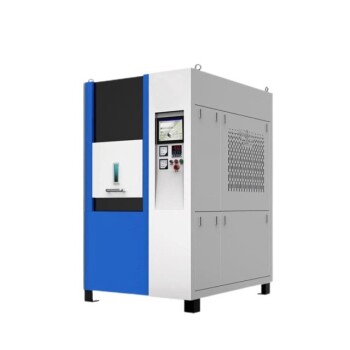
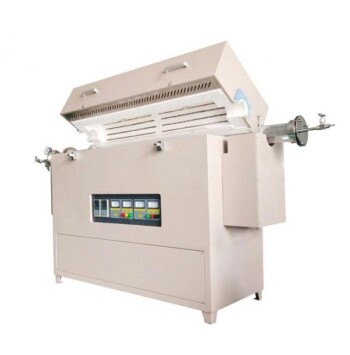
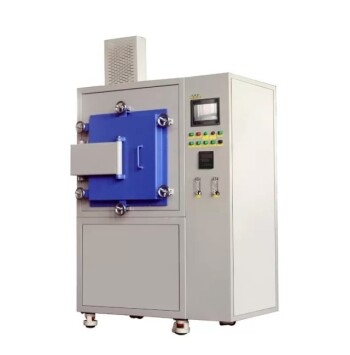
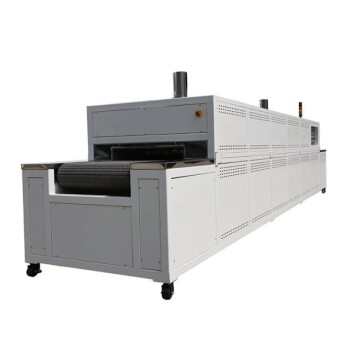
Achieving the perfect balance between grain size control and full densification requires precise furnace management. KINTEK specializes in high-performance laboratory equipment and consumables, offering a comprehensive range of customizable high-temperature furnaces—including muffle, tube, vacuum, atmosphere, CVD, and induction melting furnaces—engineered to meet the exact thermal profiles your thin-film ceramics demand.
Whether you are developing solid oxide fuel cell (SOFC) electrolytes or advanced structural ceramics, KINTEK provides reliable, highly accurate heating solutions designed to maximize process yield and prevent microstructural defects.
Ready to optimize your ceramic sintering workflow? Contact KINTEK today to find the ideal furnace solution for your lab!
Related Products
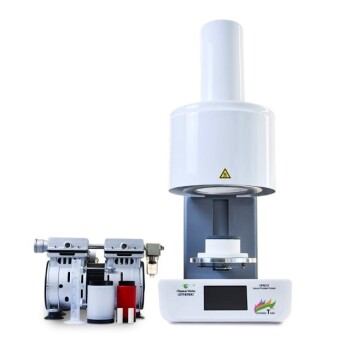
- Dental Porcelain Zirconia Sintering Ceramic Vacuum Press Furnace
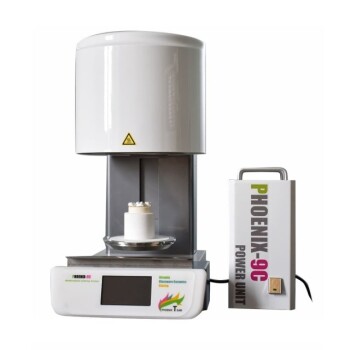
- Chairside Dental Porcelain Zirconia Sintering Furnace with Transformer for Ceramic Restorations
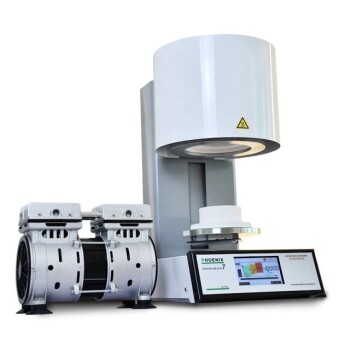
- Vacuum Dental Porcelain Sintering Furnace for Dental Laboratories
- High Temperature Muffle Oven Furnace for Laboratory Debinding and Pre Sintering
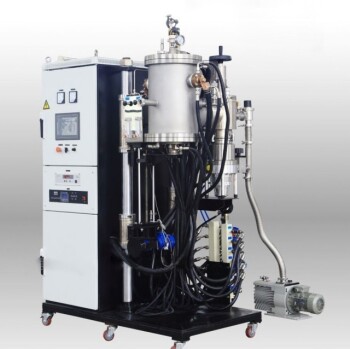
- Small Vacuum Heat Treat and Tungsten Wire Sintering Furnace
People Also Ask
- What factors determine the quality of sintered zirconia restorations? Master Material, Equipment, and Technique
- How do conventional vs rapid sintering in dental furnaces affect zirconia? Optimize Efficiency Without Sacrificing Strength
- What is the purpose of dental sintering furnaces? Transform Zirconia into Durable, High-Quality Dental Restorations
- What precautions should be taken when sintering zirconia in the Fast Slow Dental Sintering Furnace? Master Key Steps for Perfect Results
- What temperature range is used for sintering zirconia ceramics? Achieve Optimal Strength and Translucency