The integration of an observation window in a high-temperature muffle furnace serves as the bridge between thermal simulation and precise mechanical analysis. This specialized setup provides a stable, uniform environment to replicate heat stamping or extreme heat conditions while enabling external high-speed cameras to record real-time deformation.
The primary function of this equipment is to maintain a precise thermal balance while allowing for non-contact optical measurements, such as Digital Image Correlation (DIC). This ensures that the strain fields of ultra-thin stainless steel can be calculated accurately at elevated temperatures without the mechanical interference of traditional sensors.
Simulating Real-World Thermal Environments
Precision Heating for Ultra-Thin Specimens
Ultra-thin stainless steel has a very low thermal mass, making it exceptionally sensitive to temperature fluctuations. A high-precision muffle furnace ensures a uniform thermal field, which is critical for preventing localized hotspots that could prematurely weaken the specimen during a tensile test.
Replicating Industrial Heat Stamping
The furnace allows researchers to simulate the exact thermal gradients experienced during industrial processes like heat stamping. By maintaining temperatures often reaching up to 1200°C, the furnace creates the necessary conditions to study how extreme heat impacts the microstructure and mechanical integrity of the steel.
Homogenization and Microstructure Stability
Before the tensile load is applied, the furnace can perform solution heat treatment to promote the diffusion of alloying elements. This process eliminates segregation and ensures a uniform microstructure, providing a consistent baseline for measuring mechanical performance.
The Critical Role of the Observation Window
Enabling Digital Image Correlation (DIC)
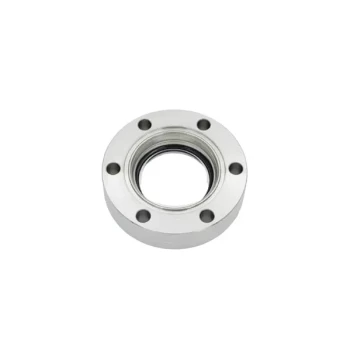
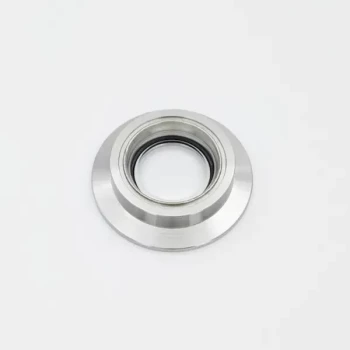
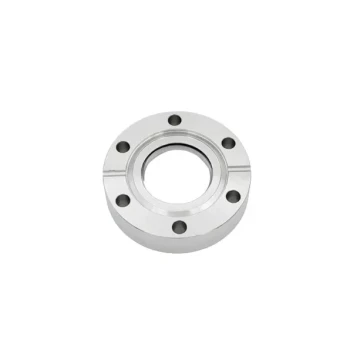
The specialized glass window is designed to facilitate non-contact optical measurements. This allows high-speed cameras located outside the furnace to track the movement of a speckle pattern on the specimen’s surface, enabling the calculation of full-field strain without physically touching the ultra-thin material.
Maintaining Internal Thermal Balance
Traditional tensile testing often requires opening a furnace or using port holes that can cause heat leakage. The observation window allows for continuous monitoring and data collection without disrupting the internal atmosphere, ensuring the specimen remains at a constant, preset temperature throughout the test.
Visual Verification of Failure Modes
In ultra-thin materials, the transition from elastic deformation to necking and fracture happens rapidly. The window allows for real-time visual recording of these events, providing qualitative data on how the material fails under specific thermal and mechanical loads.
Understanding the Trade-offs and Technical Challenges
Optical Distortion and Calibration
While the window is essential for DIC, the specialized glass can introduce refractive errors due to the heat gradient between the hot interior and cool exterior. Engineers must perform complex optical calibrations to ensure that the visual data captured by the camera represents the actual physical deformation.
Thermal Gradients Near the Window
The area of the furnace occupied by the observation window may have slightly different insulation properties than the refractory-lined walls. This can create minor temperature gradients within the chamber, which must be managed through advanced furnace design or active heating elements near the glass.
Maintenance of Specialized Glass
At extreme temperatures, volatiles from the specimen or the furnace lining can deposit on the inner surface of the window. Any clouding or "fogging" of the glass will degrade the quality of the optical data, requiring frequent cleaning and potentially limiting the duration of high-temperature tests.
How to Apply This to Your Project
Making the Right Choice for Your Goal
- If your primary focus is high-accuracy strain mapping: Invest in a furnace with high-purity quartz or sapphire windows and pair it with a high-resolution DIC system to capture subtle deformation patterns.
- If your primary focus is simulating rapid industrial cooling: Ensure the muffle furnace has a programmable temperature controller capable of executing steep cooling curves immediately following the high-heat soaking phase.
- If your primary focus is testing ultra-thin materials for aerospace or automotive use: Prioritize a furnace with exceptional thermal uniformity (within ±1°C) to prevent thermal warping of the thin-gauge specimens before the tensile test begins.
By combining stable thermal control with non-invasive optical access, the muffle furnace provides the definitive environment for characterizing the next generation of high-performance stainless steels.
Summary Table:
| Feature | Primary Function | Benefit for Ultra-Thin Steel |
|---|---|---|
| Observation Window | Enables Optical Access | Facilitates non-contact DIC and full-field strain mapping. |
| Uniform Thermal Field | Microstructure Stability | Prevents localized hotspots and premature material weakening. |
| High-Temp Range | Industrial Simulation | Replicates heat stamping conditions up to 1200°C. |
| Sealed Chamber | Thermal Balance | Maintains constant temperatures without heat leakage during tests. |
| Real-time Monitoring | Visual Verification | Captures rapid failure modes and necking events accurately. |
Elevate Your Material Research with KINTEK
Precision is paramount when testing next-generation materials. KINTEK specializes in high-performance laboratory equipment and consumables, offering a comprehensive range of customizable high-temperature furnaces, including:
- Muffle & Tube Furnaces for precise thermal uniformity.
- Vacuum & Atmosphere Furnaces for sensitive material environments.
- CVD & Rotary Furnaces for advanced chemical vapor deposition.
- Induction & Dental Furnaces for specialized melting and sintering.
Whether you are performing DIC tensile testing on ultra-thin stainless steel or simulating extreme aerospace conditions, KINTEK provides the reliability and customization you need.
Ready to optimize your lab's performance? Contact us today to discuss your unique testing requirements and get a professional quote!
References
- Ningning Guo. Hot stamping of ultra-thin stainless steel for microchannels. DOI: 10.21741/9781644902479-102
This article is also based on technical information from Kintek Furnace Knowledge Base .
Related Products
- 1800℃ High Temperature Muffle Oven Furnace for Laboratory
- 1700℃ High Temperature Muffle Oven Furnace for Laboratory
- 1200℃ Muffle Oven Furnace for Laboratory
- 1400℃ Muffle Oven Furnace for Laboratory
- Laboratory Muffle Oven Furnace with Bottom Lifting
People Also Ask
- What is the primary function of a high-temperature laboratory muffle furnace in chemical synthesis? Achieve Precision.
- How does a high-temperature laboratory muffle furnace affect material properties? Transform Anodic Oxide Films Fast
- What is the role of a laboratory high-temperature muffle furnace in iron analysis? Key to Precise Sample Mineralization
- Why is a laboratory high-temperature muffle furnace required for LaNixFe1-xO3 catalysts? Optimize Two-Stage Synthesis
- What role does a muffle furnace play in plant bark mineral analysis? Essential for Precise Dry Ashing & Trace Extraction