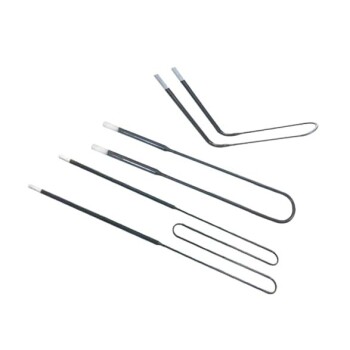
The design basis of an SCR Type Silicon Carbide (SiC) heating element is to create a component specifically optimized for advanced thermal management systems that require a high degree of control and energy efficiency. It is a calculated enhancement of the U-shaped SiC rod, engineered to work seamlessly with Silicon-Controlled Rectifier (SCR) power controllers in technically demanding applications.
The key distinction is that an SCR Type element is not designed for simple, continuous heating. Instead, its electrical and thermal properties are engineered to respond precisely to the rapid power adjustments of an electronic SCR controller, enabling sophisticated and automated temperature management.
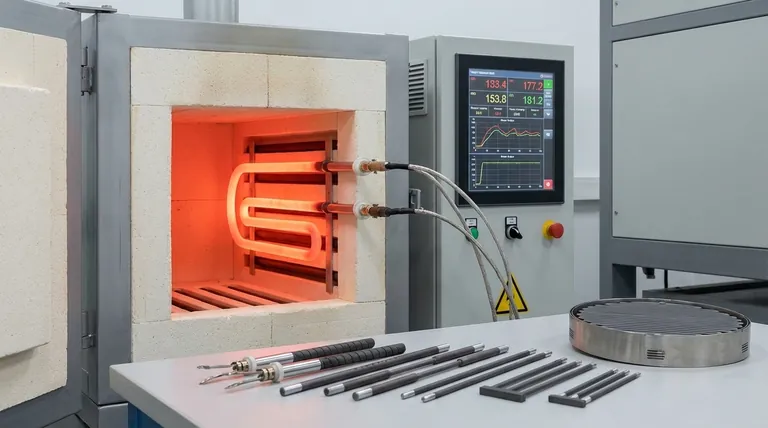
The Core Principle: Designing for Precision Control
The "SCR" in the name is the most critical part of its design basis. It refers to a Silicon-Controlled Rectifier, an electronic component that allows for highly precise and rapid modulation of electrical power. The entire element is designed around this control method.
The Role of the SCR Controller
An SCR power controller acts like a sophisticated, high-speed dimmer switch for the heating element, as opposed to a simple on/off switch.
It enables phase-angle firing or zero-cross firing, methods that precisely chop up the AC power waveform. This allows for extremely fine-tuned adjustments to the energy delivered to the element, resulting in superior temperature control.
Optimizing the Element for Dynamic Power
The SCR Type element's design is optimized to handle these rapid power cycles without degradation. Its material composition and geometry are calculated to provide a stable resistance profile under fluctuating electrical loads.
This ensures that the heat output is predictable and directly proportional to the controller's signal, which is essential for automated systems in aerospace, advanced electronics, and specialized industrial furnaces.
The Foundation of Joule Heating
At its core, the element still operates on the principle of Joule heating, where resistance to an electrical current generates heat.
However, the SCR Type's design basis is focused on making this heat generation exceptionally controllable, allowing for a level of management that simpler element designs cannot achieve.
SCR Type vs. SC (Single Spiral) Type
Understanding the design basis of the SCR Type becomes clearer when contrasted with other common designs, like the SC (Single Spiral) Type. They are engineered for different purposes.
SCR Type: For Precision and Automation
The SCR Type is designed for processes where temperature must be adjusted quickly and accurately. The U-shape allows for electrical connections on a single side, simplifying furnace wiring and construction in complex equipment.
Its home is in high-end applications where automated, tight-tolerance thermal profiles are mission-critical.
SC Type: For Uniformity and Scale
The SC (Single Spiral) Type has a different design basis: to provide maximum heating surface area for broad, uniform heat distribution.
This design is ideal for large box furnaces or trolley furnaces used in processes like annealing or tempering, where maintaining a consistent temperature across a large volume is more important than making rapid adjustments.
Understanding the Trade-offs
Choosing an SCR Type element involves acknowledging its specific purpose and limitations. It is not a universal solution.
The Requirement of a System Approach
The element and the SCR controller are a matched system. You cannot gain the benefits of an SCR Type element by simply wiring it to a basic on/off contactor. The investment must include the sophisticated power controller.
Complexity and Cost
This system-level approach naturally brings higher initial costs and complexity compared to simpler heating setups. The precision it offers is a direct trade-off for increased engineering and component costs.
General SiC Material Properties
Like all silicon carbide elements, the SCR Type is hard and brittle. It is resistant to thermal shock and will not deform at high temperatures, but it requires careful handling and installation to prevent mechanical fracture.
Making the Right Choice for Your Application
Selecting the correct heating element requires aligning its fundamental design basis with your primary operational goal.
- If your primary focus is dynamic, automated temperature control for sophisticated processes: The SCR Type is engineered specifically for this purpose and will provide the necessary responsiveness.
- If your primary focus is achieving stable, uniform heat across a large furnace for bulk processing: An SC (Single Spiral) Type or a similar design focused on surface area is the more direct and cost-effective solution.
- If your primary focus is simple heating with minimal control requirements: The SCR Type system is likely over-engineered for your needs, and a simpler, more robust element design would be a better fit.
Ultimately, choosing the right element begins with understanding that its design must match the control strategy of your entire heating system.
Summary Table:
| Aspect | Description |
|---|---|
| Core Principle | Designed for precision control with SCR power controllers, enabling rapid power adjustments and automated temperature management. |
| Key Features | Optimized for dynamic power cycles, stable resistance profile, and seamless integration with SCR controllers for high-end applications. |
| Applications | Ideal for aerospace, advanced electronics, and specialized industrial furnaces requiring tight thermal tolerances. |
| Comparison | SCR Type focuses on control and automation, while SC Type emphasizes uniform heating for large-scale processes. |
Optimize your thermal processes with KINTEK's advanced SCR Type SiC heating elements! Leveraging exceptional R&D and in-house manufacturing, we provide diverse laboratories with tailored high-temperature furnace solutions, including Muffle, Tube, Rotary, Vacuum & Atmosphere Furnaces, and CVD/PECVD Systems. Our strong deep customization capability ensures we precisely meet your unique experimental requirements for superior efficiency and control. Contact us today to discuss how we can enhance your application!
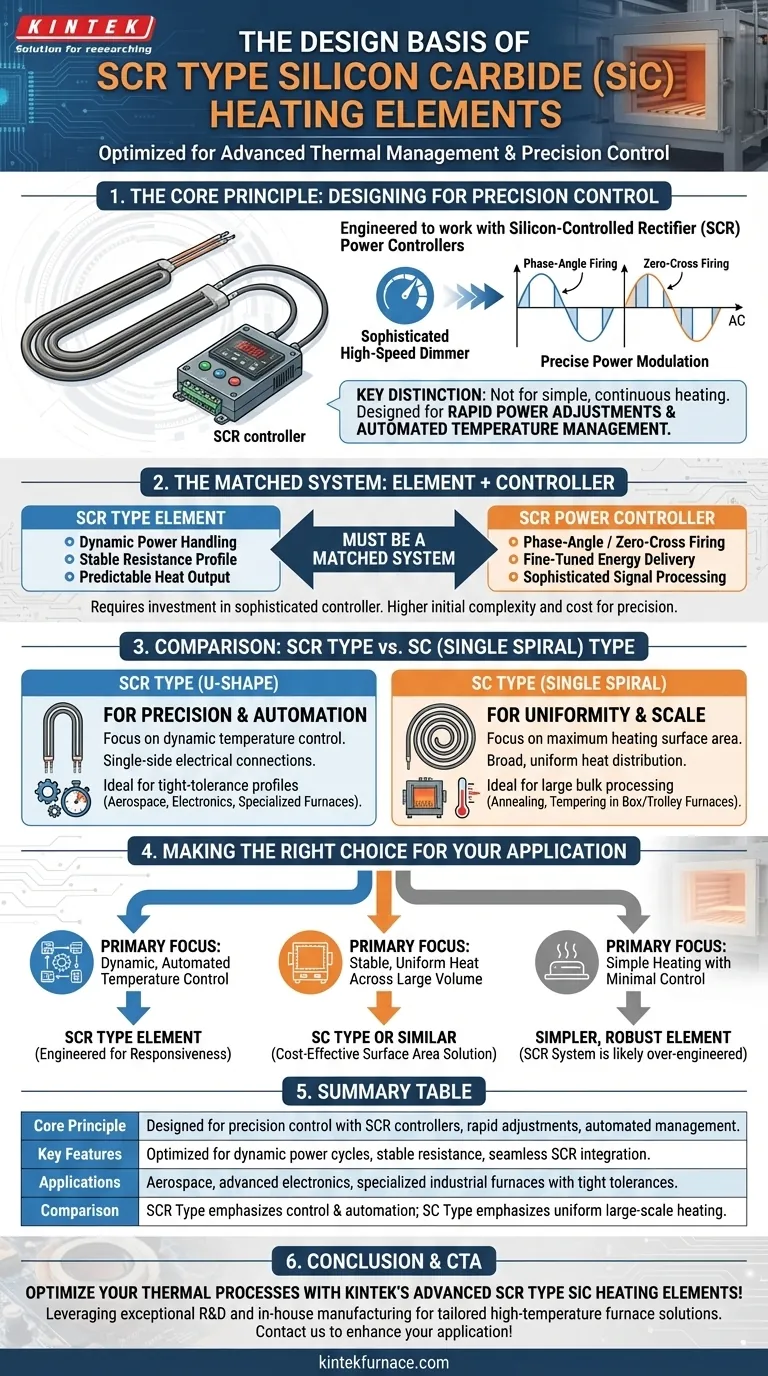
Visual Guide
Related Products
- Silicon Carbide SiC Thermal Heating Elements for Electric Furnace
- Molybdenum Disilicide MoSi2 Thermal Heating Elements for Electric Furnace
People Also Ask
- How do the different types of silicon carbide heating elements compare in terms of applications? Find the Best Fit for Your High-Temp Needs
- What are the temperature capabilities and mounting options for silicon carbide heating elements? Unlock High-Temp Flexibility and Durability
- What are the advantages of using silicon carbide heating elements in industrial furnaces? Boost Efficiency and Durability
- How do silicon carbide heating elements enhance the heat treatment of alloys? Achieve Superior Temperature Control
- What are the unique properties of silicon carbide heating elements? Key Benefits for High-Temp Performance