
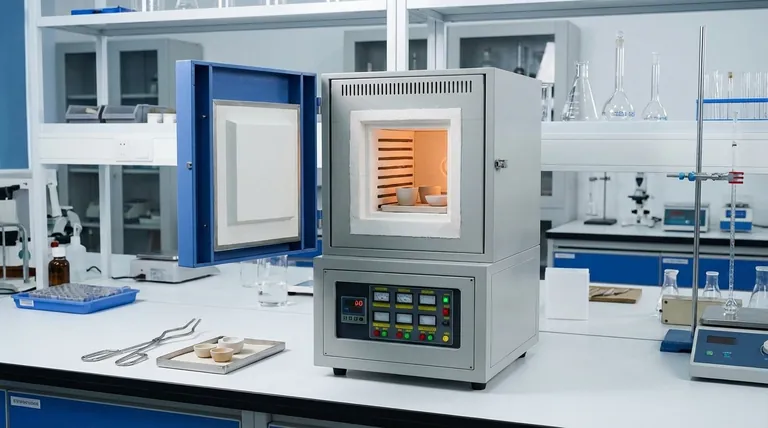
The primary advantages of a muffle furnace stem from its unique design, which separates the material being heated from the direct source of heat. This core feature delivers three critical benefits: exceptional temperature control and uniformity, prevention of sample contamination, and versatile application across a wide range of high-temperature processes.
A muffle furnace's true value is not just its ability to reach high temperatures, but its capacity to create an isolated, clean, and highly controlled heating environment. This ensures the integrity of the material and the repeatability of the process.
The Core Function: High-Integrity Thermal Processing
A muffle furnace is engineered for applications where the final quality of the material is paramount. Its design directly supports this goal by focusing on control and purity.
Achieving Precise and Uniform Temperature
The insulated, enclosed chamber of a muffle furnace allows for exceptionally uniform heat distribution. This eliminates hot and cold spots that could compromise the integrity of a sample.
Modern furnaces with digital controllers allow for precise temperature management. You can program specific heating rates, soaking times, and cooling profiles, which is critical for sensitive processes like annealing, sintering, or tempering metals.
Preventing Sample Contamination
This is the defining advantage of a muffle furnace. The "muffle" is an isolating chamber, typically made of high-temperature ceramic, that shields the sample from the heating elements and any byproducts of combustion.
For applications like chemical analysis, gravimetric analysis (ashing), or developing sensitive electronics, this contamination-free environment is non-negotiable. It ensures that the only changes to the sample are from the intended thermal process.
Accommodating a Wide Range of Materials
Muffle furnaces can reach extremely high temperatures, often ranging from 200°C to over 1300°C (392°F to 2372°F).
This high-temperature capability makes them suitable for processing a vast array of materials, including metals, ceramics, glass, and certain composites. Their use is common in both research laboratories and industrial production settings.
Operational and Economic Advantages
Beyond its core function, the construction and efficiency of a muffle furnace provide long-term benefits for any operation.
Durability and Long Service Life
These furnaces are built to withstand extreme thermal stress. They are constructed from robust, high-heat-resistant materials and durable steel bodies, leading to a long service life and reliable performance.
This durability translates to a lower total cost of ownership, as the equipment requires less frequent replacement than less robust heating alternatives.
Energy Efficiency by Design
High-quality insulation is fundamental to a muffle furnace's design. This insulation minimizes heat loss to the surrounding environment, allowing the furnace to maintain high temperatures with lower energy consumption compared to conventional or open-flame heating methods.
Enhanced Operator Safety
The enclosed, insulated design inherently improves safety. It significantly reduces external surface temperatures, protecting operators from burns.
Features like safety flap doors and controlled air inlets also help manage fumes and provide a safer working environment.
Understanding the Trade-offs
While powerful, a muffle furnace is not the universal solution for all heating tasks. Understanding its limitations is key to making an informed decision.
Heating and Cooling Cycles
The same insulation that makes a muffle furnace efficient also means it takes time to heat up and, more importantly, to cool down. While some models can reach peak temperature in about an hour, the overall cycle time can be slower than direct-fired methods.
Atmosphere Control
A standard muffle furnace operates with an air atmosphere. While it protects samples from fuel contaminants, it does not protect them from oxidation. If your process requires an inert (e.g., nitrogen, argon) or reactive (e.g., hydrogen) atmosphere, you will need a more specialized and expensive model designed for atmosphere control.
Initial Cost and Footprint
As a specialized piece of laboratory or industrial equipment, a high-quality muffle furnace represents a significant upfront investment compared to simpler ovens. They also require dedicated space and electrical infrastructure.
Making the Right Choice for Your Application
To determine if a muffle furnace is the correct tool, evaluate your primary objective.
- If your primary focus is analytical precision and sample purity: The contamination-free chamber and uniform heating of a muffle furnace are indispensable for tasks like ashing, materials research, or quality control.
- If your primary focus is high-volume, rapid heating with less stringent purity needs: A direct-fired kiln or conveyor furnace might offer faster cycle times and a better return for industrial production.
- If your primary focus is low-temperature drying or curing: A simpler, less expensive laboratory oven will likely suffice, as the high-temperature capabilities and precision of a muffle furnace would be unnecessary.
Ultimately, selecting a muffle furnace is a decision for control, purity, and repeatability in your thermal processes.
Summary Table:
| Advantage | Description |
|---|---|
| Precise Temperature Control | Enables uniform heat distribution and programmable heating/cooling cycles for repeatable results. |
| Contamination Prevention | Isolates samples from heating elements, ensuring purity in sensitive processes like ashing and analysis. |
| High-Temperature Versatility | Suitable for metals, ceramics, and more, with ranges up to 1300°C+ for diverse applications. |
| Energy Efficiency | Minimizes heat loss with quality insulation, reducing operational costs and environmental impact. |
| Durability and Safety | Built with robust materials for long service life and features that protect operators from burns and fumes. |
Ready to enhance your lab's thermal processing with precision and purity? At KINTEK, we leverage exceptional R&D and in-house manufacturing to provide advanced high-temperature furnace solutions tailored to your needs. Our product line includes Muffle, Tube, Rotary Furnaces, Vacuum & Atmosphere Furnaces, and CVD/PECVD Systems, all backed by strong deep customization capabilities to meet your unique experimental requirements. Whether you're in materials research, quality control, or industrial production, we can help you achieve contamination-free, repeatable results. Contact us today to discuss how our furnaces can benefit your specific applications!
Visual Guide

Related Products
- 1400℃ Muffle Oven Furnace for Laboratory
- 1700℃ High Temperature Muffle Oven Furnace for Laboratory
- 1800℃ High Temperature Muffle Oven Furnace for Laboratory
- 1200℃ Muffle Oven Furnace for Laboratory
- High Temperature Muffle Oven Furnace for Laboratory Debinding and Pre Sintering
People Also Ask
- How does a high-temperature laboratory muffle furnace affect material properties? Transform Anodic Oxide Films Fast
- What is the primary function of a high-temperature laboratory muffle furnace in chemical synthesis? Achieve Precision.
- What function does a muffle furnace perform in perovskite formation? Optimize Your Thermal Synthesis
- What are the primary objectives of using a muffle furnace in zirconia synthesis? Achieve precision phase control.
- What is the function of a muffle furnace in MOF-derived zirconia conversion? Optimize Phase & Pore Engineering



















