Steel slag is a non-metallic by-product created when molten iron is refined in primary steelmaking furnaces. It forms as impurities such as silicon, manganese, and phosphorus oxidize, combining with added fluxes like lime to generate a liquid oxide phase consisting predominantly of CaO, SiO₂, FeO, and MgO. Laboratory high-temperature furnaces—including muffle, tube, and induction models—replicate these extreme conditions on a small scale, giving researchers the ability to dissect slag formation chemistry, test phase evolution, and evaluate thermal behaviour with unrivaled precision.
Steel slag is both a waste stream and a resource, but its unpredictable properties are rooted in the smelting chemistry. Lab furnaces don’t just mimic industrial heat—they unlock the fundamental cause-and-effect relationships behind slag composition, stability, and reactivity, transforming a messy by-product into a predictable material.
The Genesis of Steel Slag in High-Temperature Smelting
Chemical Origins: From Impurities to Oxide Compounds
During the blow in a basic oxygen furnace (BOF) or electric arc furnace, oxygen is injected into molten iron. Elements like silicon, manganese, and carbon oxidize rapidly, while injected lime (CaO) slags off silica to form a fluid calcium-silicate melt. The result is a complex oxide mixture that can also contain MgO, Al₂O₃, and MnO sourced from the refractory lining and raw materials.
Phase Separation: The Role of Density and Fluidity
Because the oxide slag is lighter and immiscible with liquid iron, it floats as a distinct layer. Its fluidity—governed by the CaO/SiO₂ ratio—is critical for easy tapping and effective impurity removal. A slag that is too viscous traps metal droplets, while one that is too thin may erode furnace linings.
The Importance of a Controlled Thermal Profile
The entire transformation happens in a narrow temperature window, typically between 1600 °C and 1700 °C. As the blow progresses, the FeO content in the slag rises and falls, altering its oxidative power. Rapid cooling after tapping “freezes” the high-temperature phases, locking in a mineralogy that defines whether the slag is stable enough for reuse or whether it will crumble to dust.
Why Lab Furnaces Are Indispensable for Slag Formation Analysis
Replicating Industrial Conditions at a Small Scale
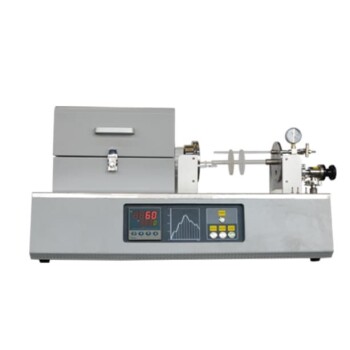
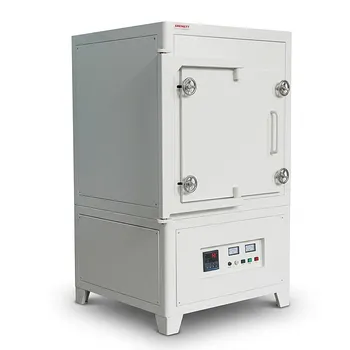
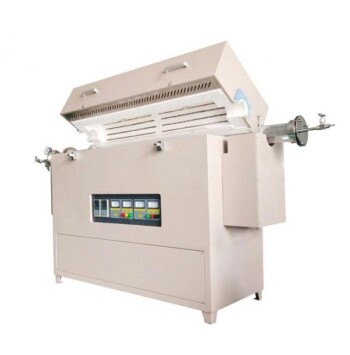
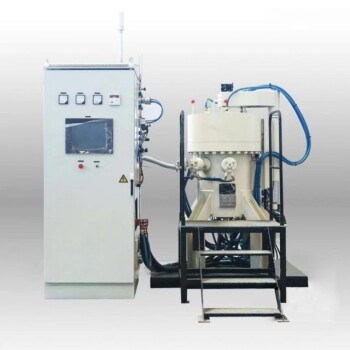
A laboratory high-temperature furnace recreates the extreme heat and controlled atmosphere of a steelmaking vessel in a crucible-sized experiment. Muffle furnaces provide uniform radiant heating up to 1100 °C and beyond, while tube furnaces add a gas-tight chamber for precise inert, reducing, or oxidizing flows. Induction furnaces deliver rapid melting and intense convective mixing, making them ideal for synthesizing homogeneous slag samples.
Deciphering Phase Evolution with Precise Thermal Cycles
Slag properties are determined by which crystalline phases form on cooling. With a programmable muffle furnace, a researcher can hold a sample at a specific temperature to observe the dehydroxylation of kaolinite into mullite or the formation of a liquid flux phase that fills pores. These tiny experiments explain why slag‑based ceramics develop high density and strength, information that is impossible to glean from an industrial slag pot.
Ensuring Feedstock Uniformity and Experimental Integrity
Before any meaningful analysis, raw materials must be perfectly consistent. A muffle furnace pre‑dries hygroscopic reagents like CaO and MgO at ~350 °C to remove moisture that would skew the CaO/SiO₂ ratio. For studies requiring a synthetic slag of known composition, a high-frequency induction furnace pre‑melts the oxide mix under argon and intensively stirs the melt at 1400 °C (1673 K), eliminating segregation errors that could easily misrepresent a phase diagram.
Probing Reaction Kinetics Under Defined Atmospheres
Many slag‑value recovery processes rely on gas‑solid reactions. A controlled‑atmosphere tube furnace, for example, can hold a slag‑soda ash mixture at 1100 °C in an air stream, allowing the solid‑phase transformation of insoluble vanadium spinels into water‑soluble pyrovanadate. By tightening gas composition and temperature uniformity, the furnace reveals the exact kinetic boundaries for metal extraction.
Understanding the Trade‑offs of Laboratory‑Scale Analysis
The Gap Between Crucible and Converter
Lab‑scale experiments typically involve static charges of 10–100 grams, whereas an industrial vessel holds 200 tonnes of violently mixed metal and slag. Mass transfer, temperature gradients, and the continuous addition of fluxes cannot be fully captured in a small furnace. As a result, phase equilibrium studies may not capture the kinetic shortcuts taken in a real‑world BOF.
Time vs. Equilibrium Challenges
Precise lab furnaces are exceptionally good at imposing thermodynamic equilibrium. Yet industrial slag formation is a highly dynamic, non‑equilibrium process where cooling rate and reaction time govern the final mineral structure. Over‑reliance on pristine, long‑hold experiments can yield a slag that has little in common with what actually drains from a taphole. Skilled researchers bridge this gap by designing cooling curves that mimic real thermal histories.
How to Select the Right Furnace for Your Slag Research Objectives
The correct furnace choice depends on the specific scientific question you need to answer.
- If your primary focus is fundamental phase equilibria: Use a muffle or tube furnace with long dwell times to map stable crystalline assemblages at known temperatures.
- If your primary focus is synthesizing a homogeneous reference slag: Choose a high‑frequency induction furnace with inert‑gas protection, which ensures rapid melting and intensive convective mixing.
- If your primary focus is gas‑slag reactions or oxidation state control: An atmosphere‑controlled tube furnace is essential; it allows you to dial in the exact oxygen or argon flow that replicates a process gas environment.
- If your primary focus is sintering slag into value‑added ceramics or aggregates: Program a muffle furnace to follow a detailed heating ramp and dwell sequence, enabling you to study liquid‑phase formation and pore filling without interference.
A laboratory high‑temperature furnace distills the chaos of an industrial smelter into a series of controlled, repeatable events, giving you the power to see exactly how, when, and why steel slag acquires its complex character.
Summary Table:
| Furnace Type | Primary Slag Research Application | Key Experimental Advantage |
|---|---|---|
| Muffle Furnace | Raw material drying, phase equilibria mapping, & ceramic sintering | Uniform radiant heating and precise programmable thermal cycling |
| Tube Furnace | Gas-slag reaction kinetics & oxidation state control | Gas-tight chamber for controlled inert, reducing, or oxidizing atmospheres |
| Induction Furnace | Synthesizing homogeneous synthetic reference slags | Rapid melting & intensive convective stirring at high temperatures (1400°C+) |
Ready to advance your slag research and metallurgical analysis? KINTEK specializes in laboratory equipment and consumables, offering a comprehensive range of high-temperature furnaces—including muffle, tube, rotary, vacuum, CVD, atmosphere, and induction melting models—all fully customizable to meet your unique experimental needs. Empower your research team with unmatched thermal precision and process control—contact KINTEK today to discuss your ideal furnace solution!
Related Products
- 1400℃ High Temperature Laboratory Tube Furnace with Alumina Tube
- 1700℃ High Temperature Laboratory Tube Furnace with Alumina Tube
- 1800℃ High Temperature Muffle Oven Furnace for Laboratory
- 1700℃ High Temperature Muffle Oven Furnace for Laboratory
- 1200℃ Muffle Oven Furnace for Laboratory
People Also Ask
- How does zone-melting in tube furnaces synthesize bismuth micro-wires? Master Single-Crystal Thermoelectric Growth
- How are high-temperature laboratory tube furnaces applied in long-term vacuum homogenization heat treatments for intermetallic samples?
- How do high-temperature laboratory tube furnaces ensure environmental stability? Precision Thermal Reduction Tips
- How are high-temp tube furnaces used to measure diffusion coefficients per Fick's law? Master Precision Annealing
- How are high-temperature tube furnaces applied in testing ceramic-supported alloy membranes? Insights