Adding MgO fundamentally alters alumina sintering by acting as a powerful microstructural stabilizer.
It introduces a dual mechanism of solute drag and second-phase pinning that severely restricts grain boundary mobility. This prevents the abnormal, runaway grain growth that would otherwise trap internal pores, enabling the ceramic to achieve near-theoretical density with a fine, uniform grain structure in a high-temperature furnace.
While the surface need is to control sintering, the core challenge is mastering the interplay between dopant chemistry and precise thermal processing. MgO doesn't just slow grain growth; it changes the rules of mass transport. The real objective is leveraging this dopant to escape the classic density-versus-grain-size trade-off, achieving full densification while retaining a submicron microstructure for superior mechanical and optical performance.
The Dual Mechanism of Microstructural Control
Adding MgO introduces two distinct but complementary mechanisms that work in tandem to homogenize the microstructure. Understanding their synergy is key to optimizing your firing cycle.
The Solute Drag Effect
The primary mechanism is a kinetic one. Mg²⁺ ions dissolve into the alumina lattice and preferentially segregate to the grain boundaries during heating.
This segregation is driven by a reduction in lattice strain energy due to ionic size mismatch and electrostatic interactions across space-charge layers. Once situated at the boundary, the Mg²⁺ ions exert a solute drag force that drastically reduces boundary mobility. The boundary moves only as fast as the slow-moving solute cloud allows.
Second-Phase Pinning in the Nanoscale
The second mechanism is physical, not chemical. During the polymorphic transition to alpha-alumina, the initially dissolved MgO precipitates out as a uniformly dispersed second phase: magnesium-aluminum spinel (MgAl₂O₄) .
These spinel nanocrystals, around 20 nm in size, sit directly on the grain boundaries. They act as physical barriers, Zener pinning the boundaries in place and suppressing boundary migration. This dual lock-and-block system effectively prevents any single grain from growing abnormally large.
Why This Matters for Full Densification
The ultimate goal of sintering is to remove pores, and MgO’s control over grain boundaries is the key to achieving this in a furnace.
Keeping Porosity on the Escape Route
Grain boundaries are the natural highways for pore elimination. For a pore to be removed, it must remain attached to a migrating grain boundary.
Without MgO, mobile boundaries rapidly sweep through the compact, detaching from slower-moving pores and trapping them inside grains. Once trapped, these intragranular pores can never be fully eliminated. Solute drag slows the boundaries down to a speed that matches or is below pore mobility, keeping the highways connected to the exits until the material is fully dense.
Homogenizing Surface Forces
Alumina is birefringent, meaning adjacent grains with different orientations have different surface energies. Trace impurities can also cause localized differences in surface energy.
MgO homogenizes these surface and grain boundary energies across the entire compact. This prevents localized differential densification and ensures all grains and pores behave predictably, which is essential for achieving a uniformly dense, fine-grained ceramic body.
Common Pitfalls to Avoid in the Furnace
The MgO-alumina system is highly sensitive to thermal processing. The most common failures arise not from the powder chemistry, but from the firing profile.
Ignoring the Dwell Time Trade-off
Data shows a very clear performance cliff. Sintering MgO-doped alumina at 1450°C for a short 6-minute dwell achieves 96.9% density, a peak microhardness of 21 GPa, and a minimal wear rate.
However, extending that dwell to just 30 minutes at the same temperature causes detrimental grain coarsening from 200-300 nm to 300-500 nm. This coarsening reduces hardness to 20 GPa and increases surface roughness from 29 nm to 43 nm. The lesson is that time at temperature is a destructive variable once densification is complete.
Forgetting Temperature Uniformity
Solute segregation and lattice diffusion rates are exponential functions of temperature. A non-uniform thermal profile in your furnace will lead to a non-uniform ceramic.
Hot spots will cause localized, premature grain growth, creating a heterogeneous, weak microstructure. Precise, uniform heating is not a convenience; it is a core material processing requirement to ensure consistent solute drag across the entire component.
Chasing Absolute Temperature Over Complete Densification
While dopants enable near-theoretical density, the driving force for grain growth increases sharply at higher temperatures. The pitfall is using a temperature slightly too high, which initiates rapid boundary migration before all pores are removed.
The MgO helps, but it cannot overcome a fundamentally over-aggressive thermal profile. The goal is the lowest possible temperature that achieves full densification, not a fixed, high number.
Making the Right Choice for Your Goal
Your specific application target should dictate how you use the MgO-Al₂O₃ system. The processing window shifts depending on whether you prioritize mechanical, optical, or wear performance.
- If your primary focus is maximizing mechanical strength and hardness: Prioritize the shortest possible high-temperature dwell time that achieves >95% density. This minimizes grain coarsening and locks in peak microhardness, capitalizing on the solute drag effect.
- If your primary focus is achieving optical translucency: Eliminate residual porosity at all costs while maintaining an equiaxed grain structure. MgO’s homogenization of surface energies is critical here to prevent the birefringent scattering that would otherwise make the dense ceramic opaque.
- If your primary focus is wear resistance and fracture toughness: Control the dwell time to achieve a fine-grained, spinel-pinned microstructure in the 200-300 nm range. This leverages the second-phase pinning mechanism to resist crack propagation and minimize material removal rates.
By shifting your perspective from simply "adding a dopant" to "engineering a kinetic pathway," you transform your high-temperature furnace from a heating tool into a precise instrument for microstructural design.
Summary Table:
| Mechanism / Processing Factor | Core Function / Phenomenon | Impact on Microstructure & Properties |
|---|---|---|
| Solute Drag Effect | Mg²⁺ segregation to grain boundaries | Reduces boundary mobility to match pore escape rates, preventing pore entrapment. |
| Second-Phase Pinning | Precipitation of ~20 nm MgAl₂O₄ spinel | Acts as Zener pinning barriers to eliminate abnormal grain growth. |
| Short Dwell Time (1450°C, 6 min) | Rapid densification window | Achieves 96.9% density, peak 21 GPa microhardness, and fine grain size (200–300 nm). |
| Extended Dwell Time (30 min) | Over-firing & thermal oversaturation | Causes grain coarsening (300–500 nm), lowering microhardness to 20 GPa. |
| Thermal Uniformity | Uniform heating profile in furnace | Prevents localized premature grain growth and ensures homogenous ceramic density. |
Achieve Superior Microstructural Precision with KINTEK Furnaces
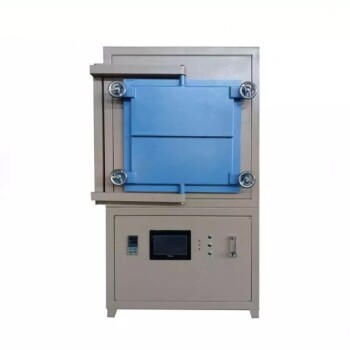
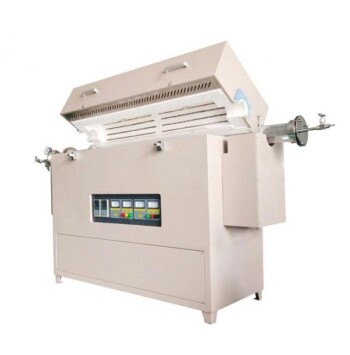
Optimizing dopant chemistry like MgO requires ultra-precise thermal processing and uncompromised temperature uniformity. KINTEK specializes in advanced laboratory equipment and high-temperature furnaces—including muffle, tube, rotary, vacuum, CVD, atmosphere, and fully customizable furnaces tailored to your exact ceramic sintering requirements.
Ready to eliminate abnormal grain growth and maximize material performance? Contact our high-temperature equipment experts today to discover the ideal furnace solution for your research and production goals.
Related Products
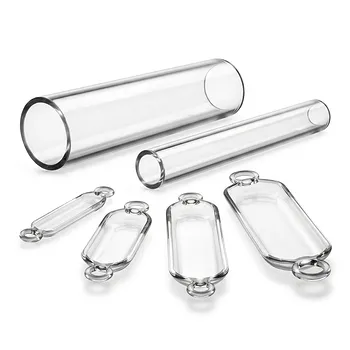
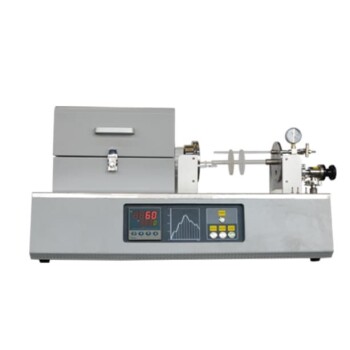
- 1400℃ High Temperature Laboratory Tube Furnace with Alumina Tube
- 1700℃ High Temperature Laboratory Tube Furnace with Alumina Tube
- 1800℃ High Temperature Muffle Oven Furnace for Laboratory
- 1700℃ High Temperature Muffle Oven Furnace for Laboratory
- 1200℃ Muffle Oven Furnace for Laboratory
People Also Ask
- How does zone-melting in tube furnaces synthesize bismuth micro-wires? Master Single-Crystal Thermoelectric Growth
- How are high-temp tube furnaces used to measure diffusion coefficients per Fick's law? Master Precision Annealing
- How do high-temperature laboratory tube furnaces ensure environmental stability? Precision Thermal Reduction Tips
- How are high-temperature laboratory tube furnaces applied in long-term vacuum homogenization heat treatments for intermetallic samples?
- How are high-temperature tube furnaces applied in testing ceramic-supported alloy membranes? Insights