Achieving near-pore-free ceramic components at industrially practical temperatures is one of the hardest challenges in materials processing. Liquid-phase sintering overcomes this by adding a small amount of a fluxing additive that melts inside a high-temperature atmosphere furnace. This molten phase creates powerful capillary forces that pull particles together, then acts as a high-speed diffusion highway—enabling rapid densification at temperatures far lower than pure solid-state sintering requires.
The central insight: a carefully controlled liquid phase transforms the sintering furnace from a slow solid-state diffusion reactor into an efficient, capillary-driven densification cell. Success hinges on maintaining perfect wetting, precise temperature uniformity, and a protective atmosphere so the liquid does its job without degrading the final ceramic’s properties.
Why Ceramics Are Hard to Densify
Pure solid-state sintering relies on atomic diffusion along grain boundaries. That process is slow and demands extremely high furnace temperatures—especially for covalent ceramics like silicon nitride or silicon carbide, where strong chemical bonds resist atomic movement. Hours at peak temperature still often leave behind unwanted porosity.
Introducing a small fraction of a liquid-forming additive (often <10 vol.%) creates a eutectic melt during the heat-up ramp. This changes the densification game completely. The liquid wets the solid grains and fundamentally alters how mass moves, how pores close, and how fast the part reaches full density.
The Three-Stage Mechanism of Liquid-Phase Sintering
Liquid-phase sintering unfolds in three overlapping stages. Each stage depends on the liquid’s properties, and all three are influenced by the furnace’s ability to deliver uniform, atmosphere-controlled heat.
Stage 1: Particle Rearrangement by Capillary Pressure
As soon as the additive melts, the liquid spreads across particle surfaces and accumulates in the tiny gaps between them. Capillary forces create a negative pressure differential across the curved liquid meniscus, given by $\Delta P = 2\gamma / r_1$ (where $\gamma$ is surface tension and $r_1$ is the pore radius). For submicron pores, this generates a compressive pressure of several megapascals.
That pressure literally pulls the solid particles closer together, collapsing pores and driving rapid volumetric shrinkage. In this stage, the ceramic body can lose a large fraction of its initial porosity just because the liquid physically rearranges the particle packing. The furnace must provide absolute temperature uniformity at this moment—any cold spot means higher liquid viscosity, slower capillary flow, and trapped porosity.
Stage 2: Solution-Precipitation and Accelerated Mass Transport
Capillary rearrangement alone cannot eliminate all voids. That’s where the liquid’s role as a diffusion amplifier takes over. The liquid wets the contact points between grains, dissolving sharp asperities where compressive stress is highest. Dissolved material then diffuses rapidly through the liquid film and reprecipitates in the pore spaces where chemical potential is lower.
The key number: the diffusion coefficient through a grain-boundary liquid film ($D_L$) can be orders of magnitude greater than solid-state grain-boundary diffusion ($D_{gb}$). This vastly accelerated solution-precipitation mechanism makes it possible to remove the last percentages of porosity and achieve near-theoretical density. The furnace atmosphere is critical here—it must prevent oxidation or volatilization of the liquid so the film’s composition and wetting behavior stay stable.
Stage 3: Coarsening and Final Microstructural Control
Eventually, the solid grains form a rigid skeleton and the liquid pockets become isolated. Densification slows, and the dominant process shifts to grain coarsening. Without careful control, this can lead to abnormal grain growth that degrades mechanical properties. An atmosphere furnace with tight temperature and atmosphere control helps suppress runaway coarsening by maintaining the correct dihedral angle and liquid film thickness right to the end of the cycle.
The Critical Role of the High-Temperature Atmosphere Furnace
Liquid-phase sintering is not a one-size-fits-all thermal cycle. The furnace itself becomes an active process variable, not just a heating box.
Precision Thermal Control Governs Liquid Viscosity and Flow
The kinetic rate parameter for viscous flow follows an Arrhenius-type relationship: $a = a_0 \exp(-Q/T)$. A small temperature drop leads to a sharp increase in liquid viscosity, which chokes capillary migration and creates non-uniform shrinkage. That causes warping, trapped pores, and pyroplastic deformation. Furnaces with excellent thermal uniformity and precise soak-level holding eliminate these defects by ensuring every cubic millimeter of the part sees the same viscosity and the same driving force for densification.
Atmosphere Management Preserves Wetting and Chemical Integrity
Good wetting is non-negotiable. It depends on the balance of solid-vapor, liquid-vapor, and solid-liquid interfacial energies. If the furnace atmosphere allows the liquid to oxidize, volatilize, or react with residual gases, the contact angle climbs, wetting fails, and capillary forces vanish. High-temperature atmosphere furnaces let operators dial in inert gas purity, vacuum levels, or reducing atmospheres to lock in the correct surface tensions. This keeps the liquid film continuous along grain boundaries and ensures solution-precipitation can do its work.
Enabling Lower Peak Temperatures and Shorter Cycles
Because liquid-phase mass transport is so vastly more efficient than solid-state diffusion, researchers can run furnaces at significantly lower soak temperatures and hold for shorter times to reach full density. That saves energy, reduces furnace wear, and opens the door to sintering covalent ceramics that would otherwise require prohibitively high temperatures.
Understanding the Trade-offs and Process Limitations
The same liquid that enables rapid densification can become a weak spot if not managed correctly.
- Residual Grain-Boundary Phase: After cooling, the liquid often solidifies into a glassy or crystalline intergranular film. While it helped sintering, this phase can reduce high-temperature strength and creep resistance because it softens again in service.
- Dihedral Angle Sensitivity: If the dihedral angle is too high, the liquid retracts into isolated pockets and stops matter transport prematurely. If it’s too low, the film penetrates too deeply and can embrittle the ceramic.
- Additive Volatilization: In vacuum or overly aggressive atmospheres, the liquid-forming additive may evaporate, leaving behind new porosity and a changed surface chemistry.
- Process Control Demands: The narrow process window means you absolutely need a furnace with excellent thermal uniformity and reliable atmosphere control. Inexpensive or poorly sealed furnaces often yield inconsistent results.
These trade-offs mean that selecting the right additive chemistry and the right furnace atmosphere are inseparable decisions.
Making the Right Choice for Your Sintering Goal
Your decision to use liquid-phase sintering—and how you configure your furnace—should match your primary design target.
- If your primary focus is reaching near-full density in hard-to-sinter covalent ceramics like Si₃N₄ or SiC: Use a small volume of a well-wetting additive, and run your atmosphere furnace with precise temperature uniformity and a protective inert gas flow. The liquid will unlock rapid densification at temperatures where solid-state sintering fails.
- If your primary focus is lowering sintering temperature and shortening cycle time: Capitalize on the exponential viscosity reduction with temperature. Set your profile just above the liquid-forming threshold in a furnace with fast, even heating, and leverage the Arrhenius boost in kinetic rates to save energy.
- If your primary focus is maintaining high-temperature mechanical performance: You must balance the sintering aid’s benefits with post-sinter heat treatments or select additive systems that crystallize the grain-boundary phase. The furnace atmosphere must be tuned to avoid residual glass formation that would limit creep resistance.
By viewing the furnace not as a fixed heating source but as an active part of the capillary and diffusion system, you can achieve dense, reliable ceramic components far beyond what solid-state routes allow.
Summary Table:
| Sintering Stage | Core Mechanism | Critical Furnace Function |
|---|---|---|
| 1. Rearrangement | Capillary pressure drives particle packing & shrinkage | Precise thermal uniformity eliminates cold spots |
| 2. Solution-Precipitation | Rapid mass diffusion through molten grain-boundary liquid | Controlled atmosphere prevents liquid oxidation/volatilization |
| 3. Microstructural Control | Final pore elimination & grain growth suppression | Stable temperature hold preserves liquid film integrity |
Master complex ceramic densification with high-precision thermal processing solutions from KINTEK. As a trusted specialist in laboratory equipment and consumables, KINTEK offers a comprehensive range of high-temperature furnaces—including customizable atmosphere, vacuum, muffle, tube, rotary, CVD, dental, and induction melting furnaces designed for your unique materials processing needs.
Whether you require tight atmosphere management to preserve liquid-phase wetting or superior thermal uniformity to reduce cycle times and peak temperatures, our team delivers tailored heating systems built for reliability. Contact KINTEK today to discuss your furnace requirements and unlock superior ceramic component performance!
Related Products
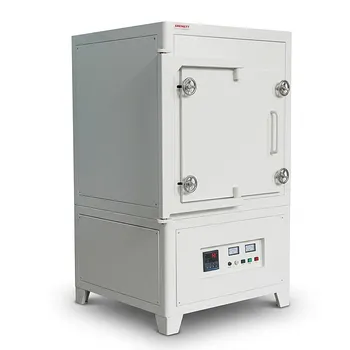
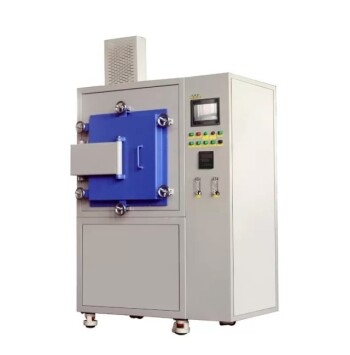
- 1700℃ Controlled Inert Nitrogen Atmosphere Furnace
- 1400℃ Controlled Inert Nitrogen Atmosphere Furnace
- 1200℃ Muffle Oven Furnace for Laboratory
- 1400℃ High Temperature Laboratory Tube Furnace with Alumina Tube
- Laboratory Muffle Oven Furnace with Bottom Lifting
People Also Ask
- How do controlled-atmosphere furnaces support polymer pyrolysis? Master SiC & Si3N4 Ceramic Conversion
- Why is thorough binder burnout necessary before sintering advanced ceramics? Ensure Peak Density & Zero Defects
- How does oxygen partial pressure control affect ceramic sintering? Master Defect Chemistry
- How does real-time dilatometric analysis in a controlled-atmosphere furnace optimize PZT ceramic sintering?
- Why is controlled-atmosphere heating required for functional ceramics and sensors? Master Defect Engineering