Gas pressure control is the cornerstone of sintering silicon nitride to full density. At the extreme temperatures required for densification (1700–1900 °C), Si₃N₄ spontaneously breaks down into silicon and nitrogen gas. By elevating the nitrogen partial pressure inside a high‑temperature atmosphere furnace—typically to 10–20 atm or more—you shift the decomposition equilibrium back toward the solid ceramic, suppressing weight loss and enabling pore‑free, near‑theoretical density.
The decomposition of Si₃N₄ is a reversible chemical reaction governed by Le Chatelier’s principle. Applying high‑pressure N₂ gas directly counters this equilibrium, while the gas’s high solubility in the ceramic prevents trapped porosity—a rare combination that makes overpressure sintering the definitive route to dense silicon nitride.
The Thermodynamic Imperative: Stopping Si₃N₄ from Turning to Vapor
The Decomposition Reaction and Its Consequences
Silicon nitride does not simply sinter; it first tries to un‑make itself. At 1700 °C and above, the solid material begins to dissociate according to:
Si₃N₄ ⇌ 3 Si (l/v) + 2 N₂ (g)
This releases nitrogen gas and leaves behind liquid or vaporized silicon. The result is weight loss and a skeleton of interconnected pores that cannot be closed by sintering, permanently capping the achievable density.
Equilibrium Pressures at Sintering Temperatures
Around 1700 °C, the equilibrium nitrogen pressure over pure Si₃N₄ is only about 0.1–1 atm. That means a standard 1 atm nitrogen atmosphere offers almost no thermodynamic protection. The decomposition drives forward relentlessly. To truly suppress the reaction, the furnace must impose a nitrogen partial pressure well above this equilibrium value—hence the need for 10–20 atm or higher of overpressure.
How High‑Pressure Nitrogen Acts as a Chemical Shield
Le Chatelier’s Principle in Action
Le Chatelier’s principle states that a system at equilibrium, when subjected to a change, will shift to counteract that change. Flooding the furnace with high‑pressure N₂ dramatically increases the concentration of the gaseous product (nitrogen). The chemical equilibrium shifts back toward solid Si₃N₄, effectively canceling the decomposition driving force and keeping weight loss below critical levels.
From Theory to Furnace Practice
Inside a gas‑pressure sintering furnace, the chamber is first evacuated and back‑filled with ultra‑high‑purity nitrogen. As the temperature climbs toward the sintering plateau, the pressure is actively ramped to the target overpressure and held stable. This sustained, pressurized environment throughout the entire high‑temperature soak ensures that the entire compact remains chemically stable, not just a thin surface layer.
The Hidden Enabler: Nitrogen Solubility and Pore‑Free Densification
Avoiding the Gas‑Trapping Trap
A common fear with high‑pressure gas sintering is that the pressurizing gas itself will become trapped inside closing pores, preventing them from disappearing. Nitrogen, however, exhibits a relatively high solubility in Si₃N₄. Instead of remaining as a persistent gas pocket, the N₂ dissolves into the ceramic matrix. This allows pores to shrink and vanish without an internal gas pressure fighting back, so full theoretical densification becomes achievable.
Why This Makes Overpressure Sintering Uniquely Effective
Many materials would swell or retain spherical gas pores under similar overpressure. For silicon nitride, the combination of chemical equilibrium suppression and high gas solubility means you can apply the pressure needed to stop decomposition without trading it for new defects. It is this dual advantage that makes high‑pressure nitrogen atmosphere furnaces non‑negotiable for engineering‑grade Si₃N₄.
Process Leverage Points: Crucibles, Timing, and Surface Protection
Protective Graphite Crucibles and Sacrificial Powders
Even with bulk overpressure, a compact’s immediate surface can still see minor decomposition if exposed to convective flows. The standard practice is to place the components inside sealed graphite crucibles surrounded by sacrificial packing powder (often a mixture of Si₃N₄ and BN). This powder establishes a localized equilibrium vapor layer, buffering the parts from any transient pressure fluctuations or impurities and ensuring a pristine surface.
Timing the Overpressure Application
Densification strategy can dictate when the full overpressure is applied. If the peak pressure is introduced after the body reaches closed porosity (around 92–95% density), the decomposition becomes restricted almost entirely to a thin surface skin. Why? Because nitrogen diffusion through the now‑dense ceramic is extraordinarily slow, making it the rate‑limiting step. This approach protects the bulk part with minimal chemical consumption, leaving only a shallow decomposed layer that can be removed by light machining.
Driving Liquid Phase into Pores
Sintering aids (like Y₂O₃ and Al₂O₃) form a transient liquid phase that wets the Si₃N₄ grains. The applied gas pressure does not just influence gas‑solid equilibrium; it also mechanically presses the liquid into micro‑pores. This dynamic helps eliminate residual porosity, accelerating the final densification and improving microstructural uniformity.
Understanding the Trade‑offs and Avoiding Pitfalls
Equipment Complexity and Cost
High‑temperature furnaces capable of sustaining 20 atm at 1900 °C represent a significant capital investment. They require pressure‑vessel certifications, sophisticated gas handling, and rigorous safety interlocks. This cost is the primary barrier for small‑scale R&D or low‑budget production runs.
Gas Purity and Side Reactions
Trace oxygen in the nitrogen supply can react with graphite furnace elements to produce CO, or with the Si₃N₄/additive system to generate volatile SiO and CO. These side reactions deplete the essential oxynitride liquid phase and create new gas porosity. Only ultra‑high‑purity nitrogen (typically ≥99.999%) and leak‑tight gas delivery systems prevent this.
Not a Silver Bullet for All Compositions
While overpressure reliably protects Si₃N₄, composite systems like Si₃N₄/SiC introduce additional decomposition pathways—surface SiO₂ can react with SiC to produce SiO and CO even under nitrogen pressure. In such cases, the overpressure still helps, but the temperature‑pressure profile must be carefully tuned to counter these secondary reactions as well.
Surface vs. Bulk Decomposition
Even with perfect bulk overpressure, a minuscule surface decomposition layer is practically inevitable at the highest temperatures. If dimensional precision is critical, parts are often sintered slightly oversized and then ground or polished to remove the affected skin, accepting a small material loss in exchange for flawless internal density.
Making the Right Choice for Your Densification Goal
The path to fully dense Si₃N₄ always runs through a high‑pressure nitrogen atmosphere, but the process details should align with your specific priorities.
- If your primary focus is maximizing final density and mechanical strength: Apply a nitrogen overpressure of at least 10 atm during the entire high‑temperature soak, use a sealed graphite crucible with sacrificial packing powder, and ensure ultra‑high‑purity N₂ to avoid liquid‑phase degradation.
- If your primary focus is minimizing surface decomposition for net‑shape parts: Apply the peak overpressure only after the body reaches closed porosity to confine decomposition to a thin, easily removable surface skin.
- If your primary focus is process economy and equipment simplicity: Recognize that achieving full density without overpressure is essentially impossible above 1700 °C; the investment in a high‑pressure furnace is the essential cost of entry for producing engineering‑grade silicon nitride.
By mastering the interplay between nitrogen pressure, thermodynamic equilibrium, and gas solubility, you transform a thermally unstable powder into a fully dense, high‑performance ceramic that underpins the most demanding structural applications.
Summary Table:
| Process Aspect | Standard 1 atm N₂ Atmosphere | Overpressure (10–20+ atm) N₂ Atmosphere |
|---|---|---|
| Thermodynamic Reaction | Rapid dissociation into liquid Si & N₂ gas | Equilibrium shifts back to solid Si₃N₄ (Le Chatelier's Principle) |
| Material Weight Loss | Severe weight loss & interconnected porosity | Minimal weight loss; surface-confined layer |
| Pore Densification | Capped density due to structural defects | Near 100% theoretical density achieved |
| Gas Solubility Effect | Escaping gas leaves permanent pores | Excess N₂ dissolves into matrix without trapping gas pockets |
Maximize Material Density with KINTEK High-Temperature Furnaces
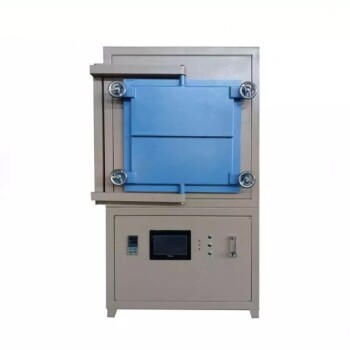
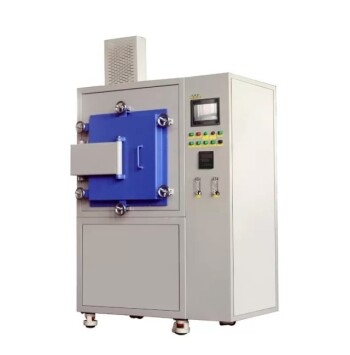
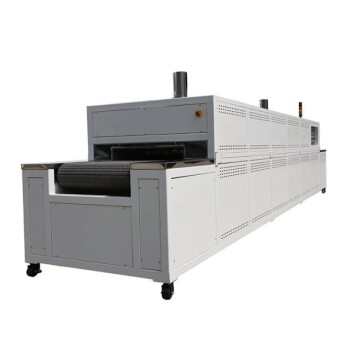
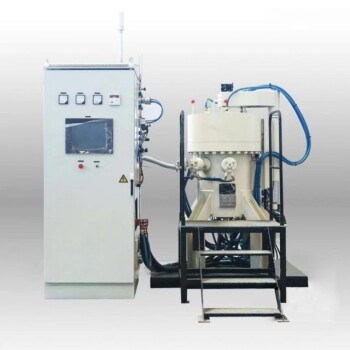
Overcoming thermal decomposition and achieving peak theoretical density in silicon nitride demands ultra-precise gas pressure and thermal control. KINTEK specializes in advanced laboratory equipment and consumables, offering a complete lineup of high-temperature atmosphere furnaces, vacuum systems, muffle, tube, and CVD furnaces—all fully customizable to support your specific overpressure sintering protocols.
Whether you need exact nitrogen partial pressure regulation or specialized crucible containment solutions, our engineering team is ready to deliver dependable, high-performance furnace systems tailored to your R&D or industrial requirements.
Contact KINTEK today to optimize your ceramic sintering process!
Related Products
- 1700℃ Controlled Inert Nitrogen Atmosphere Furnace
- 1400℃ Controlled Inert Nitrogen Atmosphere Furnace
- 1200℃ Muffle Oven Furnace for Laboratory
- 1400℃ High Temperature Laboratory Tube Furnace with Alumina Tube
- Laboratory Muffle Oven Furnace with Bottom Lifting
People Also Ask
- How does oxygen partial pressure control affect ceramic sintering? Master Defect Chemistry
- How does real-time dilatometric analysis in a controlled-atmosphere furnace optimize PZT ceramic sintering?
- Why is thorough binder burnout necessary before sintering advanced ceramics? Ensure Peak Density & Zero Defects
- How do controlled-atmosphere furnaces support polymer pyrolysis? Master SiC & Si3N4 Ceramic Conversion
- Why is controlled-atmosphere heating required for functional ceramics and sensors? Master Defect Engineering