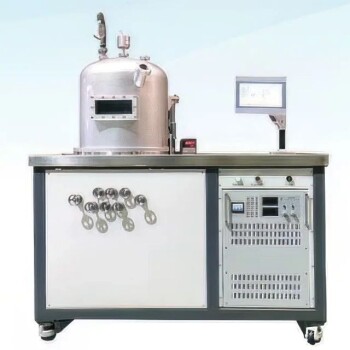
The direct answer is that MPACVD systems create the exact conditions needed for diamond to grow from a gas, rather than from molten carbon. They do this by using a precisely configured microwave circuit—generator, waveguide, tuner, and resonant cavity—to strike a plasma in a hydrogen‑methane mixture at sub‑atmospheric pressure. That plasma floods the chamber with atomic hydrogen and reactive carbon radicals, which then deposit as a high‑quality diamond film on a carefully temperature‑controlled substrate, all without the extreme pressures of traditional synthesis.
MPACVD doesn’t just “add energy”—its entire configuration is engineered to deliver uniform, high‑density microwave power into a resonant cavity, creating a stable plasma with an ionization fraction above 10%. This generates the precise chemistry and thermal environment that convert methane molecules into single‑crystal or polycrystalline diamond, while the system’s control over power density, gas flow, and substrate temperature directly determines film quality, growth rate, and electrical properties.
How the System Architecture Enables Diamond Growth
The Plasma‑Creation Chain: From Power to Resonant Cavity
A dedicated microwave generator (magnetron head) operating at 2.45 GHz feeds energy through a waveguide into a resonant cavity containing the substrate. The waveguide is not a passive pipe—it is impedance‑matched using a stub tuner that fine‑tunes the electromagnetic field to maximize power transfer and plasma stability.
Inside the cavity, the oscillating electric field violently accelerates free electrons, driving collisions that ionize the hydrogen‑methane mixture. This creates a high‑density plasma where the ionization of the feed gas can exceed 10%, filling the cavity with supersaturated atomic hydrogen and carbon‑containing radicals. The result is a chemically aggressive environment perfectly suited for diamond nucleation and growth, all while the bulk gas remains near room temperature.
Why the Cavity Design Controls Film Quality
The resonant cavity is the heart of the reaction. Its geometry and the positioning of the substrate stage determine the shape, size, and stability of the plasma ball. A stage height adjuster lets operators place the substrate in the plasma’s sweet spot—where ion density and gas temperature are optimal—ensuring uniform film thickness and minimising defects.
Microwave power density is the master control knob. At different power densities, the plasma’s temperature, ion flux, and radical composition shift dramatically. High‑quality single‑crystal diamond requires a narrow window of power density; too little yields graphite or amorphous carbon, too much etches the growing film or damages the substrate. Therefore, the system is designed to deliver precisely adjustable, stable power through the tuner and cavity, often with real‑time feedback from optical emission spectroscopy.
Gas Delivery and Thermal Management: What Happens Around the Plasma
MPACVD relies on a feed of >95% hydrogen and a few percent methane. The hydrogen serves two purposes: it generates atomic hydrogen that etches away any non‑diamond carbon, and it terminates the diamond surface to stabilise the sp³ bonds. The gas flow system—including mass flow controllers—ensures a constant, precise ratio, while the vacuum pumps maintain the sub‑atmospheric pressure that keeps the plasma diffuse and controllable.
Substrate temperature must be held at 800–1000 °C for diamond to grow correctly. This is not left to chance. A controlled‑temperature water circulator (chiller) flows through the substrate stage, actively removing excess plasma heat, while an optical pyrometer continuously monitors the surface temperature. Together, these systems keep the growth zone in the narrow thermal window where diamond’s surface mobility enables crystallisation without graphitisation.
How Doping Capability Is Built In
The same tight control that yields intrinsic diamond also enables precise doping. By adding dopant gases—such as diborane for p‑type conductivity—into the gas mixture, the MPACVD system can epitaxially grow thin films with controlled carrier concentrations. The microwave plasma’s ability to dissociate dopant molecules efficiently, combined with stable temperature and power, lets engineers fabricate p+ layers for advanced electronic devices like diamond MOSFET channels directly on HPHT substrates.
Understanding the Trade‑offs and System Limitations
Despite its advantages, MPACVD is not a plug‑and‑play solution. The system’s performance is sensitive to a number of practical challenges:
- Power Loss and Heating Inefficiency: Real‑world waveguides, tuners, and cavity walls absorb some microwave energy, reducing the power available for plasma. Improving component design to minimize losses is critical for energy economics and growth rate consistency.
- Uniformity Over Large Areas: The plasma ball produced by a single resonant cavity has a natural diameter limit. Scaling to larger substrates requires multiple plasma sources or clever cavity designs, both of which complicate impedance matching and temperature uniformity.
- Optical Pyrometry Noise: The intense plasma emission can interfere with accurate temperature reading, leading to subtle thermal drifts that affect film morphology and stress.
- Contamination Sensitivity: Even trace amounts of nitrogen or silicon in the gas lines can colour the diamond or introduce unwanted defects, so ultra‑clean plumbing and gas purifiers are mandatory.
These trade‑offs demand that the system be treated as a precision instrument, not a simple reactor. Success comes from understanding that every knob—power, pressure, gas ratio, stage height—is interconnected.
Making the Right Choice for Your Goal
Your application dictates how you should prioritize these configuration details. Use the following lenses to select and operate your MPACVD system:
- If your primary focus is optical‑grade polycrystalline diamond windows: Emphasize large‑area uniformity and low dielectric loss. Invest in cavity designs that produce a wide, flat plasma profile and in nucleation layers that promote smooth, pinhole‑free films.
- If your primary focus is high‑quality single‑crystal diamond for electronics: Prioritize microwave power density control and substrate temperature stability. A precisely matched tuner, ultra‑stable DC magnetron head, and double‑wavelength pyrometry will help you maintain the narrow growth window needed for pristine crystal and controlled doping.
- If your primary focus is fast growth rate for heat spreaders: Look to high‑power systems with efficient power delivery and active substrate cooling. Operating at higher pressure and power density can accelerate growth, but you must balance that against increased stress and polycrystalline texture.
- If your primary focus is epitaxial semiconductor layers (p‑type/p+): Focus on gas delivery purity and doping line integration. A dedicated dopant gas line with rapid‑switching capability, plus a chiller that can hold the stage temperature within ±2 °C, will give you repeatable carrier concentrations and sharp interfaces.
The MPACVD configuration is not a black box—it is a deliberately engineered platform that translates raw microwave energy into the precise chemical and physical conditions diamond demands. By mastering each subsystem, you transform a vacuum chamber into a reliable factory for some of the most extraordinary materials on Earth.
Summary Table:
| Subsystem / Component | Key Function | Impact on Diamond Growth |
|---|---|---|
| 2.45 GHz Generator & Tuner | Delivers and matches microwave energy | Maximizes power transfer and plasma stability |
| Resonant Cavity & Stage | Shapes high-density plasma ball | Controls film thickness, uniformity, and defect density |
| Gas Delivery (H₂/CH₄) | Generates atomic H and reactive carbon radicals | Etches non-diamond carbon and stabilizes sp³ bonds |
| Thermal & Pyrometry System | Holds substrate at 800–1000 °C | Prevents graphitization and optimizes crystallization |
| Doping System | Introduces precursor dopant gases (e.g., B₂H₆) | Enables precise p-type semiconductor layer fabrication |
Ready to optimize your diamond deposition or thin-film synthesis? At KINTEK, we specialize in high-performance laboratory equipment and consumables, offering a comprehensive line of customizable high-temperature systems—including CVD, atmosphere, vacuum, tube, and muffle furnaces—engineered to meet your precise research and production needs. Enhance your laboratory's material growth capabilities, precise thermal control, and operational efficiency. Contact KINTEK today to discuss your customized furnace solutions!
Related Products
- 915MHz MPCVD Diamond Machine Microwave Plasma Chemical Vapor Deposition System Reactor
- MPCVD Machine System Reactor Bell-jar Resonator for Lab and Diamond Growth
- Cylindrical Resonator MPCVD Machine System for Lab Diamond Growth
- RF PECVD System Radio Frequency Plasma Enhanced Chemical Vapor Deposition
- Slide PECVD Tube Furnace with Liquid Gasifier PECVD Machine
People Also Ask
- What is the MPCVD method and why is it considered effective for diamond deposition? Superior Purity & High Growth Rates
- What factors influence the quality of diamond deposition in the MPCVD method? Master the Critical Parameters for High-Quality Diamond Growth
- What are some key features and benefits of the microwave plasma chemical vapor deposition system? Achieve Unmatched Material Synthesis
- What is the purpose of a microwave plasma chemical vapor deposition system? Grow High-Purity Diamonds and Advanced Materials
- What is the basic principle of operation for the microwave plasma chemical vapor deposition system? Unlock High-Purity Material Growth