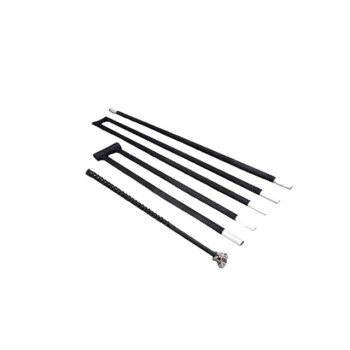
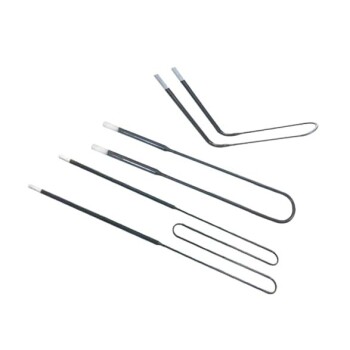
High-resistivity electric heating elements are the foundational power source of a muffle furnace, serving as the primary transducers that convert electrical energy into thermal energy. These elements leverage high-impedance characteristics to generate and maintain the intense temperatures required for material processing while ensuring a stable, uniform thermal radiation environment within the furnace chamber.
Core Takeaway: High-resistivity elements are critical for transforming electrical loads into stable, high-intensity thermal radiation, directly determining the furnace's maximum temperature ceiling and its ability to maintain a uniform environment for sensitive thermal processes.
The Mechanism of Thermal Conversion
Efficient Energy Transformation
High-resistivity elements function through Joule heating, where the resistance of the material converts the flow of electricity into heat. Because these materials possess high impedance, they can generate significant thermal energy even under heavy current loads without failing.
Creation of Thermal Radiation
Once energized, these elements emit uniform thermal radiation throughout the furnace chamber. This creates a continuous heating environment that is essential for maintaining the physical basis of stable processing temperatures during ashing or sintering.
Sustained High-Temperature Stability
The ability of these elements to resist the flow of electricity allows them to reach a state of thermal equilibrium quickly. This stability is what prevents fluctuations in the internal atmosphere, ensuring that the "muffle" or chamber remains at the precise set point required for consistent results.
Material Composition and Temperature Thresholds
Metallic and Nichrome Elements
Metallic wire heating elements, often composed of nichrome, are the most common choice for standard laboratory applications. These are typically rated for temperatures between 1000°C and 1200°C, making them ideal for routine drying and basic heat treatments.
Silicon Carbide (SiC) Elements
For applications requiring more intensity, Silicon Carbide elements are utilized. These robust materials allow muffle furnaces to reach temperatures up to 1600°C, facilitating more demanding industrial processes.
Molybdenum Disilicide (MoSi2) Elements
The most advanced furnaces employ Molybdenum Disilicide, which can achieve working temperatures up to 1800°C (3,272°F). These high-resistivity materials are necessary for sophisticated metallurgical tasks such as debinding and sintering in metal injection molding.
System Integration and Control Dynamics
Structural Support and Placement
Heating elements are integrated into the furnace using refractory, alloy, or ceramic supports. They may be mounted on sidewalls, suspended from the roof, or laid on the floor to ensure the most efficient heat distribution for the specific furnace geometry.
Multivariable Temperature Control
Modern muffle furnaces often integrate two independent heating elements (upper and lower). This configuration transforms the furnace into a multivariable control object, allowing operators to adjust the temperature field distribution with high precision.
Automated Signal Transmission
The use of dual elements reveals complex signal transmission channels within the furnace system. This complexity is essential for developing high-efficiency automatic control systems that can maintain precise temperature states across various material loads.
Understanding the Trade-offs
Material Degradation and Longevity
While high-resistivity materials are durable, they are subject to oxidation and thermal fatigue over time. Higher operating temperatures, particularly near the element's maximum rating (e.g., 1800°C for MoSi2), will accelerate wear and eventually necessitate replacement.
Power Density vs. Control Complexity
Higher power density allows for faster ramp rates but increases the difficulty of temperature overshoot management. Systems with multiple independent elements provide better control but require more sophisticated and expensive PID controllers to manage cross-connections between heat sources.
Structural Sensitivity
Many high-temperature elements, such as those made of ceramic or Silicon Carbide, become brittle after use. This makes them sensitive to mechanical shock or vibration, requiring careful handling during furnace maintenance or when loading heavy samples.
Making the Right Choice for Your Goal
Implementation Strategies
- If your primary focus is routine laboratory ashing: Opt for standard metallic or nichrome elements, as they are cost-effective and sufficient for temperatures up to 1200°C.
- If your primary focus is advanced metallurgy or sintering: Prioritize Molybdenum Disilicide (MoSi2) elements to ensure you can reach and sustain the 1800°C threshold required for metal injection molding.
- If your primary focus is extreme thermal uniformity: Utilize a furnace with independent upper and lower heating elements to allow for multivariable control and finer adjustment of the internal temperature field.
The selection and configuration of high-resistivity heating elements ultimately define the operational boundaries and processing capabilities of the modern muffle furnace.
Summary Table:
| Element Material | Max Operating Temp | Common Applications |
|---|---|---|
| Metallic (Nichrome) | 1000°C - 1200°C | Routine drying, ashing, and basic heat treatment |
| Silicon Carbide (SiC) | Up to 1600°C | Demanding industrial processes and high-temp sintering |
| Molybdenum Disilicide (MoSi2) | Up to 1800°C | Advanced metallurgy, debinding, and metal injection molding |
Elevate Your Lab’s Precision with KINTEK Heating Solutions
Choosing the right heating element is critical for achieving consistent, high-temperature results. At KINTEK, we specialize in high-performance laboratory equipment, providing a comprehensive range of customizable furnaces including muffle, tube, rotary, vacuum, CVD, atmosphere, dental, and induction melting furnaces.
Our systems are engineered with advanced high-resistivity elements to ensure superior thermal stability and efficiency for your specific research or industrial needs.
Why partner with KINTEK?
- Precision Control: Achieve temperatures up to 1800°C with uniform heat distribution.
- Customized Solutions: Tailor-made furnace geometries and control systems for unique material needs.
- Reliability: Built with durable SiC and MoSi2 components for long-term laboratory performance.
Contact KINTEK today to discuss your unique heating requirements and secure the most reliable equipment for your laboratory!
References
- М. І. Горбійчук, М. І. Когутяк. СИНТЕЗ ЕФЕКТИВНИХ СИСТЕМ КЕРУВАННЯ ТЕМПЕРАТУРНИМ РЕЖИМОМ МУФЕЛЬНОЇ ПЕЧІ. DOI: 10.31471/1993-9981-2024-2(53)-81-93
This article is also based on technical information from Kintek Furnace Knowledge Base .
Related Products
- 1400℃ Muffle Oven Furnace for Laboratory
- Silicon Carbide SiC Thermal Heating Elements for Electric Furnace
- Molybdenum Disilicide MoSi2 Thermal Heating Elements for Electric Furnace
- 1800℃ High Temperature Muffle Oven Furnace for Laboratory
- 1700℃ High Temperature Muffle Oven Furnace for Laboratory
People Also Ask
- What is the primary function of a high-temperature laboratory muffle furnace in chemical synthesis? Achieve Precision.
- How does a high-temperature laboratory muffle furnace affect material properties? Transform Anodic Oxide Films Fast
- How does a muffle furnace facilitate Ag/ATP catalyst preparation? Optimize Calcination for Superior Performance
- What function does a muffle furnace perform in perovskite formation? Optimize Your Thermal Synthesis
- How does a laboratory high-temperature muffle furnace facilitate the homogenization of borosilicate glass samples? Expert Insights