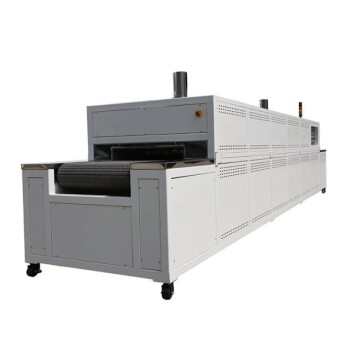
Atmosphere high-temperature lab furnaces mitigate oxidation risks by creating a hermetically sealed, inert‑gas‑purged or vacuum thermal environment for every stage that reactive metals encounter outside the LBPBF chamber. They flood the work zone with argon (or maintain high vacuum) while delivering uniform heat, starving the metal of oxygen and nitrogen. This prevents the surface oxidation, internal embrittlement, and chemical drift that would otherwise degrade a reactive alloy’s strength, ductility, and print‑to‑part consistency.
Reactive metals used in Laser Beam Powder Bed Fusion aren’t just “sensitive to oxidation”—at elevated temperatures, oxygen and nitrogen absorption is a fast pathway to catastrophic embrittlement. Laboratory atmosphere furnaces counter this by transforming a simple heating step into a fully controlled thermodynamic shield: gas‑tight construction, precise inert‑gas (or vacuum) control, and uniform thermal distribution lock out contaminants so the material’s chemistry and mechanical properties stay intact.
Why Reactive Metals Demand Extreme Oxidation Control
The metallurgical threat of oxygen and nitrogen uptake
Titanium, Ti‑6Al‑4V, tantalum, and similar alloys have an immense affinity for oxygen and nitrogen at temperatures above 300–400 °C. Even trace amounts dissolve interstitially and form brittle oxide or nitride phases. This mechanisms strips away ductility, kills fatigue life, and creates unpredictable stress concentrations—a disaster for thin‑walled, complex LBPBF geometries.
The gap between the printer and the furnace
LBPBF machines operate under argon or nitrogen to protect the melt pool. But when reactive powder is preheated, dried, or stress‑relieved outside that chamber—or when printed parts undergo post‑process heat treatment—the protection vanishes. An open‑air furnace instantly reintroduces oxygen and nitrogen, undoing all the printer’s purity work. Atmosphere furnaces are the bridge that keeps the environment completely inert from powder conditioning through to finished part.
How Atmosphere Furnaces Starve Oxidation Reactions
Sealed, gas‑purged environments lock out contaminants
The core defense is physical separation. A high‑temperature atmosphere furnace uses vacuum‑rated seals, welded chambers, and precision mass flow controllers to fill the work zone with a continuous stream of inert gas—usually argon. The gas sweeps away residual air, maintains a slight positive pressure, and pushes oxygen partial pressure to near‑zero levels. Any oxygen that leaks in through seals is immediately diluted and purged before it can react with the metal surface.
The vacuum alternative for absolute purity
For ultra‑reactive alloys, even parts‑per‑million oxygen in a gas stream can be too much. Supplementary vacuum furnaces pump the chamber down to 10⁻³ mbar or lower, physically removing all gaseous contaminants. In this high‑vacuum state, surface diffusion during sintering or stress relief happens without any oxide formation, enabling clean neck formation and uniform densification. Vacuum and inert‑gas modes can also be combined: a vacuum purge followed by backfill with high‑purity argon marries the best of both worlds.
Uniform thermal distribution halts localized attack
Oxidation isn’t just a bulk‑atmosphere problem—hot spots can drive fleeting reactivity even in a nominally inert environment. Quality atmosphere furnaces use multi‑zone heating and forced‑gas circulation to keep temperature gradients within a few degrees. This consistent thermal field prevents any locale from reaching temperatures where residual oxygen could react out of proportion, and ensures that stress‑relief cycles, preheating, or controlled cooling impart repeatable microstructures without hidden oxidation damage.
Gas‑tight integrity and safety systems deliver reproducibility
Maintaining a protective atmosphere through heating, soaking, and cooling demands more than a flowmeter. High‑performance furnaces include vacuum‑sealed flanges, leak‑sensitive purge protocols, oxygen sensors, and interlocked safety valves. Before the heating cycle even begins, the chamber is repeatedly evacuated and backfilled with inert gas to pull out adsorbed moisture and trapped air from the load. This multi‑cycle purge strips the system to the purity level needed for reactive metals, and mass flow controllers hold that composition stable for hours without human intervention.
Understanding the Trade‑offs
The nitrogen pitfall with titanium alloys
While LBPBF machines sometimes use nitrogen for cost savings, that choice can be catastrophic in a furnace. Titanium and its alloys readily form brittle titanium nitrides at high temperature. For any reactive‑metal furnace work, argon or vacuum is the safe baseline; nitrogen should only be used if the alloy is specifically known to tolerate it.
Cost and complexity of high‑vacuum capability
Vacuum‑rated chambers with turbomolecular pumps and high‑integrity sealing add significant capital and maintenance expense. They also slow down cycle times because the pump‑down and purging stages require minutes to hours. For many post‑processing steps where temperature and time are moderate, a well‑designed argon‑purged furnace provides ample protection at lower cost.
Gas consumption and cycle time
An inert‑gas atmosphere furnace consumes argon continuously. For long, high‑temperature holds, that can become a meaningful operating expense. Optimizing flow rates, using return‑stack purging, and carefully right‑sizing the chamber all help balance protection against cost, but users must plan for a steady supply of high‑purity gas.
Matching the Furnace to Your LBPBF Workflow
- If your primary focus is maintaining absolute chemical purity for aerospace‑grade Ti‑6Al‑4V or tantalum parts: A high‑vacuum furnace capable of <10⁻³ mbar is the safest bet, eliminating oxygen‑ and nitrogen‑based embrittlement entirely.
- If your priority is effective stress‑relief and thermal treatment of reactive alloy prints without the vacuum overhead: An argon‑purged atmosphere furnace with precision mass flow controllers and a proven purge‑cycle protocol will deliver robust protection for most commercial reactive powders.
- If you need to condition and reuse recycled reactive metal powders: A programmable atmosphere furnace with multi‑segment ramping, inert‑gas environment, and uniform heating ensures you can dry and sinter the powder without re‑oxidizing it, preserving its laser‑printability.
By matching the furnace environment to the specific thermal step—powder prep, preheating, or post‑print treatment—you close the oxidation control loop that the LBPBF machine started, keeping every atom of your reactive alloy exactly where it should be and in the state your design intended.
Summary Table:
| Environment / Feature | Mitigation Mechanism | Key Benefit for Reactive Metals |
|---|---|---|
| Inert Gas Purge (Argon) | Continuous purge & positive pressure | Sweeps away residual air and prevents oxygen ingress |
| High Vacuum ($<10^{-3}\text{ mbar}$) | Deep evacuation before heating | Eliminates trace $O_2$/$N_2$ to prevent interstitial embrittlement |
| Multi-Zone Heating | Precise thermal uniformity | Eliminates localized hot spots that trigger sudden oxidation |
| Multi-Cycle Purge Protocol | Repeated vacuum pull & backfill | Removes trapped moisture and air from porous powder or parts |
Ready to protect your reactive metal components from catastrophic oxidation and embrittlement? KINTEK specializes in high-performance laboratory equipment and customizable high-temperature furnaces designed for demanding metallurgical workflows. Whether you need inert atmosphere furnaces, high-vacuum systems, tube, muffle, CVD, or induction melting furnaces, our tailored solutions deliver the precise atmospheric control required for Ti-6Al-4V, tantalum, and other LBPBF alloys.
Contact KINTEK today to discuss your unique post-processing requirements and elevate your material performance!
Related Products
- 1400℃ Controlled Inert Nitrogen Atmosphere Furnace
- 1700℃ Controlled Inert Nitrogen Atmosphere Furnace
- Laboratory Muffle Oven Furnace with Bottom Lifting
- 1200℃ Muffle Oven Furnace for Laboratory
- 1400℃ High Temperature Laboratory Tube Furnace with Alumina Tube
People Also Ask
- How does nitrogen atmosphere control in high-temperature furnaces prevent the decomposition of silicon nitride during sintering?
- How does oxygen partial pressure control affect ceramic sintering? Master Defect Chemistry
- Why is thorough binder burnout necessary before sintering advanced ceramics? Ensure Peak Density & Zero Defects
- How do controlled-atmosphere furnaces support polymer pyrolysis? Master SiC & Si3N4 Ceramic Conversion
- Why is controlled-atmosphere heating required for functional ceramics and sensors? Master Defect Engineering