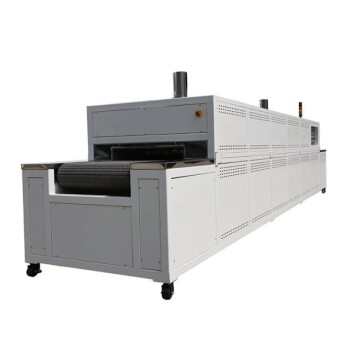
The moment you heat an electroceramic containing volatile elements like lead or sodium, you risk irreversible compositional changes. You can prevent this in a high-temperature controlled atmosphere furnace by placing your powder compact inside a sealed crucible surrounded by a sacrificial packing powder of the same chemistry. As the furnace heats up, the packing powder volatilizes first, creating a local equilibrium partial pressure of the volatile species that suppresses further evaporation from your component, preserving stoichiometry and enabling full densification.
Volatilization during sintering destroys the precise chemistry that gives electroceramics their functional properties. The core principle is to establish a micro-atmosphere rich in the volatile species directly around the sample. This is most reliably achieved inside a controlled atmosphere furnace using a sealed-crucible setup with sacrificial powder, effectively decoupling the sensitive part from the bulk furnace environment.
Understanding the Damage Caused by Volatilization
Why Precise Stoichiometry Defines Electroceramic Performance
Electroceramics like PLZT, sodium β-alumina, and barium titanate rely on exact atomic ratios for their dielectric, piezoelectric, or ionic conductivity properties. Even a small loss of lead or sodium at high temperature shifts the phase balance, creates lattice defects, and immediately degrades electromechanical response.
How Vapor Loss Creates Pores and Destroys Microstructure
Volatile species don’t just leave—they create vacancy clusters. When PbO or Na₂O evaporates from grain surfaces, it leaves behind pores that cannot be removed by normal sintering. Those pores pin grain boundaries, prevent densification, and make optical transparency or high dielectric breakdown impossible.
The Core Mechanism: Local Equilibrium Suppresses Evaporation
The Sealed-Crucible Technique Explained
Engineers place the green compact inside a closed crucible or tube made of inert materials like alumina or platinum. Around the compact, they pack a bed of coarse powder that has the exact same chemical composition as the sintering part. This sacrificial bed then acts as a volatile source.
How the Packing Powder Establishes a Protective Vapor Pressure
As the controlled atmosphere furnace ramps up, the high-surface-area packing powder begins to volatilize before the dense compact does. It quickly saturates the small enclosed volume with vapor of the volatile component (e.g., PbO, Na₂O). Once the partial pressure inside the crucible reaches the equilibrium value for that temperature, the driving force for evaporation from the compact drops to near zero.
Why the Furnace Atmosphere Still Matters
The outer furnace atmosphere—often an inert gas like argon or nitrogen—prevents oxidation or unwanted gas-phase reactions that could disrupt the local equilibrium. It also protects the crucible material and furnace elements from corrosive vapors. The furnace’s precise temperature uniformity ensures the entire crucible volume reaches the same equilibrium state, preventing cold spots where condensation might drain the protective vapor.
Expanding the Toolkit: Overpressure and Atmosphere Switching
Gas Overpressure for Non-Oxide Systems
While electroceramics benefit from local equilibrium, some advanced ceramics (like Si₃N₄) require a different approach: applying a positive gas overpressure (10–20 atmospheres of N₂) directly in the furnace chamber. This method shifts the decomposition reaction equilibrium back toward the solid phase, but for most oxide electroceramics, the sealed-crucible method is both simpler and more cost-effective.
Using Atmosphere Chemistry to Control Grain Boundaries
The sintering atmosphere also governs interfacial energy anisotropy. Switching from air to a reducing hydrogen environment can transform faceted grain boundaries into rough, isotropic ones, altering growth dynamics. While not a direct volatilization fix, this demonstrates that the furnace atmosphere is a powerful tool for microstructural engineering, and the sealed-crucible approach isolates your delicate stoichiometry while still allowing you to choose the outer gas for grain boundary control.
Understanding the Trade-offs
Crucible Material and Contamination Risks
The crucible must be chemically inert relative to the powder and the volatile vapor. Alumina works for many systems, but platinum may be needed for highly reactive lead-based compositions. Even trace reactions can introduce foreign ions and alter the very stoichiometry you are trying to protect.
Process Complexity and Cycle Time
A sealed crucible assembly adds thermal mass, slowing heat transfer and extending cycle times. It also demands meticulous powder preparation and crucible sealing to maintain the micro-atmosphere. Direct overpressure systems avoid some of this handling but require more expensive pressure-rated furnace vessels.
Limitations for Large or Complex Parts
For very large components, a uniform local equilibrium is harder to achieve. The packing powder must completely surround the part, and the crucible volume must be large enough to hold the vapor while remaining sealed. In such cases, a combined strategy—using both a powder bed and moderate chamber overpressure—may be necessary.
Making the Right Choice for Your Process
Selecting the right volatilization control strategy depends on your material system, part geometry, and available furnace infrastructure.
- If your primary focus is sintering lead-based electroceramics like PLZT: Use a sealed platinum crucible with a PbO-rich packing powder inside an argon-purged tube furnace. This remains the gold standard for achieving transparent, fully dense ceramics.
- If you are working with sodium-beta alumina or other alkali-containing ceramics: A sealed alumina crucible with identical powder and a controlled inert atmosphere will reliably preserve stoichiometry without the cost of noble metals.
- If you require ultra-high throughput and have pressure-rated equipment: Consider gas overpressure for non-oxide ceramics that decompose via gas evolution, while still using a powder bed to create the local equilibrium for the actual volatile metal species.
- If microstructural texture is as critical as density: Choose your outer furnace atmosphere (oxidizing, reducing, or inert) based on the grain boundary structure you need, and use the sealed-crucible method as an independent stoichiometry safeguard.
Apply the sealed-crucible equilibrium technique inside a well-controlled atmosphere furnace, and you convert the risk of volatilization from a process-killing variable into a predictable, physics-based tool for achieving the exact ceramic properties your application demands.
Summary Table:
| Volatilization Control Strategy | Core Mechanism | Target Material Systems | Equipment & Setup Requirements |
|---|---|---|---|
| Sealed Crucible & Packing Powder | Sacrificial powder creates local equilibrium partial pressure to suppress sample evaporation | Lead-based (PLZT, PZT), Sodium-beta alumina, Alkali oxide ceramics | Tube or atmosphere furnace with inert purge; sealed alumina/platinum crucibles |
| Gas Overpressure (10–20 atm) | High positive gas pressure shifts decomposition equilibrium back to solid phase | Non-oxide ceramics (Si₃N₄, AlN) | Pressure-rated atmosphere furnace vessel with positive pressure N₂ control |
| Atmosphere Gas Switching | Controls interfacial energy, grain boundary anisotropy, and protects furnace elements | Multi-component oxide electroceramics, reduction-sensitive phases | Controlled atmosphere furnace with multi-gas manifolds (Ar, N₂, H₂, Air) |
Achieving precise micro-atmosphere control and thermal uniformity is critical to suppressing element volatilization and preserving exact stoichiometry in electroceramics. KINTEK specializes in premium laboratory equipment and consumables, offering a comprehensive range of high-temperature furnaces—including atmosphere, tube, muffle, vacuum, CVD, rotary, dental, and induction melting furnaces—all fully customizable for your unique material processing needs.
Whether you require tight atmosphere control for lead-based ceramics or engineered heating zones for complex crucible assemblies, KINTEK delivers reliable, high-performance thermal systems. Contact KINTEK today to speak with our application specialists and tailor the perfect high-temperature furnace solution for your laboratory!
Related Products
- 1700℃ Controlled Inert Nitrogen Atmosphere Furnace
- 1400℃ Controlled Inert Nitrogen Atmosphere Furnace
- 1200℃ Controlled Inert Nitrogen Atmosphere Furnace
- Controlled Inert Nitrogen Hydrogen Atmosphere Furnace
- Mesh Belt Controlled Atmosphere Furnace Inert Nitrogen Atmosphere Furnace
People Also Ask
- Why is thorough binder burnout necessary before sintering advanced ceramics? Ensure Peak Density & Zero Defects
- How does real-time dilatometric analysis in a controlled-atmosphere furnace optimize PZT ceramic sintering?
- How do controlled-atmosphere furnaces support polymer pyrolysis? Master SiC & Si3N4 Ceramic Conversion
- How does oxygen partial pressure control affect ceramic sintering? Master Defect Chemistry
- Why is controlled-atmosphere heating required for functional ceramics and sensors? Master Defect Engineering