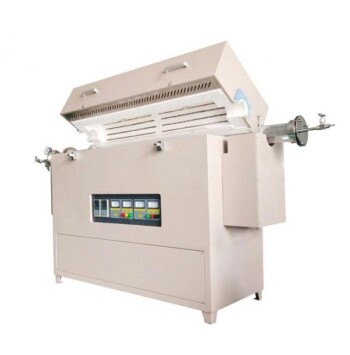
PLA’s journey from renewable feedstock to reliable 3D printing filament hinges on meticulous thermal processing. In the research and thermal synthesis of bio-based materials like polylactic acid, high-temperature laboratory furnaces—particularly controlled-atmosphere tube furnaces—serve as the backbone of catalyst evaluation, polymerization control, and thermal stability verification. They create the inert, precisely heated environments needed to convert lactide into consistent, high-molecular-weight PLA and to screen candidate formulations before they ever enter a printer.
Developing high-performance PLA for additive manufacturing isn’t just about the recipe—it’s about repeatable heat treatment. A high-temperature tube furnace delivers the oxygen-free, tightly profiled thermal conditions that let researchers correlate synthesis parameters with final polymer quality, ensuring that the material will print reliably and perform predictably.
The Critical Role of Thermal Processing in PLA Development
Before PLA can be extruded into filament, researchers must solve a series of interlocking thermal challenges. The primary reference correctly identifies that high-temperature furnaces are indispensable during R&D, and that role breaks down into four make-or-break activities: synthesis, catalyst screening, degradation analysis, and compounding verification.
Synthesizing PLA from Lactide
The most common route to high-molecular-weight PLA is ring-opening polymerization of lactide. This reaction is thermally activated and highly sensitive to both temperature uniformity and atmosphere.
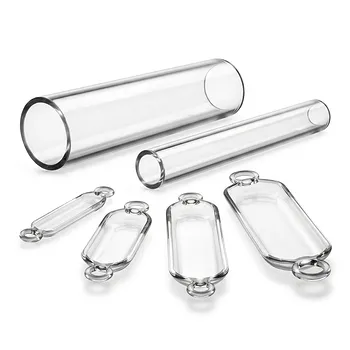
A controlled-atmosphere tube furnace is the ideal vessel for this step. Researchers load lactide monomer and a catalyst (often tin(II) octoate) into a quartz or alumina tube, purge the system with inert gas such as nitrogen or argon, and ramp the temperature to a precise setpoint—typically 130–180 °C. The furnace’s ability to maintain a stable, gradient-free hot zone ensures that the entire batch polymerizes at a consistent rate, yielding uniform molecular weight and narrow polydispersity.
Oxygen must be rigorously excluded because it can deactivate the catalyst and cause unwanted discoloration or chain scission. A tube furnace with gas-tight end-seals and mass flow controllers provides exactly that environment, turning a reaction that could easily fail into a reproducible process.
Catalyst Screening and Optimization
Not all catalysts perform the same. Some accelerate the reaction but reduce thermal stability; others produce PLA with higher crystallinity but require longer times. High-temperature furnaces allow researchers to run parallel experiments under identical thermal histories, changing only the catalyst type or concentration.
By operating at controlled temperatures just above the melting range of the growing polymer, the furnace creates a melt-phase polymerization environment. Researchers can then quench samples, analyze conversion via FTIR or GPC, and directly link thermal processing parameters to catalyst performance. This systematic screening is what transforms a promising bio-polymer into a predictable 3D printing feedstock.
Thermal Stability and Degradation Analysis
For additive manufacturing, the filament must survive extrusion and printing without significant degradation. That means PLA must withstand repeated heating cycles—often in the presence of residual moisture.
Laboratory furnaces enable thermogravimetric analysis (TGA) and isothermal degradation studies under air or nitrogen. Researchers place a small sample in a furnace at a fixed temperature, mimic the residence time in a hot end, and measure mass loss or color change. A tube furnace with rapid heating capability can also simulate thermal shock or peak processing spikes. This data feeds directly into material selection decisions: does this formulation yellow? does it lose 5% mass at extrusion temperature? The answers come from controlled furnace work.
Compounding and Composite Verification
PLA is rarely used neat. To enhance mechanical properties, reduce warping, or add functionality, researchers compound PLA with particles like wood flour, carbon fibers, or nano-clays. Melt-blending these composites requires temperatures that fully melt the PLA without thermally damaging the additive.
A high-temperature muffle or tube furnace can verify the thermal behavior of the composite before scale-up. For instance, researchers might place a small batch in a furnace at 200 °C under nitrogen to confirm that the additives do not catalyze degradation. They can also pre-treat fillers at elevated temperatures inside a furnace to remove surface moisture or sizing agents—a step that dramatically improves interfacial bonding in the final printed part.
Understanding the Trade-offs
High-temperature furnaces are powerful, but they’re not a one-size-fits-all solution. Adopting them without awareness of their limitations can misdirect research efforts.
Atmosphere control adds complexity. A tube furnace with gas-handling requires seals, flowmeters, and exhaust scrubbing. For quick benchtop checks, a simpler air-only muffle furnace may suffice—but it can’t replicate the inert conditions needed for sensitive synthesis. Choosing the wrong atmosphere can mask the true thermal degradation behavior of a PLA formulation.
Not every thermal event needs a furnace. Standard melt-compounding in a twin-screw extruder already subjects the material to heat and shear. The furnace’s unique value is in isolating the thermal variable, free of mechanical stress, which makes it indispensable for mechanism studies but less relevant for routine extrusion trials.
Cost and throughput. A high-end tube furnace with programmable controllers represents a significant capital investment. For labs that only need basic isothermal holds, a lower-cost muffle furnace might deliver adequate data. But sacrificing temperature uniformity or atmosphere fidelity to save money will undercut the very reproducibility that makes the research publishable and the product scalable.
How to Apply These Insights to Your Research
The furnace you choose—and how you use it—should mirror the specific hypothesis you’re testing. Align your thermal tool with your R&D objective to avoid wasted time and ambiguous results.
- If your primary focus is lactide-to-PLA synthesis optimization: Prioritize a tube furnace with precise inert-atmosphere control. Uniform heat and oxygen-free conditions directly determine molecular weight and reproducibility.
- If your primary focus is thermal stability screening for 3D printing: Use a furnace capable of isothermal holds at extrusion temperatures (190–220 °C) under both nitrogen and air. Measure mass loss and discoloration to predict hot-end behavior.
- If your primary focus is composite compatibility testing: Combine furnace-based filler pre-treatment (drying or surface activation) with melt-blend verification. Confirm that the additive does not accelerate PLA degradation at processing temperatures.
- If your primary focus is catalyst benchmarking: Run multiple small-batch polymerizations in a tube furnace with interchangeable sample boats. Keep the thermal profile fixed and vary only the catalyst to isolate its effect.
A well-chosen high-temperature furnace turns PLA development from a batch of educated guesses into a disciplined, data-driven science. Master its thermal environment, and you master the material.
Summary Table:
| R&D Stage | Recommended Furnace | Thermal Processing Function | Key Outcome / Benefit |
|---|---|---|---|
| PLA Synthesis | Atmosphere Tube Furnace | Oxygen-free ring-opening polymerization (130–180 °C) | Uniform molecular weight & narrow polydispersity |
| Catalyst Screening | Controlled Tube Furnace | Parallel melt-phase reactions under precise thermal history | Optimized reaction rates & polymer stability |
| Thermal Stability | Tube / Muffle Furnace | Isothermal holds & degradation profiling (190–220 °C) | Predictable, yellowing-free 3D printing filament |
| Composite Verif. | High-Temp Muffle Furnace | Filler moisture removal & composite melt testing | Enhanced interfacial bonding without polymer breakdown |
Elevate Your Bio-Polymer & PLA Research with KINTEK
Accelerate your additive manufacturing breakthroughs with KINTEK’s precision high-temperature laboratory furnaces. Whether you need controlled atmosphere tube furnaces for oxygen-free lactide polymerization or versatile muffle, vacuum, and custom high-temp furnaces for composite testing and thermal stability analysis, KINTEK provides exceptional temperature uniformity and reliable gas-handling solutions.
We empower research institutions, materials scientists, and distributors with customizable equipment engineered for rigorous R&D, backed by OEM/ODM support and global service.
👉 Contact KINTEK today to discuss your bio-material synthesis needs
Related Products
- 1400℃ High Temperature Laboratory Tube Furnace with Alumina Tube
- 1700℃ High Temperature Laboratory Tube Furnace with Alumina Tube
- 1800℃ High Temperature Muffle Oven Furnace for Laboratory
- 1700℃ High Temperature Muffle Oven Furnace for Laboratory
- 1200℃ Muffle Oven Furnace for Laboratory
People Also Ask
- How does zone-melting in tube furnaces synthesize bismuth micro-wires? Master Single-Crystal Thermoelectric Growth
- How do high-temperature laboratory tube furnaces ensure environmental stability? Precision Thermal Reduction Tips
- How are high-temp tube furnaces used to measure diffusion coefficients per Fick's law? Master Precision Annealing
- How are high-temperature laboratory tube furnaces applied in long-term vacuum homogenization heat treatments for intermetallic samples?
- How are high-temperature tube furnaces applied in testing ceramic-supported alloy membranes? Insights