The Frustrating Mystery of the "Contaminated" Batch
You’ve calibrated your tube furnace to the exact specifications. Your precursor materials are laboratory-grade. Yet, after a 1050°C reduction cycle, your graphene oxide doesn’t meet the conductivity standards you expected, or worse, your sample carrier has hairline cracks that threaten to shatter mid-experiment.
In high-temperature synthesis, the furnace is often the star of the show, but the "supporting cast"—the sample boats—often determines whether the experiment succeeds or fails. Many researchers find themselves trapped in a cycle of inconsistent results, where metallic impurities appear out of nowhere, sabotaging the delicate chemical structure of nanomaterials like graphene or carbon nanotubes.
The Cost of "Good Enough" Carriers
When faced with sample contamination or boat failure, the common reaction is to double-check the gas flow or recalibrate the furnace temperature. When boats crack, many labs simply treat it as an inevitable "cost of doing business," ordering bulk replacements of generic ceramic or industrial-grade alumina carriers.
However, these "common" solutions carry hidden costs:
- Metallic Interference: Standard ceramic boats can release trace metallic impurities at temperatures exceeding 1000°C, which integrate into the graphene lattice and alter its electronic properties.
- Thermal Downtime: If a boat cannot handle rapid temperature changes, you are forced to use agonizingly slow heating and cooling rates to prevent cracking, dragging a three-hour process into a full day.
- Collateral Damage: A boat that reacts with the sample can produce vapors that etch or degrade the expensive quartz or ceramic working tubes of your furnace, leading to equipment failure that costs thousands of dollars to repair.
The Science of Silence: Why High-Purity Quartz is Non-Negotiable
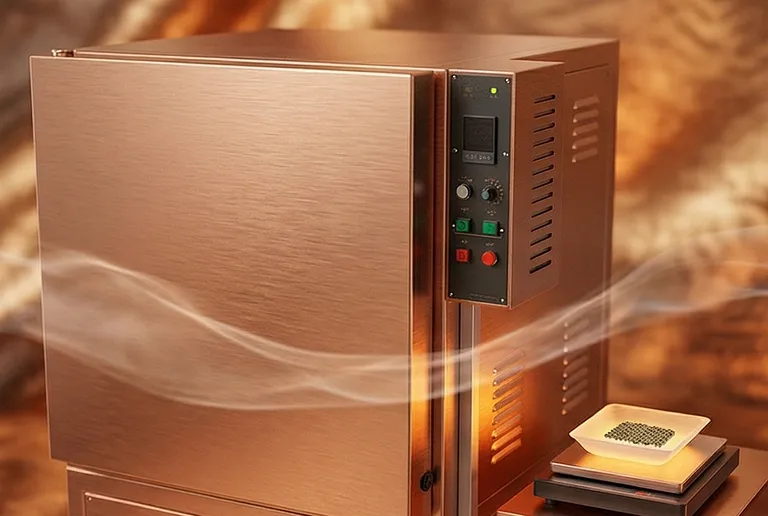
The reason your experiments succeed or fail often comes down to a property called chemical inertness. At 1050°C—the critical zone for graphene oxide reduction—most materials become "talkative," meaning they react chemically with your sample or the surrounding atmosphere.
High-purity quartz is different because it is essentially "silent." Its molecular structure is incredibly stable, ensuring it does not introduce external impurities into nanopowders or catalysts. Whether you are dealing with a hydrogen atmosphere or corrosive pyrolysis gases, high-purity quartz remains a neutral observer.
Furthermore, quartz possesses an extraordinary coefficient of thermal expansion—or rather, a lack of one. While most ceramics expand and contract significantly when heated, quartz barely moves. This is why you can rapidly move a quartz boat from the cooling zone into the 1000K center of a furnace without it shattering. It allows for the precise capture of transient reaction data because the carrier doesn't introduce its own thermal deviations.
Choosing the Right Tool for the Thermal Task
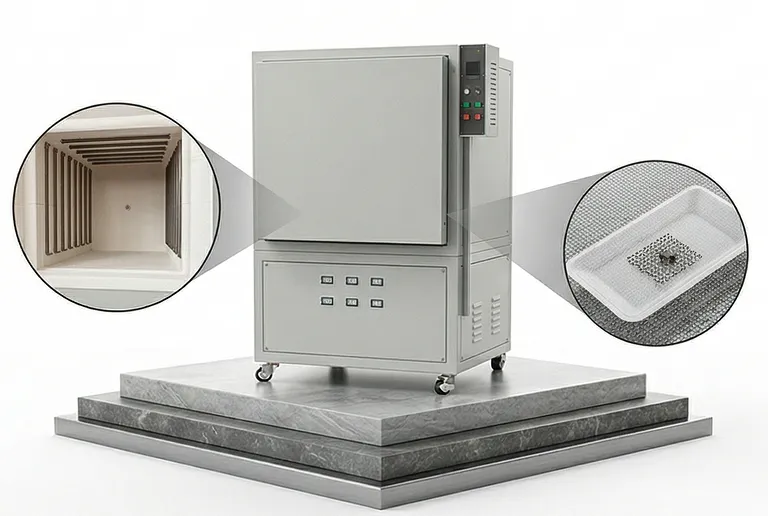
At KINTEK, we understand that a high-temperature furnace is only as effective as the environment inside the tube. Our high-purity quartz boats are not generic consumables; they are engineered as critical components of the thermal path.
- For Graphene and CNTs: Our quartz boats provide the chemical isolation needed to ensure that nitrogen-enriched carbon nanotubes or reduced graphene oxide maintain high consistency and surface purity.
- For Rapid Processing: The superior thermal shock stability means you can insert and remove samples faster, increasing your lab’s throughput without risking experiment safety.
- For Complex Pyrolysis: Even when dealing with molten plastics or aggressive reducing gases, our quartz carriers protect the integrity of your pyrolysis oil and analytical results.
While high-purity alumina remains the choice for alkaline environments (where quartz might be susceptible to chemical attack), quartz is the undisputed champion for high-purity, high-speed carbon synthesis.
Beyond the Fix: Accelerating Your Research Timeline
When you solve the "carrier problem," you do more than just stop boats from cracking. You unlock a new level of experimental precision. By removing the variable of material contamination, your data becomes "cleaner," making it easier to identify the actual drivers of your synthesis results.
With reliable carriers, you can explore more aggressive thermal profiles, push the boundaries of Chemical Vapor Deposition (CVD), and accelerate your move from the lab bench to pilot-scale production. You stop managing "accidents" and start managing breakthroughs.
The success of your high-temperature research depends on controlling every variable, especially the ones that seem invisible. At KINTEK, we provide the specialized furnaces and the high-purity consumables required to ensure your results are repeatable, pure, and precise. Whether you are struggling with graphene contamination or looking to optimize a new CVD process, our technical team is ready to help you select the ideal configuration for your specific thermal challenges.
Related Products
- High Performance Vacuum Bellows for Efficient Connection and Stable Vacuum in Systems
- Ultra High Vacuum CF Observation Window Flange with High Borosilicate Glass Sight Glass
- Multi Heating Zones CVD Tube Furnace Machine for Chemical Vapor Deposition Equipment
- Stainless Steel Quick Release Vacuum Chain Three Section Clamp
- Ultra High Vacuum Observation Window Stainless Steel Flange Sapphire Glass Sight Glass for KF