The High-Purity Paradox: Why Perfect Ingredients Aren’t Enough
You’ve sourced the highest-grade Germanium, Selenium, and Tellurium. You’ve followed the stoichiometric ratios to the milligram. You’ve sealed your quartz ampoule and set your furnace to the precise temperature. Yet, when the cooling cycle ends, the resulting chalcogenide glass is cloudy, or the semiconductor thin film shows inconsistent electrical properties.
For many researchers and materials scientists, this is a recurring nightmare. You are chasing "high purity," but the results suggest something is contaminating your process from within. This isn't just a minor technical hiccup; in the world of advanced optics and sensors, a single percentage point drop in infrared (IR) transmission can mean the difference between a high-performance aerospace component and a piece of expensive scrap.
The Common Struggle: When "Good Enough" Vacuum Fails
When faced with oxidation or impurity issues, the first instinct is often to "double-down" on existing protocols. You might try purging the system with high-purity Argon multiple times or upgrading to a slightly better mechanical vacuum pump.
However, these common fixes often fall short for a simple reason: they address the volume of air, but not the residual molecules that cling to surfaces and hide in the "mean free path" of the gas.
The consequences of sticking with a standard vacuum setup are costly:
- Wasted Raw Materials: Elements like Tellurium and Gallium are expensive; losing a batch to oxidation is a significant financial hit.
- Project Delays: Each failed melt requires cleaning, re-prep, and another long heating cycle.
- Sub-par Performance: In applications like (Ge0.1Se0.7Tl0.2)85Sb15 thin films, even trace oxygen disrupts the straight-line path of vaporized atoms, leading to poor adhesion and non-uniform thickness.
The Invisible Enemy: Why Chalcogenides are Different
The root of the problem lies in the fundamental chemistry of chalcogenide elements (S, Se, Te) and the dopants often used with them, such as Indium or Antimony. These elements are "oxygen-hungry." At the elevated temperatures required for melting or synthesis, they don't just sit there; they actively scavenge any remaining oxygen or moisture in the environment.
A standard mechanical pump might reach a vacuum level that feels "empty," but at the atomic level, it’s still a crowded room. To truly protect these materials, you need to reach an ultra-high vacuum level of 2.66 x 10⁻³ Pa (or approximately 10⁻⁶ Torr).
Why is this specific threshold so critical?
- Eliminating the Oxide Layer: At lower vacuum levels, chromium in steels or metals like Antimony react instantly to form oxides. A high-vacuum environment reduces the oxidation rate so significantly that metal atoms can achieve direct contact, ensuring a pure reaction.
- Mean Free Path: In thin-film deposition, a high vacuum ensures that vaporized atoms travel in a straight line from the source to the substrate without colliding with residual gas molecules. This is what creates that "amorphous" structure with zero impurity contamination.
- Stoichiometric Integrity: For materials like Fe3GeTe2 or Gallium Sulfide (GaS), the absence of oxygen and water vapor ensures that the volatile components don't drift away or react prematurely, keeping the final crystal's "recipe" exactly as intended.
The Solution: The High-Vacuum Diffusion Pump System
To bridge the gap between "standard" and "ultra-high" vacuum, a Diffusion Pump System is the essential tool. Unlike mechanical pumps that use moving parts to "push" air out, a diffusion pump uses a high-speed jet of oil vapor to "sweep" gas molecules toward the exhaust. It is a silent, high-efficiency scavenger.
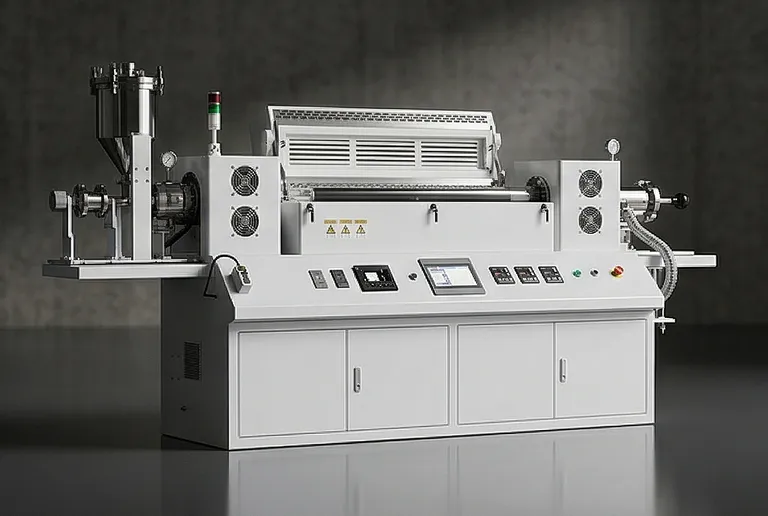
At KINTEK, we design our high-temperature vacuum furnaces—including our muffle, tube, and CVD systems—to integrate seamlessly with these high-vacuum assemblies. Our systems are engineered to:
- Achieve 2.66 x 10⁻³ Pa consistently, ensuring the internal environment of your quartz ampoules is truly evacuated.
- Remove moisture and residual air that standard systems leave behind, which is the primary cause of cloudiness in IR glasses.
- Support customizable thermal profiles, allowing you to maintain the vacuum integrity throughout the entire melting and cooling process.
By using a system specifically designed for these physics-defying requirements, you aren't just buying a furnace; you are buying an insurance policy for your material’s purity.
Beyond the Fix: Opening New Doors in Material Science

Once you solve the "oxidation problem" with a high-vacuum diffusion system, the focus shifts from troubleshooting to innovation. When you are no longer fighting impurities, you can explore the true potential of your materials.
Imagine producing IR lenses with near-perfect transmission across the entire spectrum, or developing Sb2S3 semiconductors with significantly higher electrical mobility because the metallic precursors never saw a molecule of oxygen. This level of precision allows for faster product-to-market cycles and the ability to meet the most stringent military and industrial specifications.
The transition from "troubled results" to "scientific breakthrough" starts with the environment inside your furnace.
The challenges of synthesizing Ge-Se-Te-In and other sensitive materials require more than just a standard laboratory setup; they require a deep understanding of vacuum physics and thermal engineering. At KINTEK, we specialize in translating these complex requirements into reliable, high-performance furnace systems tailored to your specific research goals. Whether you are scaling up production or refining a new semiconductor alloy, our team is ready to help you eliminate the "invisible enemies" in your process. Contact Our Experts today to discuss your project requirements and find the ideal high-vacuum solution for your lab.
Related Products
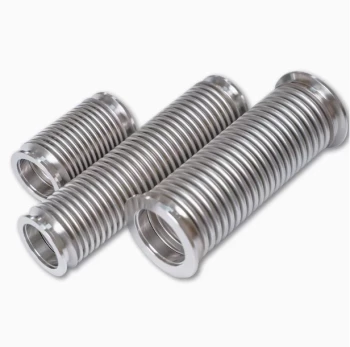
- High Performance Vacuum Bellows for Efficient Connection and Stable Vacuum in Systems
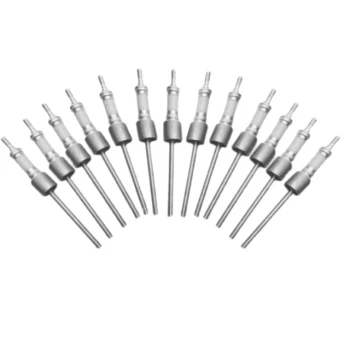
- Ultra Vacuum Electrode Feedthrough Connector Flange Power Lead for High Precision Applications
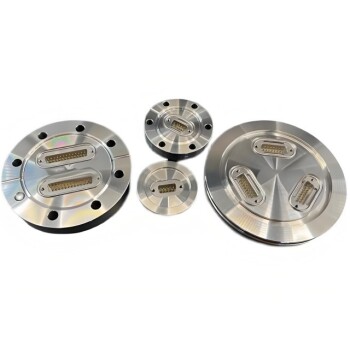
- Ultra-High Vacuum Flange Aviation Plug Glass Sintered Airtight Circular Connector for KF ISO CF
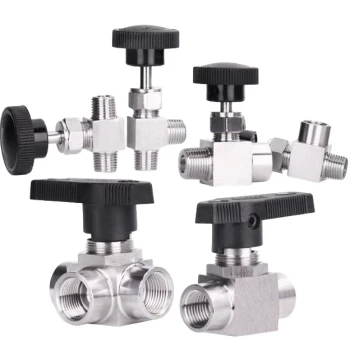
- 304 316 Stainless Steel High Vacuum Ball Stop Valve for Vacuum Systems
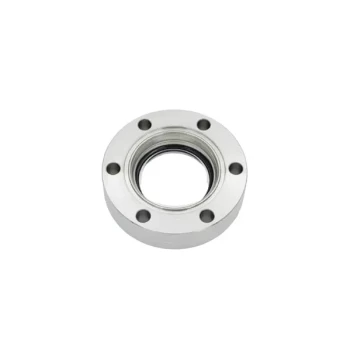
- Ultra High Vacuum CF Observation Window Flange with High Borosilicate Glass Sight Glass