The Mystery of the Brittle Joint
Imagine you have followed every parameter for brazing Ti-15-3 titanium alloys to the letter. The temperature ramp-up was precise, the filler metal was premium grade, and the timing was exact. Yet, when the parts emerge from the furnace, they don’t possess the legendary toughness of titanium. Instead, the surface is discolored, and under stress, the joint snaps with the disturbing ease of dry glass.
This is a scenario faced by many metallurgy labs and aerospace manufacturers. You are left staring at ruined components, wondering why a material prized for its strength has suddenly become so fragile. The culprit is often invisible, occurring at a molecular level during the heating process.
The Cost of "Good Enough" Protection
When titanium alloys fail after heat treatment, the first instinct of many engineers is to check the furnace calibration or the purity of the shielding gas. Some attempt to "fix" the problem by increasing the flow of argon or slightly lowering the temperature.
However, these common adjustments often fail to address the underlying issue. In the world of high-performance alloys, "standard" protection is rarely enough. The negative consequences are significant:
- Project Delays: Retesting and re-manufacturing parts can set schedules back by weeks.
- Material Waste: Titanium is expensive; scrap rates due to embrittlement represent a massive financial leak.
- Reliability Risks: In industries like aerospace or medical implants, a brittle joint isn't just a technical failure—it’s a safety liability.
The Root Cause: The Greedy Nature of Titanium
To solve the problem, we must look at the chemistry of the process. Titanium is what metallurgists call a "getter." At high temperatures—particularly above 950°C—it acts like a chemical sponge, greedily absorbing oxygen and nitrogen from the surrounding environment.
Even in a vacuum that seems "clean," trace amounts of oxygen can lead to the formation of an "alpha-case" layer. This is a hard, brittle oxygen-enriched shell that migrates from the surface into the core of the material. Once this layer forms, the inherent ductility of the Ti-15-3 alloy is compromised.
Traditional muffle furnaces or lower-purity chambers often outgas impurities from their own walls when heated to 1200°C. These impurities find their way straight into your titanium, causing the very embrittlement you were trying to avoid.
The Solution: A Chemically Inert "Clean Room"
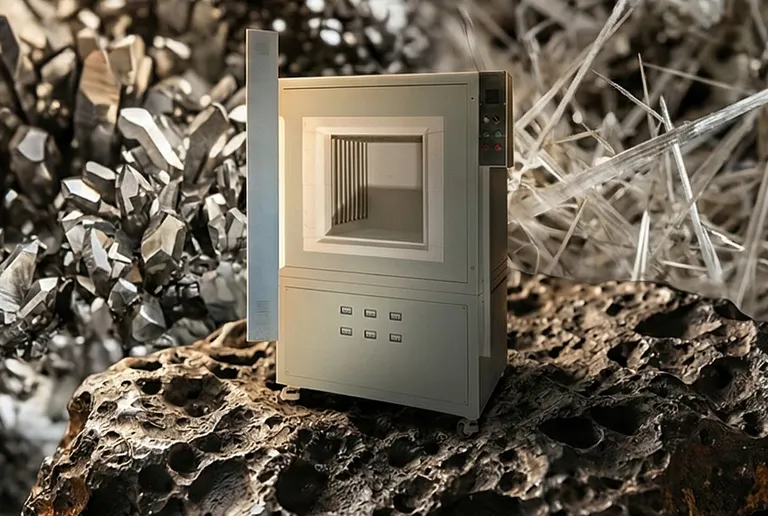
True protection requires more than just a vacuum; it requires an environment that is chemically "silent." This is where the high-purity quartz tube becomes the hero of the vacuum brazing furnace.
A high-purity quartz tube serves as a specialized reaction chamber that offers three critical advantages:
- Chemical Stability: Unlike metal or lower-grade ceramic chambers, high-purity quartz is exceptionally inert. It does not react with the titanium or outgas oxygen even at temperatures exceeding 1200°C.
- Vacuum Integrity: When integrated into a precision system like KINTEK’s, these tubes support high vacuum levels of $10^{-5}$ mbar (or even $9.9 \times 10^{-5}$ Pa). This "ultra-clean" environment effectively starves the titanium of the oxygen it would otherwise absorb.
- Dual-Atmosphere Capability: Quartz tubes allow for a "seal-and-backfill" technique. By evacuating the tube and backfilling it with high-purity argon, the sample is double-protected against atmospheric ingress.
At KINTEK, we design our vacuum furnaces with these physical realities in mind. Our quartz tube systems utilize advanced features like grinding mouth structures for airtight seals and specialized piston valves at the sampling ports. This isn't just about holding heat; it's about engineering an environment where oxidation simply cannot happen.
Beyond the Fix: Unlocking New Potential
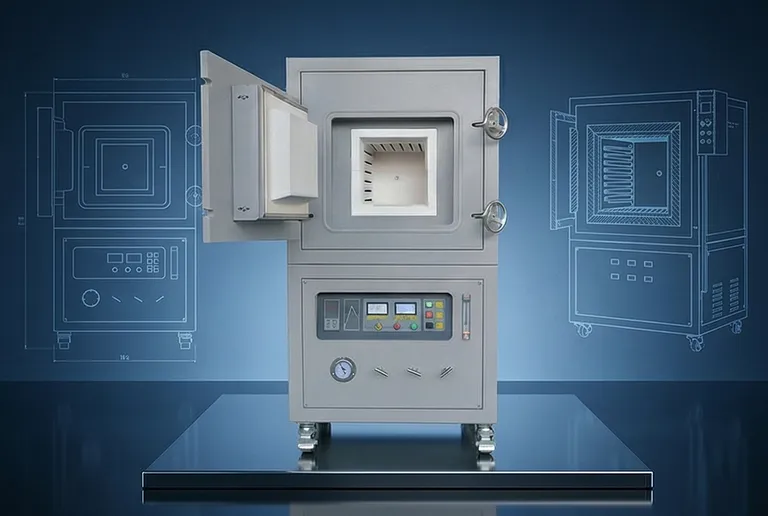
When you eliminate the threat of the alpha-case layer, you move beyond "troubleshooting" and into the realm of advanced material science.
With a stable, high-purity quartz environment, you can achieve homogenization processes lasting over 100 hours without fear of surface degradation. This allows for the synthesis of complex alloys—like NbTaTiV or Sb-Te—where maintaining precise chemical stoichiometry is the difference between a breakthrough and a failure.
By ensuring your titanium retains its inherent mechanical properties and relative density, you can produce joints that are stronger, components that are lighter, and products that reach the market faster.
Solving the problem of embrittlement is the first step toward exploring more precise processes and demanding geometries. If your current heat treatment results are inconsistent, the solution likely lies not in your process parameters, but in the environment where the reaction takes place. Our team of experts specializes in tailoring high-temperature furnace solutions to the specific chemical sensitivities of your materials. Let us help you eliminate the "invisible saboteur" from your production line and ensure the integrity of every part you create.
Related Products
- High Pressure Laboratory Vacuum Tube Furnace
- Vertical Laboratory Quartz Tube Furnace Tubular Furnace
- 1200℃ Split Tube Furnace Laboratory Quartz Tube Furnace with Quartz Tube
- Laboratory Quartz Tube Furnace RTP Heating Tubular Furnace
- Magnesium Extraction and Purification Condensing Tube Furnace
Related Articles
- Mastering the Micro-Environment: The Art and Science of the Laboratory Tube Furnace
- Beyond Heat: Mastering the Controlled Universe Inside a Tube Furnace
- Why Your Crystal Growth Experiments Are Failing: The Hidden Culprit in Your Tube Furnace
- Mastering the Void: How Tube Furnaces Forge the Atoms of Innovation
- Is Your Material Data Real? Why Temperature Gradients Are Sabotaging Your Cu2Se Resistivity Measurements