The Hidden Weak Link in Advanced Thermal Management
Imagine you have designed the perfect aluminum thermosyphon. On paper, it is a masterpiece of thermal engineering: lightweight, highly conductive, and shaped to move heat with maximum efficiency. But when the first batch comes off the assembly line, the reality is devastating. Some units fail pressure tests immediately; others show sluggish thermal response, and under a microscope, the joints look porous and brittle.
For many engineers working on high-performance cooling systems—from aerospace components to EV battery management—the assembly phase is where great designs go to die. The problem isn't the design; it is the fundamental struggle of joining aluminum components without compromising the very properties that make them valuable.
The Cost of "Good Enough" Joining Methods
When faced with the challenge of connecting a boiling section, a condenser, and cooling fins into a single, sealed thermosyphon, many manufacturers fall back on traditional methods.
Some attempt mechanical joining, which almost inevitably leads to micro-leaks under the thermal stress of operation. Others try torch brazing or standard atmosphere welding. However, these methods often require aggressive chemical fluxes to clean the metal. These fluxes can get trapped inside the thermosyphon’s internal channels, leading to long-term corrosion and clogging that ruins the unit's heat-transfer efficiency.
The business consequences are clear: high scrap rates, unpredictable product lifespans, and the constant risk of "field failures" that can damage your brand's reputation for reliability.
The Invisible Barrier: Why Oxygen is the Enemy of Aluminum
To solve this, we have to look at the chemistry of the material. Aluminum has an incredible affinity for oxygen. The moment it is exposed to air, a thin, stubborn layer of aluminum oxide ($Al_2O_3$) forms on its surface.
In a standard furnace or welding environment, high temperatures actually accelerate this process. When you try to join two aluminum parts, this oxide layer acts as a physical barrier, preventing the filler metal from "wetting" the surfaces and creating a true molecular bond. You might get a joint that looks solid on the outside, but internally, it is a lattice of voids and weak points.
Furthermore, if oxygen is present inside the thermosyphon during heating, the internal channels oxidize, creating a "dirty" surface that hinders the phase-change cycle of the working fluid. This is why traditional heating methods often result in thermosyphons that look correct but perform poorly.
The KINTEK Solution: Precision Vacuum Brazing
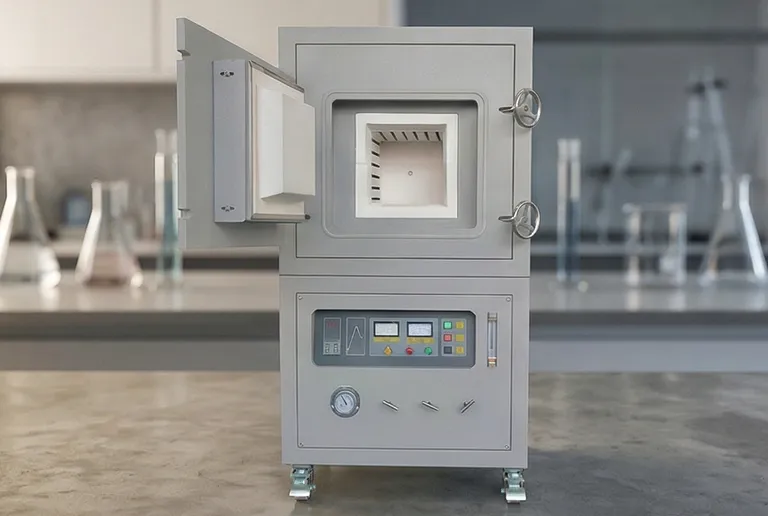
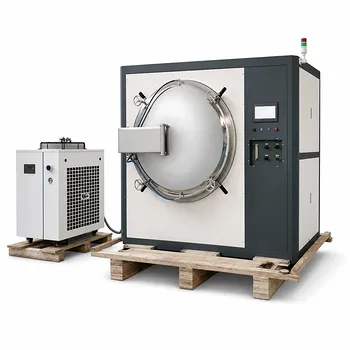
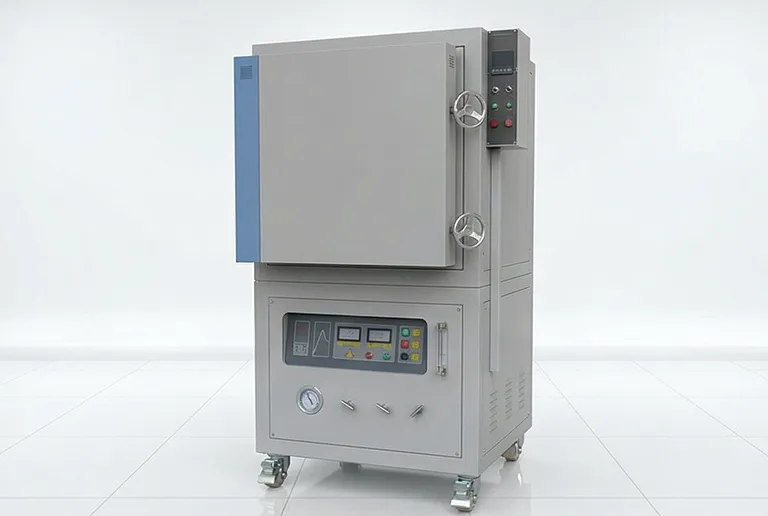
To overcome the "oxidation trap," you need an environment where the enemy—oxygen—simply doesn't exist. This is the primary function of a KINTEK Industrial-Grade Vacuum Furnace.
By heating the aluminum components in a high-vacuum environment, we remove the oxygen before the brazing temperature is ever reached. This allows for Vacuum Brazing, a process where:
- Simultaneous Assembly: All components—the boiling section, condenser, and cooling fins—can be connected in a single heating cycle. This ensures uniform expansion and contraction, reducing internal stress.
- Flux-Free Excellence: Because the vacuum prevents oxidation, there is no need for corrosive chemical fluxes. The internal channels remain pristine, ensuring maximum thermal conductivity.
- High Sealing Integrity: The filler metal flows perfectly into every micro-crevice, creating joints that are not only structurally strong but vacuum-tight, maintaining the thermosyphon’s internal pressure for years of operation.
KINTEK furnaces are engineered specifically to provide this level of control. They are not merely heating boxes; they are precision instruments designed to manage the delicate ramp-up and soak times required to achieve "perfect wetting" of aluminum alloys without melting the base metal.
From Thermal Bottlenecks to Real-World Performance
When you solve the root cause of joining failure, you unlock new possibilities for your product line. By moving to a vacuum-brazed assembly process, engineers are no longer limited by the "joinability" of their parts.
With a reliable vacuum process, you can:
- Produce complex, multi-fin geometries that were previously impossible to seal.
- Drastically reduce the weight of thermal management systems.
- Accelerate your mass production by brazing dozens of units in a single furnace load.
- Guarantee the long-term vacuum integrity required for critical aerospace and data center applications.
The shift from "struggling with leaks" to "mastering the vacuum" is the difference between a prototype that works in the lab and a product that dominates the market.
At KINTEK, we understand that your thermal management challenges are unique. Whether you are scaling up production for a new EV platform or refining a specialized aerospace component, our team of experts can help you select and customize the vacuum furnace technology that fits your specific metallurgical needs. Let’s turn your complex assembly problems into a seamless, repeatable success story. Contact Our Experts
Related Products
- Vacuum Heat Treat Sintering and Brazing Furnace
- Vacuum Hot Press Furnace Machine for Lamination and Heating
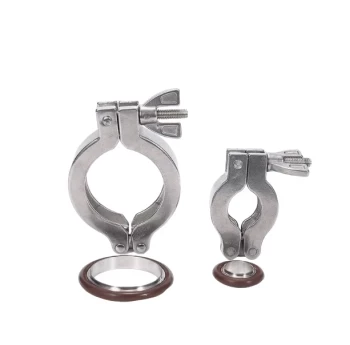
- Stainless Steel Quick Release Vacuum Chain Three Section Clamp
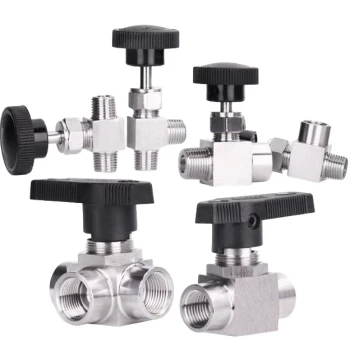
- 304 316 Stainless Steel High Vacuum Ball Stop Valve for Vacuum Systems
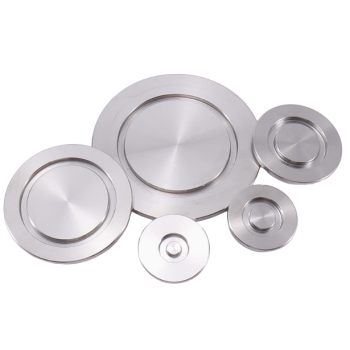
- Stainless Steel KF ISO Vacuum Flange Blind Plate for High Vacuum Systems
Related Articles
- Why 10⁻⁶ mbar Vacuum Isn’t Enough for Perfect Brazing—And the Missing Link to Oxide-Free Surfaces
- Why Your High-Temperature Aerospace Joints Fail—and the Science of the Perfect Vacuum Weld
- Why Your 3D-Printed Maraging Steel Parts Aren't Performing—And How to Fix the Structural Weakness
- Why Your Vacuum Brazed Joints Are Failing—And the Precise Pressure Fix You’ve Been Missing
- Beyond Inert: The Physics and Psychology of Perfecting Joints in a Vacuum Furnace