The Invisible Variable Ruining Your Brazing Data
You’ve optimized the temperature, selected the perfect filler metal, and spent weeks prepping your samples. Yet, when the tensile tests come back, the results are inconsistent. In one batch, the joints are unexpectedly hard but brittle; in another, they don’t meet the expected fatigue life.
When researchers or quality control engineers face these "mystery" fluctuations in brazing experiments, they often look at the alloy composition or the flux. But the culprit is often something much more subtle: the very air—or "protective" gas—surrounding the joint during the heating cycle.
Why Conventional "Protective" Atmospheres Fall Short
In high-volume production, the conveyor belt furnace is the workhorse. To prevent parts from burning up, these furnaces typically use a nitrogen-rich atmosphere to displace oxygen. On the surface, this seems like a perfect solution. It’s cost-effective and relatively stable.
However, many engineering teams find that moving a process from a laboratory conveyor furnace to a different manufacturing environment leads to "untraceable" performance drops. This is because nitrogen is not truly inert for many metals. The "solutions" usually involve expensive trial-and-error adjustments to flux chemistry or belt speed, costing weeks of project delays and thousands in wasted materials. The core issue remains: you are experimenting in a "noisy" environment where the atmosphere is actively changing the chemistry of your joint.
The Scientific Truth: The Hidden Impact of Nitrogen Strengthening
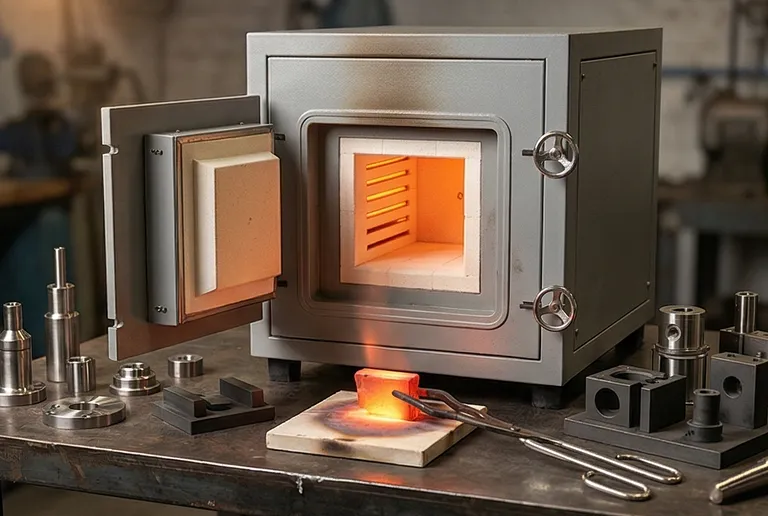
The reason your data is skewed in a conveyor belt furnace boils down to a phenomenon known as Nitrogen Strengthening.
When brazing occurs in a nitrogen-rich atmosphere, nitrogen atoms can diffuse into the base metal and the filler material. This changes the mechanical properties of the joint, often increasing hardness but potentially decreasing ductility.
If you are trying to measure the inherent performance of a new brazing alloy or the bonding strength of reactive metals like tungsten or molybdenum, the nitrogen atmosphere acts as a technical "pollutant." It masks the true characteristics of the materials. Without a baseline that is completely free of atmospheric interference, you are essentially trying to measure the weight of an object while someone is resting their hand on the scale.
The High-Vacuum Furnace: A True Laboratory "Absolute Zero"
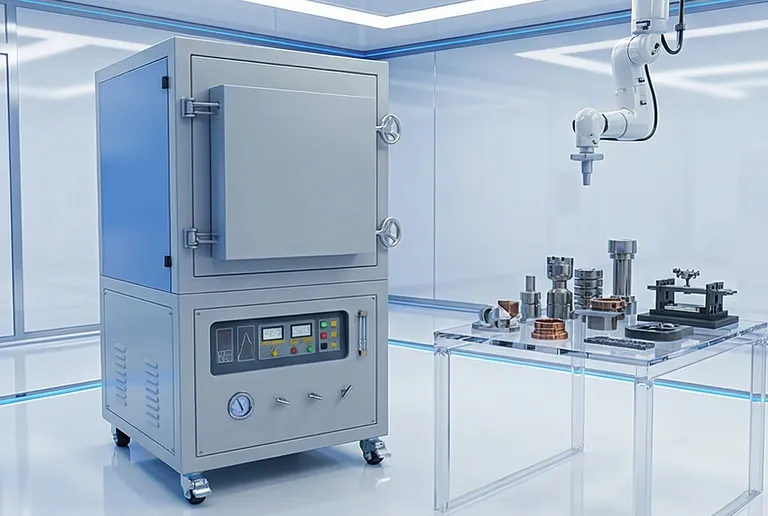
To solve this, you need an environment that doesn't just "protect" the metal, but completely isolates it. This is where the High-Vacuum Furnace becomes an indispensable tool for the modern lab.
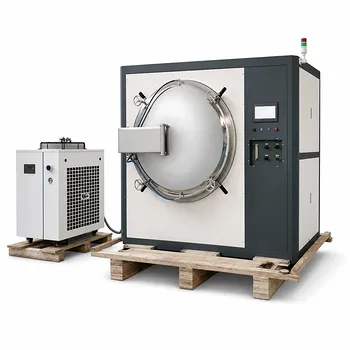
By operating in a nearly total vacuum, these furnaces eliminate both oxygen and nitrogen. This creates a "clean room" for thermal processing. At KINTEK, our high-vacuum furnaces—capable of reaching temperatures up to 2200°C—are engineered to provide this exact isolation.
Why this approach works where others fail:
- Decoupling the Variables: By removing nitrogen, you eliminate nitrogen strengthening. This allows the vacuum-brazed sample to serve as the "True Baseline." You can finally see how the alloy performs in its pure state.
- Eliminating Surface Defects: Unlike traditional furnaces, vacuum sintering and brazing eliminate surface oxidation and decarburization entirely, resulting in a superior surface finish.
- Precision and Purity: With more accurate temperature measurement and a pollution-free environment, the data you gather is a reflection of your materials, not your furnace’s atmospheric leaks.
Beyond the Fix: Unlocking New Material Potential
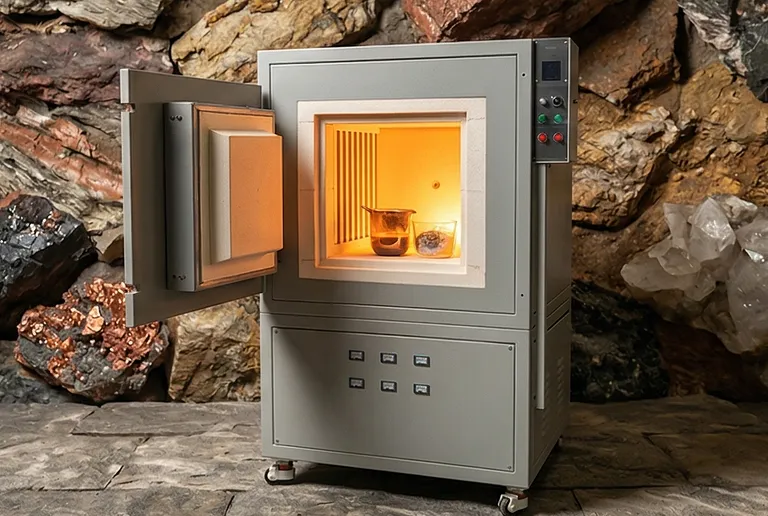
When you move your experiments into a KINTEK high-vacuum environment, you aren't just solving a measurement problem; you are opening the door to more advanced engineering.
Once you have established a clear baseline in a vacuum, you can then introduce controlled atmospheres to measure exactly how much nitrogen or hydrogen impacts your specific joint. This level of control allows you to work with reactive metals that would be destroyed in a standard conveyor furnace. It enables you to speed up R&D cycles because your results are finally repeatable and scientifically sound.
Whether you are seeking to improve the density of sintered parts or achieve the perfect braze on a tungsten assembly, understanding the "baseline" is the first step toward mastery.
At KINTEK, we understand that your research is only as good as the control you have over your variables. Our customizable high-temperature vacuum furnaces are designed to remove the "noise" from your lab, allowing you to focus on the breakthroughs that move your business forward. Whether you are navigating complex brazing experiments or scaling up precision manufacturing, our technical team is ready to help you design a thermal solution tailored to your unique challenges. Contact Our Experts today to discuss how we can bring absolute precision to your next project.
Related Products
- Vacuum Hot Press Furnace Machine Heated Vacuum Press Tube Furnace
- Vacuum Hot Press Furnace Machine Heated Vacuum Press
- 600T Vacuum Induction Hot Press Vacuum Heat Treat and Sintering Furnace
- 2200 ℃ Tungsten Vacuum Heat Treat and Sintering Furnace
- Vacuum Heat Treat Sintering Furnace with Pressure for Vacuum Sintering
Related Articles
- How Vacuum Hot Press Furnaces Transform Advanced Material Engineering
- How to Select the Right Vacuum Hot Pressing Furnace Temperature for Your Materials
- Beyond the Parts List: The Real Reason Your Vacuum Hot Press Fails (And How to Fix It)
- Why Your High-Temperature Materials Fail: The Hidden War Inside Your Furnace
- Is Your Material Data Real? Why Temperature Gradients Are Sabotaging Your Cu2Se Resistivity Measurements