High-temperature annealing is the definitive step for achieving chemical purity and structural stability in synthesized nanoparticles. This process, typically conducted at 600°C for two hours, is required to oxidatively decompose residual organic precursors and stabilize the monoclinic $\alpha$-$\text{Bi}_2\text{O}_3$ crystal structure. Without this thermal treatment, the resulting material would lack the phase purity and crystallinity necessary for high-performance technical applications.
Core Takeaway: The muffle furnace provides a controlled, uniform thermal environment that facilitates the transition from a messy organic-metal precursor to a high-quality, crystalline Zinc-doped Bismuth Oxide nanostructure.
Achieving Chemical Purity and Phase Stability
Removal of Residual Organic Components
During the initial synthesis phases, especially in "green" or chemical precipitation methods, nanoparticles are often coated with residual organic components and capping agents. The 600°C environment in the muffle furnace causes these organics to undergo oxidative decomposition and pyrolysis. This ensures the final product is a pure metal oxide rather than a carbon-contaminated composite.
Stabilization of the Monoclinic Structure
Bismuth Oxide exists in several polymorphic forms, but the monoclinic $\alpha$-$\text{Bi}_2\text{O}_3$ phase is often the desired stable state for specific electronic and catalytic uses. The high-temperature energy provided by the furnace allows the atoms to overcome kinetic barriers and rearrange into this specific, thermodynamically stable lattice.
Promoting Phase Ordering
The introduction of Zinc as a dopant creates local distortions in the Bismuth Oxide lattice. Annealing facilitates phase ordering, allowing the Zinc ions to integrate properly into the host structure. This results in a more homogenous material with improved structural quality and predictable physicochemical properties.
Enhancing Physical and Structural Quality
Improving Crystallinity
High-temperature treatment promotes the repair of internal crystal lattice defects that occur during rapid precipitation. By providing sustained thermal energy, the muffle furnace allows for the growth of well-defined crystal planes. This enhancement in crystallinity directly correlates to improved thermal stability and electronic performance.
Controlled Thermal Decomposition
The furnace acts as a catalyst for the dehydration and transformation of precursor complexes (such as hydroxides) into oxides. This transition is not instantaneous; it requires a stable thermal field to ensure that the entire batch of material transforms uniformly.
Uniform Thermal Distribution
Unlike standard ovens, a muffle furnace (or box resistance furnace) provides a highly uniform thermal field. This uniformity is critical for ensuring that all nanoparticles in a sample experience the same growth conditions. This leads to consistent grain sizes and prevents the formation of localized secondary phases that could degrade material purity.
Understanding the Trade-offs
The Risk of Sintering and Grain Growth
While high temperatures improve crystallinity, they also encourage grain growth and agglomeration. As nanoparticles are heated, they may fuse together (sinter), increasing the average particle size and reducing the total surface area. Finding the "sweet spot"—in this case, 600°C—is a delicate balance between achieving high crystallinity and maintaining nano-scale dimensions.
Energy Consumption vs. Material Quality
Lower temperatures (e.g., 300°C–400°C) may remove some organics but often fail to achieve the full crystalline transformation required for $\alpha$-$\text{Bi}_2\text{O}_3$. Conversely, excessive temperatures can lead to unwanted phase transitions or the evaporation of volatile components. Precision in temperature control is the most critical factor in successful synthesis.
Making the Right Choice for Your Goal
- If your primary focus is Phase Purity: Ensure the furnace maintains a stable 600°C for the full 2-hour duration to guarantee the monoclinic structure is fully formed.
- If your primary focus is High Surface Area: Consider testing the lower end of the effective temperature range to minimize particle sintering while still removing organic residues.
- If your primary focus is Photocatalytic Activity: Prioritize the removal of all organic capping agents through oxidative annealing to expose the maximum number of active surface sites.
By mastering the annealing stage in a muffle furnace, you transform a raw precursor into a sophisticated, high-performance Zinc-doped Bismuth Oxide nanomaterial.
Summary Table:
| Objective | Process Mechanism | Final Material Impact |
|---|---|---|
| Chemical Purity | Oxidative decomposition of organic precursors | Carbon-free, pure metal oxide nanoparticles |
| Phase Stability | Transition to monoclinic $\alpha$-$\text{Bi}_2\text{O}_3$ structure | High-performance electronic & catalytic properties |
| Dopant Integration | Thermal phase ordering of Zinc ions | Homogenous lattice with improved quality |
| Crystallinity | Repair of internal lattice defects | Enhanced thermal stability and grain consistency |
| Structural Control | Managed dehydration of hydroxides | Uniform oxide transformation across the sample |
Elevate Your Material Synthesis with KINTEK Precision
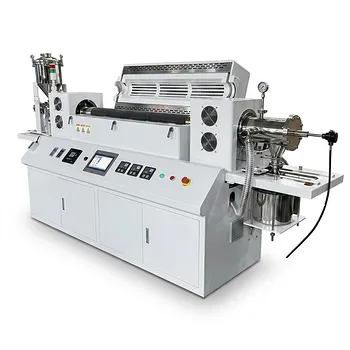
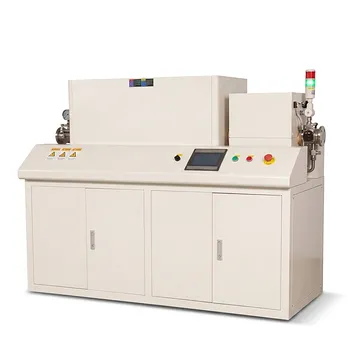
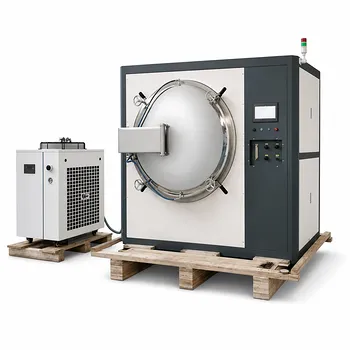
Achieving the perfect monoclinic structure in Zinc-doped Bismuth Oxide requires more than just heat—it requires absolute thermal uniformity and precision. KINTEK specializes in high-performance laboratory equipment, providing researchers and manufacturers with a comprehensive range of muffle, tube, rotary, vacuum, and CVD furnaces tailored for advanced material science.
Whether you are synthesizing specialized nanoparticles or scaling up industrial production, our high-temperature furnaces are fully customizable to meet your unique thermal profiles. Ensure consistent crystallinity and phase purity in every batch.
Ready to optimize your annealing process? Contact KINTEK today to find the perfect high-temperature solution for your lab!
References
- Asad ur Rehman Khan, Muhammad Hassan Sarfraz. Structural, Optical, Electrical and Photocatalytic Investigation of n-Type Zn<sup>2+</sup>-Doped α-Bi<sub>2</sub>O<sub>3</sub> Nanoparticles for Optoelectronics Applications. DOI: 10.1021/acsomega.3c10521
This article is also based on technical information from Kintek Furnace Knowledge Base .
Related Products
- 1400℃ Muffle Oven Furnace for Laboratory
- 1700℃ High Temperature Muffle Oven Furnace for Laboratory
- 1800℃ High Temperature Muffle Oven Furnace for Laboratory
- 1200℃ Muffle Oven Furnace for Laboratory
- High Temperature Muffle Oven Furnace for Laboratory Debinding and Pre Sintering
People Also Ask
- What is the primary function of a high-temperature laboratory muffle furnace in chemical synthesis? Achieve Precision.
- How does a high-temperature laboratory muffle furnace affect material properties? Transform Anodic Oxide Films Fast
- What role does a muffle furnace play in refractory bricks? Enhance Performance and Durability Testing
- What is the role of a laboratory high-temperature muffle furnace in bauxite adsorbent prep? Boost Efficiency to 95%.
- What is the role of a laboratory high-temperature muffle furnace in H13 steel treatment? Optimize Tool Performance