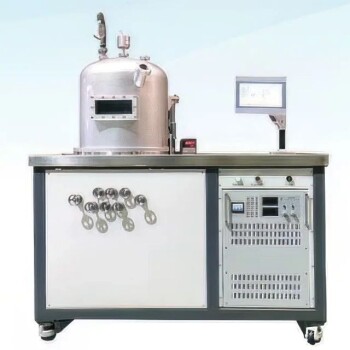
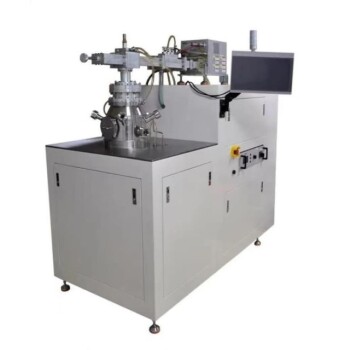
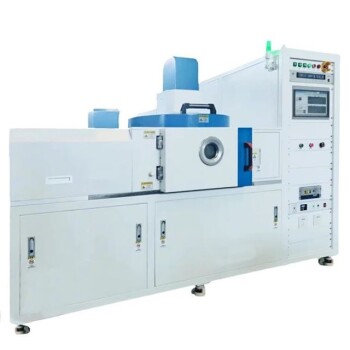
The industrial low-activity Chemical Vapor Deposition (CVD) system is the critical control mechanism for high-performance coating synthesis. In Pd-Zr and Pt-Zr modified aluminizing, this system provides a highly regulated chemical environment that facilitates the simultaneous deposition and inward diffusion of aluminum and zirconium at temperatures of approximately 1050°C. By precisely managing gas precursors, it ensures the formation of a uniform beta-NiAl phase coating specifically engineered to bond with noble metal-modified layers.
The core value of a low-activity CVD system lies in its ability to transition from simple surface coating to deep metallurgical modification. It serves as a precision reactor that balances thermal energy and chemical flux to embed zirconium dopants into an aluminide matrix, significantly enhancing the oxidation resistance of critical components.
The Functional Role of the CVD System
High-Temperature Phase Transformation
The CVD system maintains a stable thermal environment at approximately 1050 degrees Celsius, which is essential for the chemical reactions to occur. At these temperatures, the system enables the gaseous precursors to decompose and react, allowing elements to integrate into the substrate's crystal lattice. This thermal energy is the catalyst that drives the transformation of raw gases into a solid, protective beta-NiAl phase coating.
Precision Control of Precursor Flux
Unlike simpler coating methods, an industrial CVD system allows for the fine-tuning of flow rates and pressure of the precursor gases. This precision is vital for "low-activity" processes, where the goal is to control the rate of deposition to match the rate of inward diffusion. This balance prevents the formation of brittle surface layers and promotes a more stable, integrated coating structure.
Achieving Structural Integrity and Uniformity
Simultaneous Aluminizing and Zr-Doping
The system acts as a multi-element delivery platform, allowing aluminum and zirconium (Zr) to be deposited at the same time. This "co-deposition" or simultaneous doping is difficult to achieve with traditional methods but is easily managed in a CVD chamber by mixing specific precursor vapors. The result is a zirconium-doped aluminide layer that offers superior adhesion and resistance to thermal cycling.
Uniformity Across Intricate Geometries
One of the primary advantages of the CVD role is its ability to treat complex internal geometries and large-area surfaces uniformly. Because the process relies on gas-phase reactions, the protective elements can reach recessed areas and cooling holes that line-of-sight methods would miss. This ensures that the Pd-Zr or Pt-Zr modification is consistent across the entire part, regardless of its shape.
Understanding the Trade-offs
Thermal Impact on Substrate Properties
While the 1050°C operating temperature is necessary for diffusion, it can inadvertently affect the mechanical properties of the underlying base alloy. Prolonged exposure to high heat during the CVD cycle may require subsequent heat treatments to restore the material's original fatigue resistance or grain structure.
Complexity of Parameter Calibration
The "low-activity" nature of the system demands rigorous calibration of gas chemistry and vacuum levels. Small deviations in the precursor concentration can lead to non-uniform doping or the failure to form the desired beta-NiAl phase. This complexity requires advanced monitoring systems and higher operational expertise compared to high-activity pack cementation.
How to Apply This to Your Project
Recommendations for Implementation
- If your primary focus is maximum oxidation resistance: Utilize the CVD system to maximize zirconium (Zr) doping levels, as the precise gas control allows for optimal reactive element concentrations.
- If your primary focus is treating complex turbine components: Leverage the gas-phase penetration of the CVD process to ensure that internal cooling channels receive the same Pd-Zr or Pt-Zr protection as external surfaces.
- If your primary focus is coating structural stability: Prioritize the "low-activity" settings to encourage inward diffusion, which creates a more robust bond between the noble metal layer and the aluminide coating.
The industrial CVD system transforms chemical vapor into a sophisticated metallurgical shield, providing the precision necessary to master complex noble metal-modified aluminizing.
Summary Table:
| Feature | Function in CVD System | Key Benefit |
|---|---|---|
| Thermal Control | Maintains stable 1050°C environment | Drives beta-NiAl phase transformation |
| Precursor Flux | Fine-tunes gas flow and pressure | Prevents brittle layers; promotes stability |
| Co-Deposition | Simultaneous Al and Zr delivery | Superior adhesion and thermal resistance |
| Gas-Phase Reaction | Penetrates intricate geometries | Uniform protection for complex internal parts |
Elevate Your Coating Precision with KINTEK
Unlock the full potential of your metallurgical processes with KINTEK’s industry-leading technology. KINTEK specializes in laboratory equipment and consumables, offering a comprehensive range of high-performance high-temperature furnaces—including CVD, vacuum, atmosphere, tube, muffle, rotary, dental, and induction melting systems—all of which are fully customizable to meet your unique research and production requirements.
Whether you are optimizing Pd-Zr/Pt-Zr modified aluminizing or developing next-generation thermal barrier coatings, our expert team provides the precision tools necessary for superior material integrity. Contact us today to discuss your project needs and get a custom solution!
References
- Maciej Pytel, Р. Філіп. Structure of Pd-Zr and Pt-Zr modified aluminide coatings deposited by a CVD method on nickel superalloys. DOI: 10.4149/km_2019_5_343
This article is also based on technical information from Kintek Furnace Knowledge Base .
Related Products
- HFCVD Machine System Equipment for Drawing Die Nano Diamond Coating
- Cylindrical Resonator MPCVD Machine System for Lab Diamond Growth
- MPCVD Machine System Reactor Bell-jar Resonator for Lab and Diamond Growth
- Inclined Rotary Plasma Enhanced Chemical Deposition PECVD Tube Furnace Machine
- Custom Made Versatile CVD Tube Furnace Chemical Vapor Deposition CVD Equipment Machine
People Also Ask
- What is Hot-filament Chemical Vapor Deposition (HFCVD)? Achieve High-Quality Thin Films with Precision Control
- What are the equipment for chemical vapor deposition? A Guide to the 5 Essential Components
- What is the significance of the vacuum pressure control system in the CVD coating process for powders?
- What is the function of high-purity Argon (Ar) gas during CVD? Optimize Your Thin Film Uniformity and Purity
- What are the advantages of using Chemical Vapor Deposition (CVD) for coating turbine blades? Enhance Life & Performance