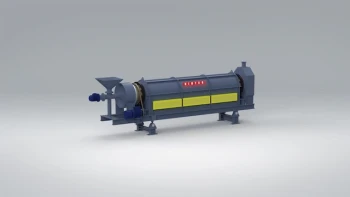
A high-capacity muffle furnace acts as the primary thermal reactor for the carbonization of cattle bones, providing the controlled, high-temperature environment necessary for pyrolysis. Specifically, it facilitates the thermal decomposition of organic components at temperatures typically ranging from 500°C to 700°C. By maintaining an oxygen-limited or anaerobic atmosphere, the furnace ensures that volatile matter is removed while leaving behind a stable, porous carbonaceous skeleton that serves as the foundation for activated carbon.
The muffle furnace is the critical tool for transforming raw biological waste into a functional adsorbent by precisely managing the heat required to strip away non-carbon elements. Its ability to maintain uniform temperature and an oxygen-free environment directly determines the surface area and porosity of the final product.
The Engine of Pyrolysis: Thermal Decomposition
Removing Organic Volatiles
The primary role of the furnace is to drive off the moisture and complex organic proteins found in cattle bones. Under intense heat, these components break down and volatilize, leaving only the mineral and carbon structures behind.
Forming the Carbonaceous Skeleton
As organic matter exits the bone material, the furnace’s heat facilitates the rearrangement of carbon atoms. This process creates a stable, solid framework that retains the physical integrity of the bone while significantly increasing its internal surface area.
Precision Control and Environmental Management
Temperature Accuracy and Pore Development
Precise temperature control is essential for determining the pore size distribution of the activated carbon. Fluctuations in heat can lead to uneven carbonization, which compromises the material’s ability to adsorb specific contaminants later in its lifecycle.
Maintaining Anaerobic Conditions
The muffle furnace provides a relatively enclosed environment that is vital for oxygen-deficient processing. Without this isolation, the cattle bones would simply combust into ash rather than undergoing the pyrolysis required to create a carbon-rich material.
Managing Heating Rates and Dwell Times
Sophisticated furnaces allow for specific heating rates (such as 17°C/min) and multi-stage dwell times. This gradual increase in temperature prevents structural collapse of the bone material and ensures that the volatile gases escape without damaging the developing pore structure.
Impact on Material Performance
Specific Surface Area Optimization
The quality of the furnace's insulation and its ability to sustain a stable 700°C environment directly correlate to the specific surface area of the bone char. A higher surface area results in a more efficient activated carbon with superior adsorption capabilities.
Mechanical and Chemical Stability
Through high-temperature treatment, the muffle furnace grants the resulting activated carbon its necessary mechanical strength. This stability is crucial for industrial applications where the carbon must withstand physical pressure and chemical exposure during water or air filtration.
Understanding the Trade-offs
Thermal Efficiency vs. Capacity
While high-capacity furnaces allow for larger batches of cattle bones, they may suffer from thermal gradients where the center of the batch is cooler than the edges. Ensuring uniform heat distribution across a large internal volume requires advanced heating element placement and high-quality insulation.
Energy Consumption and Throughput
Operating a muffle furnace at 700°C for extended periods—often 60 minutes or more—requires significant energy. Users must balance the dwell time required for complete carbonization against the operational costs of maintaining such high temperatures in a laboratory or industrial setting.
Making the Right Choice for Your Goal
When selecting or operating a muffle furnace for cattle bone carbonization, your technical requirements will vary based on your desired output.
- If your primary focus is Maximum Adsorption Capacity: Prioritize a furnace with highly precise temperature sensors to maintain a consistent 600°C-700°C range for optimal pore development.
- If your primary focus is High-Volume Production: Invest in a high-capacity unit with superior insulation and multi-zone heating to ensure uniform carbonization throughout the entire batch.
- If your primary focus is Structural Integrity: Use a programmable furnace that allows for slow, controlled heating rates to prevent the carbon skeleton from becoming brittle.
By mastering the thermal environment within the muffle furnace, you transform raw cattle bones into a high-performance material capable of complex molecular adsorption.
Summary Table:
| Feature | Role in Carbonization | Impact on Final Product |
|---|---|---|
| Thermal Reactor | Facilitates pyrolysis at 500°C - 700°C | Removes volatiles to create carbon skeleton |
| Anaerobic Control | Maintains oxygen-free environment | Prevents combustion and preserves carbon yield |
| Precision Control | Manages heating rates (e.g., 17°C/min) | Determines pore size and surface area |
| Thermal Uniformity | Ensures consistent heat across batch | Provides high mechanical and chemical stability |
Elevate Your Carbonization Research with KINTEK Precision
High-quality activated carbon production demands absolute thermal control and reliability. At KINTEK, we specialize in high-performance laboratory equipment, offering a comprehensive range of muffle furnaces, tube furnaces, rotary furnaces, vacuum systems, and CVD/atmosphere furnaces. Our high-capacity units are fully customizable to meet your specific pyrolysis requirements, ensuring uniform heat distribution and optimal pore development for your materials.
Ready to scale your production and achieve superior adsorption performance? Contact us today to find the perfect high-temperature furnace solution for your laboratory or industrial needs!
References
- C.S. Maduka, Monday Morgan Chukwu. Chemical Analysis of Pretreated Coal Effluent with Hydrochloric and Tetraoxosulphate (VI) Acids Activated Carbon: A Comparative Study. DOI: 10.29294/ijase.10.3.2024.3482-3488
This article is also based on technical information from Kintek Furnace Knowledge Base .
Related Products
- High Temperature Muffle Oven Furnace for Laboratory Debinding and Pre Sintering
- 1200℃ Muffle Oven Furnace for Laboratory
- 1400℃ Muffle Oven Furnace for Laboratory
- 1700℃ High Temperature Muffle Oven Furnace for Laboratory
- 1800℃ High Temperature Muffle Oven Furnace for Laboratory
People Also Ask
- What thermal phenomena occur during polymer binder burnout in ceramic green bodies? Lab Furnace Guide
- What role does a high-temperature muffle furnace play in STFO synthesis? Achieve Pure Perovskite Results
- Why is controlled heat treatment in a muffle furnace necessary for calcined clay? Achieve Optimal Pozzolanic Activity
- How does a high-temperature muffle furnace facilitate the formation of LaNbxAl1−xO3+δ perovskite structures? Key Roles
- What role does a high-temperature muffle furnace play in the formation of biochar catalysts? Master Catalyst Synthesis