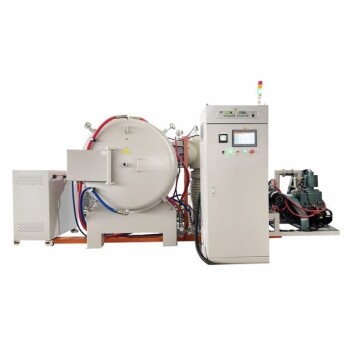
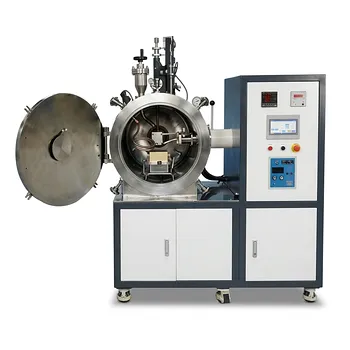
Controlling the environment is everything. When heat-treating carbon allotropes like graphite and diamond, the non-negotiable operational factors are eliminating oxygen to prevent catastrophic oxidation, selecting furnace hardware that can withstand the process without contaminating the workpiece, and tailoring the heating cycle to respect each allotrope’s unique thermodynamic stability. In practice, this means using high-purity vacuum or inert gas atmospheres, leveraging graphite-based heating elements and tooling, and applying rapid heating strategies—especially for metastable diamond—to suppress decomposition.
Success hinges on understanding that carbon allotropes are simultaneously the workpiece, the furnace tooling, and a reactive element. The operational strategy revolves around controlling oxygen partial pressure to prevent burn‑off, respecting the material’s sublimation and stability limits, and designing the thermal cycle to outrun degradation kinetics.
The Dominant Threat: Oxidation and Atmosphere Control
Carbon’s most critical vulnerability at high temperature is not melting—it is its relentless reaction with oxygen. Before any other operational factor can matter, the furnace atmosphere must be rendered chemically inert to carbon.
Oxygen: The Primary Enemy at Elevated Temperatures
Graphite and diamond begin to oxidize rapidly in ambient air above just 400–500 °C. Even trace oxygen partial pressure will consume carbon workpieces, fixtures, and heating elements long before the material’s sublimation point is reached. Therefore, the furnace chamber must continuously exclude oxygen through a high-integrity vacuum or a positive-pressure blanket of high-purity inert gas.
Vacuum vs. Inert Atmosphere — Choosing the Right Protection
A high‑vacuum environment (<10⁻³ mbar) removes the bulk of oxygen and allows processing up to extreme temperatures. However, vacuum alone is not always sufficient. Above 2200 °C, graphite begins to evaporate even in pure vacuum, vaporizing carbon that can re‑deposit on sensitive workpieces and insulation. To suppress this evaporation and safely reach 2500–2800 °C, operators backfill with a high‑purity inert gas—argon—to a partial pressure sufficient to slow sublimation. Argon is preferred because it does not form carbides or react with carbon, unlike nitrogen which can introduce unwanted nitride formation with some furnace hardware.
Furnace Hardware: Heating Elements and Tooling Compatibility
The furnace internals are not passive bystanders. They become chemically and mechanically active at the extreme temperatures needed for carbon allotropes. The wrong material choice leads to premature failure, contamination, or both.
Why Graphite is the Backbone of High‑Temperature Carbon Processing
Graphite retains its mechanical strength and thermal stability at temperatures that would melt most metals. It is the default material for heating elements, punches, and dies in vacuum hot‑presses and sintering furnaces, routinely handling processing up to 2200–2400 °C. Its self‑compatibility with carbon workpieces eliminates the risk of eutectic melting or adverse reactions that metal tooling would cause. For carburizing or carbon‑saturated environments, graphite is essentially irreplaceable.
The Limits of Graphite Elements — Evaporation and Contamination
The very property that makes graphite stable in a carburizing atmosphere becomes a liability in ultra‑high vacuum. Above 2200 °C in vacuum, graphite evaporates, releasing carbon vapor that can condense on cooler components and contaminate the workpiece. The operational fix is to introduce an argon backfill once the furnace has degassed, maintaining a pressure just high enough to suppress evaporation while preserving inert conditions.
Alternative Heating Elements (Molybdenum, Tantalum, Tungsten) — When and Why
Metallic elements provide fast heating and high temperature capability, but they degrade rapidly in the presence of carbon:
- Molybdenum (up to 1700 °C) oxidizes at 600–700 °C and forms brittle carbides above 1350 °C if residual carbon or binder vapor is present.
- Tantalum (up to 2500 °C) greedily forms oxides, nitrides, and carbides in any atmosphere that isn't perfectly pure; it is also embrittled by hydrogen.
- Tungsten (up to 2800 °C) is susceptible to severe degradation in carbon monoxide environments above 1400 °C.
Because carbon allotropes and their binder residues inevitably release carbon‑bearing vapors, graphite remains the only truly robust heating element for carbon heat‑treatment above 2000 °C.
Preserving Metastable Diamond: Kinetics and Cycle Design
Diamond is not in its thermodynamically most stable state at room temperature; it persists because of an enormous kinetic barrier. High‑temperature processing threatens to collapse that barrier and convert diamond into graphite.
Diamond’s Metastability — Graphitization is the Hidden Risk
Diamond undergoes phase decomposition to graphite at a rate dependent on temperature, pressure, and time. The process is irreversible once started. An operator must view heat‑treatment of diamond not as a simple soak at temperature, but as a race against graphitization kinetics.
Accelerated Heating and Minimal Dwell — The Kinetic Defense
The operational countermeasure is to minimize cumulative thermal exposure. This is achieved by:
- Applying high heating rates to race through lower‑temperature ranges where decomposition may have an outsized incubation effect.
- Reducing dwell times at peak temperature to the absolute minimum required for the metallurgical or sintering goal.
- Often combining mechanical pressure with heating, which accelerates densification and allows the cycle to complete before significant graphitization can occur.
By outrunning the kinetics, a furnace with fast‑ramp capability can safely process diamond that would otherwise be destroyed by a slower, conventional cycle.
Tooling and Material Interaction: Avoiding Mechanical Failure
Even when the atmosphere is perfect and the temperature is correct, the physical interface between the carbon workpiece and the tooling can destroy the part or the die.
Thermal Expansion Coefficients — The Silent Part‑Killer
Graphite punches and dies have a specific coefficient of thermal expansion (CTE). If the powder compact or preform does not have a closely matched CTE, differential contraction during cooling will crack the finished part or rupture the die. Operators must select tooling graphite grades and design compaction geometries that account for this mismatch, often through sacrificial interfaces or graded expansion layers.
Graphite Tooling Integrity — Carbon Monoxide and Structural Failure
Graphite dies operate under high compressive loads at up to 2200 °C inside a protective atmosphere. Any oxygen ingress—from a leak or insufficient purge—reacts with the die to form carbon monoxide gas. This not only erodes the tooling structurally but also creates a dangerous pressure buildup and contaminates the process atmosphere. Continuous monitoring of oxygen partial pressure and vacuum/hold cycles during heat‑up is essential to prevent the catastrophic failure of graphite dies under load.
Understanding the Trade‑offs
No single furnace recipe works universally; every operational choice carries a competing consequence.
The Vacuum‑Ionization vs. Contamination Balance
Drawing a deep vacuum removes oxygen thoroughly but activates graphite evaporation above 2200 °C. Adding an argon backfill suppresses evaporation but sacrifices the absolute cleanliness of high vacuum, potentially leaving trace impurities to interact with the workpiece. The operator must decide based on the workpiece’s sensitivity: a diamond‑like carbon film may demand a cleaner vacuum, while a bulk graphite component can tolerate a light backfill that enables a higher ultimate temperature.
Speed vs. Uniformity — The Heating Rate Dilemma
Rapid heating is essential for preserving metastable diamond, but it also increases the risk of thermal gradients in large or thick cross‑sections. A part that heats unevenly may crack from thermal stress before it ever reaches its target temperature. Die geometry, heating element layout, and the use of multi‑zone control must be tuned to balance the need for speed against the demand for thermal uniformity.
Tooling Life vs. Process Purity
Graphite tooling is robust but sheds fine particulate, can introduce carbon into the process atmosphere, and eventually degrades through erosion and vaporization. In processes that demand ultra‑high purity, this can become unacceptable. The operational trade‑off is between the high temperature and pressure capability of graphite dies and the potential for microscopic contamination of the workpiece—a decision that often drives pre‑treatment, coating, or the use of alternative refractory metals at lower temperatures.
Making the Right Choice for Your Goal
Operational success is about matching the furnace strategy to the specific carbon allotrope and the end product’s requirements.
- If your primary focus is preserving diamond integrity: Prioritize a furnace with high‑ramp capability and low‑inertia graphite elements. Design cycles with minimal soak times and apply mechanical pressure to densify before graphitization can initiate. Use a high‑vacuum environment with the option for a light argon backfill only if evaporation threatens tooling stability.
- If your primary focus is processing graphite to ultra‑high temperatures (>2500 °C): Select a furnace equipped with graphite heating elements and a reliable argon backfill system. Never rely on pure vacuum above 2200 °C; instead, establish a controlled partial pressure of argon to suppress graphite evaporation while maintaining an oxygen‑free atmosphere.
- If your primary focus is ensuring consistent production runs with graphite tooling: Invest in matching thermal expansion coefficients between the workpiece and the die graphite grade. Implement rigorous leak‑free atmosphere monitoring and establish oxygen‑scavenging purge cycles to protect tooling from oxidation and carbon monoxide degradation over repeated cycles.
- If your primary focus is avoiding contamination of high‑purity carbon components: Consider metallic heating elements only if the process temperature can be kept below 1700 °C (molybdenum) and carbon vapor is rigorously excluded. For higher temperatures, accept that graphite elements will dominate, and implement post‑process cleaning or protective coatings to mitigate particulate fallout.
The key to heat‑treating carbon allotropes is not found in a single parameter but in orchestrating the furnace environment, the heating cycle, and the material interfaces into a coherent, oxygen‑free defense against the very reactivity that makes carbon so powerful.
Summary Table:
| Operational Factor | Primary Challenge | Recommended Solution / Best Practice |
|---|---|---|
| Atmosphere Control | Rapid oxidation >400 °C; graphite evaporation >2200 °C | High vacuum (<10⁻³ mbar) + high-purity Argon backfill above 2200 °C |
| Furnace Hardware | Metal tooling carbide formation & failure at high temps | Utilize self-compatible graphite elements & dies; match CTEs |
| Diamond Preservation | Irreversible graphitization phase transformation | Accelerated ramp rates, minimal soak time, and mechanical pressure |
Master High-Temperature Carbon Processing with KINTEK
Precision atmosphere and thermal control are critical when heat-treating diamond and graphite. KINTEK specializes in advanced laboratory equipment and custom high-temperature furnaces—including vacuum, controlled atmosphere, CVD, tube, and muffle furnaces designed to prevent oxidation and ensure precise thermal cycles.
Whether you need standard furnace setups or fully customized thermal solutions for advanced carbon research, our team is here to help. Contact KINTEK today to speak with a lab furnace expert!
Related Products
- 2200 ℃ Tungsten Vacuum Heat Treat and Sintering Furnace
- 2200 ℃ Graphite Vacuum Heat Treat Furnace
- Molybdenum Vacuum Heat Treat Furnace
- 1400℃ High Temperature Laboratory Tube Furnace with Alumina Tube
- Vacuum Heat Treat Sintering Furnace Molybdenum Wire Vacuum Sintering Furnace
People Also Ask
- How does a tungsten-heated vacuum sintering furnace prepare (TbxY1-x)2O3 ceramics? Achieve 99%+ Density & Purity
- What wear-resistance enhancements are achieved by powder coating? The Role of Vacuum Sintering Furnaces
- How do compaction pressure and vacuum sintering optimize porous ceramics? Maximize Density & Toughness
- What role does a high-temperature vacuum sintering furnace play in the densification of WC-10(Ni, Ni/Co) alloys?
- How does high-temp vacuum sintering influence Y-TZP mechanical properties? Achieve Max Toughness