Liquid phase sintering of WC-Co cemented carbides requires precise high-temperature furnace processing to transform a powder compact into a dense, wear-resistant composite. The process demands peak temperatures in the range of 1400 °C to 1500 °C (1673–1773 K) under vacuum or controlled atmosphere, where the cobalt binder melts and wets the tungsten carbide particles. The critical microstructural mechanism is a combination of particle rearrangement by capillary forces and solution–reprecipitation, which together eliminate porosity and build a continuous, interlocking WC skeleton bonded by a solidified Co-rich matrix. Achieving that durable skeletal architecture depends on exact carbon stoichiometry, heating rate, and dwell time.
Understanding liquid phase sintering of WC-Co means balancing two interdependent requirements: a furnace temperature high enough to create a mobile liquid phase, and a heating profile gentle enough to avoid carbon loss, exaggerated grain growth, or incomplete densification. The key takeaway is that the process is not a single-temperature event but a carefully choreographed thermal sequence that transforms mixed powders into a skeleton of angular carbide grains held together by a thin metallic binder, delivering extreme hardness and toughness.
Why This Temperature Window Matters
The Role of Carbon Stoichiometry and Eutectic Melting
The temperature at which the cobalt binder becomes liquid is not fixed; it depends on the carbon content within the Co-W-C system. In a graphite-saturated, stable composition, the eutectic melting temperature can be as low as 1280 °C. When carbon content is lower, eta-carbides (Co₃W₃C, Co₆W₆C) form and push the melting point up to roughly 1375 °C. Pure cobalt, without dissolved tungsten and carbon, melts at 1495 °C. This means furnace operators must maintain a fine-tuned carbon balance to ensure the liquid phase appears reliably within the 1320–1360 °C range observed during thermal analysis of standard compacts.
Conventional Peak Temperature and Dwell Time
Even though the binder can melt below 1400 °C, industrial and laboratory practice typically employs a peak temperature of 1400 °C (sometimes reaching 1500 °C for rapid homogenization) with a 60‑minute dwell. Holding at this temperature ensures complete liquid formation, uniform spreading of the melt, and sufficient time for dissolution–precipitation processes to eliminate fine porosity. Operating under high vacuum or inert gas prevents oxidation that would degrade both the carbide and the liquid cobalt.
Heating Rate Through the Critical Window
The final heating rate, ideally 5–10 °C/min, is as important as the peak temperature. Moving too quickly through the 1100–1230 °C solid-state range or across the melting interval can cause uneven shrinkage, differential thermal expansion stress, and irregular pore closure. A steady ramp allows uniform diffusional creep of cobalt and prevents part distortion.
The Microstructural Mechanisms of Liquid Phase Sintering
Solid-State Sintering as a Prelude
Before the binder melts, solid-state diffusion begins to weld particles at their contact points. In the 1100–1230 °C range, tiny amounts of WC dissolve into the solid cobalt and reprecipitate, causing some shrinkage. However, under strict isothermal conditions, this shrinkage rate drops drastically once a local equilibrium is reached—dissolution ceases to generate the free volume needed for further rearrangement. That is why a careful thermal ramp is necessary to sustain steady densification and prepare the compact for the liquid stage.
Liquid Formation and Particle Rearrangement
As the temperature crosses the liquidus, the first cobalt droplets form and rapidly wet the WC particles because of the system’s excellent wetting characteristics. Capillary forces from the liquid menisci exert enormous local pressures, pulling particles together into a denser packing. This rapid rearrangement can eliminate a large fraction of the initial porosity within minutes, but alone it cannot close all voids—continued grain-shape accommodation is required.
Dissolution–Precipitation and Grain Shape Accommodation
Small, sharp-edged WC grains have higher solubility in the liquid cobalt than larger, flat grains. The resulting chemical potential gradient drives preferential dissolution of fine asperities and small grains and reprecipitation onto larger grain facets. This solution–reprecipitation process smooths grains, allows them to pack more efficiently, and fills remaining pores. The continuous transport of tungsten and carbon through the liquid phase shapes the angular, faceted WC crystals characteristic of high-quality cemented carbides.
Formation of the Interconnected Skeleton
Ultimately, the dissolution–precipitation mechanism does more than just densify the material. It also creates a rigid, three-dimensional skeleton of WC grains in direct contact with one another. The cobalt liquid solidifies into a thin, continuous film between these interlocking carbide grains, forming a metal‑matrix composite where the hard skeleton carries most of the mechanical load. This skeleton architecture is why WC-Co can achieve exceptional hardness and transverse rupture strength simultaneously.
Understanding the Trade-offs and Common Pitfalls
Carbon Control and Embrittlement
Improper carbon management is the most common failure mode. Carbon loss from the compact—often accelerated by the use of inappropriate furnace fixtures—leads to the formation of brittle eta‑carbides (Co₃W₃C) that drastically reduce toughness. Using graphite heating elements and support fixtures helps maintain the correct carbon potential and prevents surface decarburization during vacuum sintering.
Grain Growth vs. Dwell Time
Long dwell times at high temperature allow continuous grain growth via Ostwald ripening, coarsening the microstructure and reducing hardness. While grain‑growth inhibitors such as VC or TaC are often added, careful time–temperature management can suppress coarsening without them. Processes that achieve rapid densification, like microwave sintering, can reach full density in as little as 10–30 minutes at 1250–1320 °C, delivering an inherently finer grain size.
Heating Rate and Uniformity
A fast ramp that feels efficient can cause differential shrinkage across a part, leading to cracks or warping. Conversely, an excessively slow ramp in the solid‑state zone may allow local equilibria to stall densification. Maintaining a measured 5–10 °C/min heating rate through the critical range balances uniform binder creep with sustained densification.
Making the Right Choice for Your Sintering Goal
The ideal furnace profile depends on the balance of properties you need most.
- If your primary focus is maximum hardness and wear resistance: Use a standard 1400 °C vacuum cycle with a 60‑minute dwell, and strictly control carbon activity to avoid eta‑phase. The resulting well‑formed WC skeleton and fine grain size will deliver the highest abrasion resistance.
- If your primary focus is toughness and avoidance of embrittlement: Maintain a graphite‑rich furnace environment and choose a temperature near 1400 °C that stays safely above the eutectic but below any region where carbon loss accelerates. Confirm binder melting does not occur below 1360 °C by verifying carbon stoichiometry.
- If your primary focus is suppressing grain growth without expensive inhibitors: Explore microwave sintering at 1250–1320 °C. The rapid, volumetric heating achieves full density in minutes, preserves a finer grain structure, and can improve corrosion and erosion resistance by 15–30 %.
- If your primary focus is preventing part distortion: Apply a gentle final ramp of 5–10 °C/min from the solid‑state stage through the liquidus, using uniform furnace hot zones and graphite fixtures to ensure even shrinkage.
By treating liquid phase sintering as a tightly choreographed interaction of temperature, time, and carbon chemistry, you can consistently produce WC-Co components with the ideal skeleton‑matrix architecture that defines world‑class cemented carbides.
Summary Table:
| Process Stage | Temperature / Ramp Rate | Key Microstructural Mechanism | Primary Outcome |
|---|---|---|---|
| Solid-State Sintering | 1100–1230 °C | Solid-state diffusion & WC dissolution | Initial particle bonding & partial shrinkage |
| Liquid Formation | 1280–1375 °C | Eutectic melting & capillary rearrangement | Rapid elimination of major porosity |
| Peak Sintering Stage | 1400–1500 °C (60 min dwell) | Solution–reprecipitation | Interlocking 3D WC skeleton & full density |
| Thermal Ramp Control | 5–10 °C/min final ramp | Uniform diffusional binder creep | Prevention of part distortion & cracking |
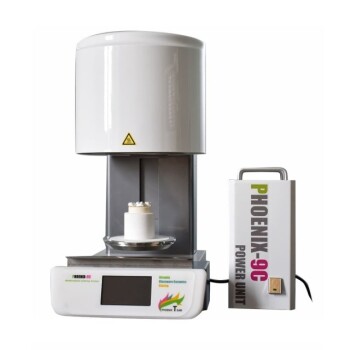
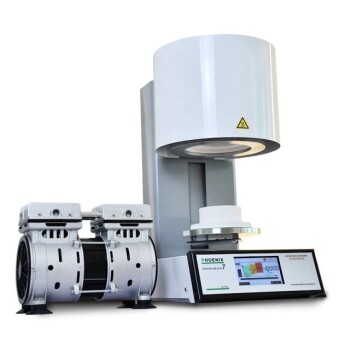
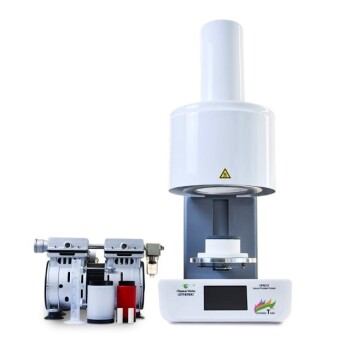
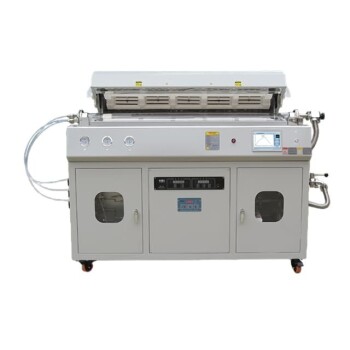
Master precise thermal processing for high-performance WC-Co cemented carbides with KINTEK. KINTEK specializes in laboratory equipment and consumables, offering a comprehensive range of high-temperature furnaces (vacuum, atmosphere, tube, muffle, CVD, and dental furnaces)—all customizable to your exact research and production specifications. Our precision vacuum and controlled-atmosphere solutions ensure strict carbon stoichiometry control and optimal grain structure development. Contact KINTEK today to consult with our experts and discover how our advanced furnace technology can enhance your lab's productivity!
Related Products
- Vacuum Heat Treat Sintering Furnace Molybdenum Wire Vacuum Sintering Furnace
- Vacuum Heat Treat Sintering Furnace with Pressure for Vacuum Sintering
- Spark Plasma Sintering SPS Furnace
- High Temperature Muffle Oven Furnace for Laboratory Debinding and Pre Sintering
- 600T Vacuum Induction Hot Press Vacuum Heat Treat and Sintering Furnace
People Also Ask
- What are the main structural components of a vacuum sintering furnace? Unlock Precision in High-Temperature Processing
- How does vacuum sintering improve dimensional tolerances? Achieve Uniform Shrinkage and Precision
- What is the purpose of setting a mid-temperature dwell stage? Eliminate Defects in Vacuum Sintering
- What are the key components of a vacuum sintering furnace? Essential Parts for Precision Material Processing
- How does vacuum sintering contribute to cost reduction in material processing? Lower Expenses with Superior Parts