
Selecting the right quartz tube furnace is a critical decision that directly impacts the reliability and safety of your high-temperature processes. The primary factors you must evaluate are the required operating temperature, the need for atmosphere control (air, inert gas, or vacuum), the size of the furnace tube, and the precision of the temperature control system. These elements, combined with essential safety features, will determine the furnace's suitability for your specific application.
A tube furnace is more than just a heating element; it is a controlled environment. The most common mistake is focusing only on maximum temperature. The right choice is always dictated by the specific requirements of your process—be it annealing, pyrolysis, or material synthesis—and matching the furnace's capabilities for atmosphere, control, and uniformity to that process.
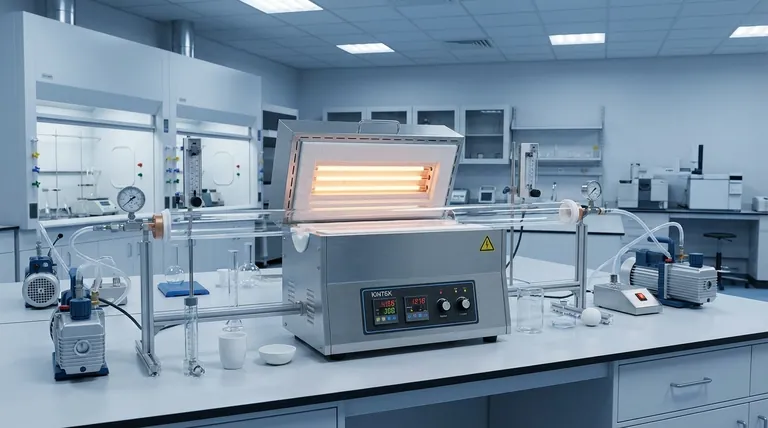
Defining Your Core Operational Parameters
Before evaluating specific models, you must first define the non-negotiable requirements of your work. These parameters will narrow your search significantly.
Maximum Temperature and Uniform Heating Zone
The most fundamental specification is the furnace's operating temperature range. Ensure the maximum temperature provides a safe margin above your required process temperature.
Equally important is the uniform heating zone: the length of the tube where the temperature is stable and consistent. A longer uniform zone is critical for processing larger samples or ensuring repeatable results.
Atmosphere Control: Air, Inert Gas, or Vacuum?
Your intended process dictates the type of atmospheric control you need. This is a primary driver of system complexity and cost.
- Air Atmosphere: For simple heating processes like basic annealing, a furnace open to ambient air may suffice.
- Controlled Gas: For processes requiring an inert or reactive environment, you need a furnace with sealed end flanges, gas inlets/outlets, and a flow control system.
- Vacuum: For high-purity applications, you will need a system capable of achieving and holding a specific vacuum level, which often requires specialized flanges and a dedicated vacuum pump system.
Tube Material: Is Quartz Always the Answer?
While the furnace is often named for it, quartz is not the only option, and it has limitations.
Quartz tubes are popular because they are transparent, allowing for direct observation of the sample. They offer good thermal shock resistance and chemical inertness for most applications up to approximately 1100°C.
Alumina tubes are opaque but can withstand significantly higher temperatures (often >1700°C). They are a necessary choice for processes that exceed the limits of quartz.
Chamber Size and Sample Throughput
The inner diameter and heated length of the furnace tube determine the maximum size and quantity of samples you can process at one time. Consider not only your current needs but also potential future requirements for larger samples or higher throughput.
Evaluating Control and Reliability
Once you've defined your core needs, the next step is to assess the quality and precision of the furnace's systems.
The Importance of PID Temperature Control
Modern furnaces use a Proportional-Integral-Derivative (PID) controller. This system actively monitors the temperature and adjusts the heating element to minimize overshoot and maintain a highly stable setpoint.
A precise and well-tuned PID controller is essential for experimental repeatability. It ensures that your material is processed under the exact thermal conditions you intend, run after run.
Heating Zones and Thermal Uniformity
For applications requiring exceptional temperature consistency across a large sample, a multi-zone furnace is superior.
A single-zone furnace has one heating element and controller. A multi-zone furnace (typically with three zones) has independent heating elements and controllers for the center and ends, allowing it to create a much longer and more precise uniform temperature zone.
Understanding the Trade-offs and Safety
A furnace is a long-term investment. Understanding the practical trade-offs and prioritizing safety is crucial for making a wise decision.
The Cost of Advanced Capabilities
There is a direct correlation between cost and capability. A simple, single-zone furnace for use in air is relatively inexpensive. Adding gas control, vacuum capabilities, or multiple heating zones will significantly increase the price. Be realistic about the features you truly need.
Quartz Brittleness and Thermal Shock
While resistant, quartz is a glass and can crack or shatter if subjected to extreme thermal shock (heating or cooling too rapidly). Always follow the manufacturer's recommended ramp rates to ensure the longevity of the tube.
Essential Safety Features
Safety is non-negotiable. Look for these critical features:
- Over-temperature Protection: A secondary system that shuts down the furnace if it exceeds a preset maximum temperature.
- Emergency Shut-off: A clearly accessible button to immediately cut power.
- Door Interlocks: On some models, this feature cuts power if the furnace door is opened during operation.
Supplier Reputation and Support
Purchase from a reputable supplier known for quality and post-sales support. Access to spare parts (like heating elements or tubes) and technical assistance is invaluable over the operational life of the furnace.
Making the Right Choice for Your Application
Use your specific process as the ultimate guide to filter your options and select the most appropriate furnace.
- If your primary focus is general-purpose lab heating in air: A reliable, single-zone furnace with a quality PID controller is a cost-effective choice.
- If your primary focus is material synthesis under inert gas: You must select a furnace equipped with sealed flanges and gas flow control hardware.
- If your primary focus is high-purity processing or thin-film growth: A dedicated high-vacuum system with compatible flanges and pumping is required.
- If your primary focus is processing large or thermally sensitive samples: A multi-zone furnace is critical for achieving the necessary temperature uniformity.
By carefully matching the furnace's capabilities to your specific process needs, you ensure your investment becomes a reliable cornerstone of your work for years to come.
Summary Table:
| Factor | Key Considerations |
|---|---|
| Operating Temperature | Maximum temperature with safety margin; uniform heating zone length |
| Atmosphere Control | Air, inert gas, or vacuum; requires sealed flanges and gas/vacuum systems |
| Tube Material | Quartz (up to 1100°C, transparent) or alumina (over 1700°C, opaque) |
| Chamber Size | Inner diameter and heated length for sample size and throughput |
| Control System | PID controller for precise temperature stability and repeatability |
| Heating Zones | Single-zone for basic needs; multi-zone for better thermal uniformity |
| Safety Features | Over-temperature protection, emergency shut-off, door interlocks |
| Cost and Supplier | Higher cost for advanced features; choose reputable suppliers with support |
Upgrade your laboratory with KINTEK's advanced high-temperature furnace solutions! Leveraging exceptional R&D and in-house manufacturing, we provide diverse labs with reliable equipment like Muffle, Tube, Rotary Furnaces, Vacuum & Atmosphere Furnaces, and CVD/PECVD Systems. Our strong deep customization capability ensures precise alignment with your unique experimental requirements, enhancing safety, efficiency, and results. Don't compromise on quality—contact us today to discuss how we can support your high-temperature processes and drive innovation in your work!
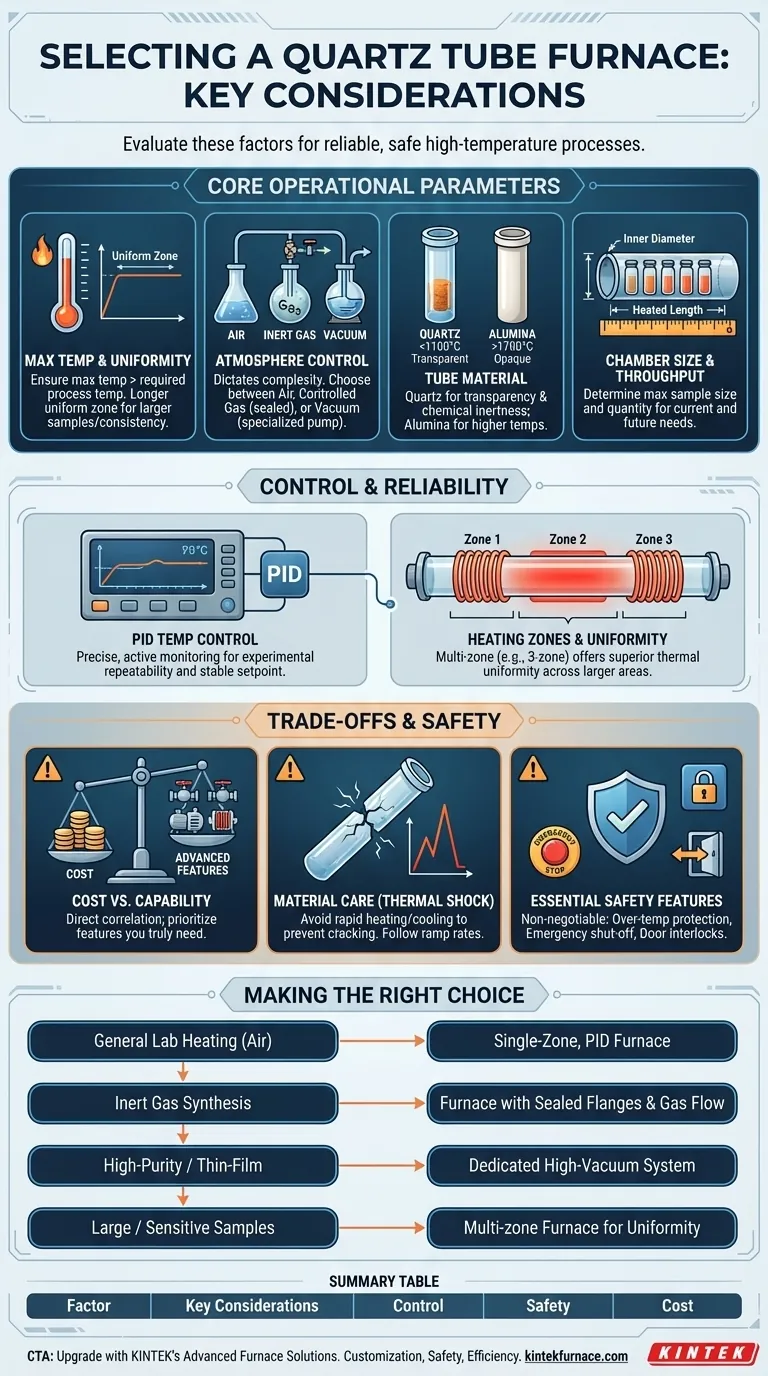
Visual Guide
Related Products
- Laboratory Quartz Tube Furnace RTP Heating Tubular Furnace
- 1200℃ Split Tube Furnace Laboratory Quartz Tube Furnace with Quartz Tube
- Vertical Laboratory Quartz Tube Furnace Tubular Furnace
- Multi Zone Laboratory Quartz Tube Furnace Tubular Furnace
- High Pressure Laboratory Vacuum Tube Furnace
People Also Ask
- What physical conditions does a laboratory Tube Furnace provide for SOEC? Precision Heat for Solid Oxide Characterization
- What are the main features and functions of a laboratory tube furnace? Unlock Precise High-Temp Control for Your Lab
- What parameters must be controlled when calcining freeze-dried oxide precursors in a laboratory tube furnace? A Guide
- What role does a laboratory tube furnace play in geological and mineralogical research? Unlock Earth's Secrets with Precision
- What conditions does a tube furnace provide for post-ion-implantation? Achieve Precise Microstructural Repair



















