The primary advantage of Joule-heating for RuMo alloy synthesis lies in its ability to achieve ultra-fast thermal shock, reaching heating and cooling rates as high as 361 K/s. Unlike traditional tube furnaces that heat slowly over hours, Joule-heating provides the precise activation energy needed to create atomically dispersed alloys in seconds. This rapid process prevents metal atoms from aggregating into inactive clusters, thereby maximizing the density of high-energy active sites.
Joule-heating transcends the limitations of traditional thermal equilibrium methods by using rapid "quenching" to freeze catalysts in a highly active, metastable state. This technique bypasses thermodynamic aggregation, resulting in superior lattice distortions and unsaturated active sites that significantly enhance catalytic performance.
The Impact of Rapid Thermal Shock on Catalyst Formation
Achieving Extreme Heating and Cooling Rates
Joule-heating equipment utilizes high current (such as 90 A) to generate instantaneous high temperatures, reaching rates like 361 K/s. This is orders of magnitude faster than a traditional tube furnace, which relies on steady, slow radiation and convection.
Millisecond-to-Second Reaction Windows
The synthesis process is often completed within a 30-second duration, allowing for the rapid decomposition and transformation of precursors. This ultra-short timeframe ensures that the energy is used for chemical transformation rather than allowing atoms time to migrate and clump.
Rapid Quenching and Phase Freezing
Following the high-heat pulse, the material undergoes a rapid quenching process. This effectively "freezes" the atoms in specific metastable structures, preventing them from settling into the low-energy, bulk-metal states typical of slow-cooled furnace processes.
Structural and Catalytic Enhancements
Inhibiting Thermodynamic Atom Aggregation
In traditional furnaces, long-duration high-temperature treatments often cause metal atoms to migrate and form large-sized particles. Joule-heating confines atoms—such as Ruthenium (Ru)—within the support lattice, ensuring they remain highly dispersed or even as single atoms.
Inducing Abundant Lattice Distortions
The violent thermal shock induces lattice distortions and unsaturated active sites within the RuMo alloy. These "defects" are actually beneficial in catalysis, as they provide more locations for chemical reactions to occur compared to the perfect, but less reactive, crystals formed in slow furnaces.
Maintaining Atomic Dispersion
By providing the necessary activation energy while inhibiting thermodynamically driven aggregation, Joule-heating ensures atomic dispersion. This dispersion avoids the deactivation of catalyst active sites, which is a common failure point for alloys synthesized via traditional methods.
Understanding the Technical Trade-offs
Material Conductivity Requirements
Joule-heating requires the precursor or the support material (like porous carbon) to be electrically conductive. If the substrate is a pure insulator, the high-current mechanism cannot generate the necessary heat, limiting its application compared to the universal heating of a tube furnace.
Precision Control vs. Uniformity
While Joule-heating offers extreme speed, achieving thermal uniformity across a large-scale batch can be challenging. Traditional tube furnaces offer a more uniform temperature field for bulk processing, whereas Joule-heating requires careful engineering to avoid "hot spots" or uneven synthesis.
Equipment Complexity and Scalability
The power electronics required to manage 90 A pulses and millisecond timing are more specialized than standard resistive heating elements. Scaling this process from a laboratory "flash" to industrial-level throughput requires significant investment in specialized reactor designs.
Making the Right Choice for Your Synthesis Goal
How to Apply This to Your Project
Determining whether to move from a tube furnace to Joule-heating depends on your specific catalyst requirements and material properties.
- If your primary focus is maximizing catalytic activity: Joule-heating is the superior choice because it creates the lattice distortions and unsaturated sites necessary for high-performance RuMo alloys.
- If your primary focus is preventing metal clumping (aggregation): Utilize Joule-heating to "shock" the precursors into a dispersed state, bypassing the long heat cycles that drive atoms to form large, inactive particles.
- If your primary focus is synthesizing metastable or "impossible" phases: Use the rapid quenching capability of Joule-heating to freeze atomic structures that would otherwise disappear during the slow cooling of a traditional furnace.
By leveraging the speed of Joule-heating, researchers can unlock catalytic structures that are thermodynamically unreachable through traditional thermal methods.
Summary Table:
| Feature | Joule-Heating Equipment | Traditional Tube Furnace |
|---|---|---|
| Heating/Cooling Rate | Ultra-fast (up to 361 K/s) | Slow (degrees per minute) |
| Reaction Duration | Milliseconds to seconds | Hours |
| Atomic Structure | Highly dispersed / Single atoms | Likely to aggregate/clump |
| State of Matter | Metastable, high-energy phases | Thermodynamic equilibrium |
| Key Benefit | Maximum active site density | High batch uniformity |
Unlock High-Performance Catalyst Synthesis with KINTEK
Ready to push the boundaries of materials science? Whether you need the extreme speed of Joule-heating or the reliable precision of a tube furnace, KINTEK provides the specialized tools you need.
As experts in high-temperature laboratory equipment, we offer a comprehensive range of muffle, tube, rotary, vacuum, CVD, and induction melting furnaces, all customizable to your unique research specifications. Our solutions ensure your lab achieves superior atomic dispersion and thermal control for every synthesis project.
Maximize your research potential—contact KINTEK today to find your custom furnace solution!
References
- Zhan Zhao, Xiangchao Meng. Engineering active and robust alloy-based electrocatalyst by rapid Joule-heating toward ampere-level hydrogen evolution. DOI: 10.1038/s41467-024-51976-5
This article is also based on technical information from Kintek Furnace Knowledge Base .
Related Products
- Multi Heating Zones CVD Tube Furnace Machine for Chemical Vapor Deposition Equipment
- Electric Rotary Kiln Continuous Working Small Rotary Furnace Kiln for Pyrolysis Plant Heating
- Vacuum Hot Press Furnace Machine Heated Vacuum Press
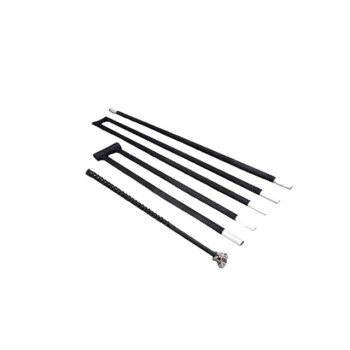
- Silicon Carbide SiC Thermal Heating Elements for Electric Furnace
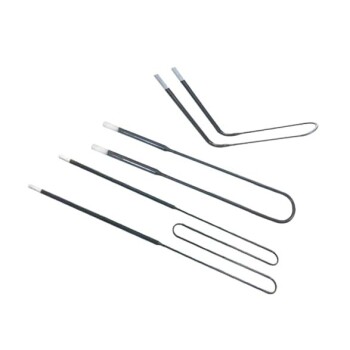
- Molybdenum Disilicide MoSi2 Thermal Heating Elements for Electric Furnace
People Also Ask
- What is the function of a multi-zone tube furnace in CVD synthesis? Master 2D In2Se3 Nanosheet Precision
- What role do multi zone tube furnaces play in new energy research? Unlock Precise Thermal Control for Innovation
- What temperature-related capabilities make multi zone tube furnaces valuable for research? Unlock Precision Thermal Control
- Why are multi zone tube furnaces particularly useful for nanomaterial research? Unlock Precise Thermal Control for Advanced Synthesis
- What environmental protection applications utilize multi zone tube furnaces? Unlock Precision in Waste Treatment and Green Tech