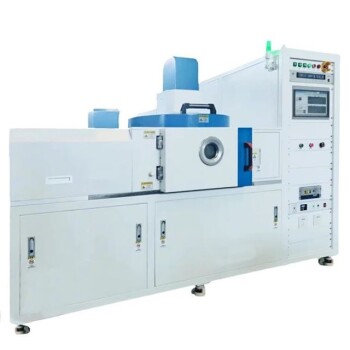
Chemical Vapor Deposition (CVD) represents the gold standard for protecting nickel-based superalloys in high-performance environments. This gas-phase process surpasses the limitations of traditional pack cementation by offering unparalleled precision in coating thickness and chemical composition. By utilizing an external reactor to generate active precursors, CVD ensures that even the most complex internal geometries receive a uniform, high-purity protective layer without the risk of mechanical blockages.
Core Takeaway: CVD equipment provides a high-precision, residue-free alternative to pack cementation, utilizing gaseous precursors to protect complex internal cooling structures while maintaining extreme material purity and thickness uniformity.
Achieving Superior Compositional Control
Precise Precursor Management
CVD equipment utilizes an external reactor to generate active aluminum vapor, such as AlCl3. This allows engineers to accurately control the concentration and flow rate of reactive gases before they ever reach the substrate.
Consistency Across Batches
Because the process is regulated by automated gas delivery systems, it achieves stable film quality over long production runs. This level of control is virtually impossible to replicate with the manual packing and heating cycles required in pack cementation.
Molecular-Level Nucleation
CVD relies on molecular-level growth, which results in coatings with near-theoretical density. This ensures the aluminide layer is not only uniform but also possesses the high-performance thermal and electrical properties required for aerospace applications.
Protecting Complex Internal Geometries
Unobstructed Cooling Holes
Modern turbine blades feature intricate cooling hole structures that are easily clogged by the powder mixtures used in pack cementation. CVD uses purely gaseous precursors that flow through these holes without leaving detrimental powder residues.
Simultaneous Internal and External Coating
The gaseous nature of CVD allows for simultaneous protection of both the internal passages and the external surfaces of a component. This "wrap-around" capability ensures that the entire part is shielded from oxidation and corrosion.
High Length-to-Diameter Ratios
CVD is particularly effective at coating internal passages with high length-to-diameter ratios. The gas penetrates deep into narrow channels, providing a homogeneous film where other line-of-sight or mechanical methods would fail.
Enhancing Material Purity and Integrity
Eliminating Particulate Contamination
Pack cementation often leaves behind diluent particles or sintering residues that can compromise the mechanical integrity of the superalloy. CVD is a self-cleaning process that produces deposits of extremely high purity, often exceeding 99.995%.
Dense and Conformal Films
The coatings produced via CVD are highly conformal, meaning they follow the exact contours of the substrate perfectly. This results in a smoother surface finish and better conductivity compared to the relatively rougher finishes produced by pack methods.
Environmental and Structural Durability
CVD coatings are designed to withstand high stress and extreme temperatures found in harsh environments. Furthermore, the process can offer a reduced CO2 footprint compared to certain alternative coating technologies, aligning with modern industrial sustainability goals.
Understanding the Technical Trade-offs
Equipment Complexity and Cost
The primary drawback of CVD is the high initial capital investment required for reactors, gas handling systems, and abatement equipment. Pack cementation remains a more cost-effective choice for simple geometries where high precision is not a requirement.
Precursor Handling and Safety
CVD involves the use of reactive gaseous precursors that require sophisticated safety protocols and monitoring. Managing these chemicals is significantly more complex than handling the solid powder packs used in traditional cementation.
Thermal Constraints
While CVD is versatile, the substrate must be able to withstand the deposition temperatures required for the specific chemical reaction. However, CVD is often more compatible with temperature-sensitive substrates than other high-temperature metallurgical processes.
How to Apply This to Your Project
When selecting a surface protection method for nickel-based superalloys, the decision should be driven by the complexity of the part and the required performance standards.
- If your primary focus is protecting internal cooling holes: CVD is the only reliable choice to ensure those passages remain clear and fully coated.
- If your primary focus is extreme material purity: Utilize CVD to achieve 99.995%+ purity levels and avoid the particulate contamination inherent in pack processes.
- If your primary focus is cost-effective coating of simple shapes: Pack cementation may still be the more economical route if internal geometries and high precision are not factors.
- If your primary focus is industrial scalability for complex parts: CVD equipment provides the automation and consistency needed for high-volume, high-reliability production.
CVD technology ultimately empowers manufacturers to push the thermal and mechanical limits of superalloys through superior gas-phase precision.
Summary Table:
| Feature | CVD Equipment | Pack Cementation |
|---|---|---|
| Geometric Capability | Excellent (complex internal holes) | Poor (prone to clogging) |
| Material Purity | Very High (99.995%+) | Lower (particulate residue) |
| Coating Uniformity | Precise molecular growth | Variable and manual |
| Process Control | Automated gas delivery | Manual packing/heating |
| Initial Investment | High (specialized reactors) | Low (simple equipment) |
| Surface Finish | Smooth and conformal | Relatively rough |
Optimize Your Superalloy Protection with KINTEK
Are you ready to transition from traditional methods to high-precision surface engineering? KINTEK specializes in advanced laboratory equipment and consumables, offering a comprehensive range of customizable high-temperature furnaces, including CVD, vacuum, atmosphere, and tube furnaces.
Whether you are protecting turbine blades with complex cooling structures or requiring extreme material purity, our expert-grade CVD systems ensure uniform, residue-free coatings every time.
Why choose KINTEK?
- Customizable Solutions: Tailored furnace designs for your unique research or production needs.
- Precision Engineering: Achieve batch-to-batch consistency and molecular-level control.
- Comprehensive Range: From muffle and rotary to induction melting furnaces, we cover all high-temp applications.
Contact us today to discuss your project requirements and receive a custom quote!
References
- Aleksander Antonov, Ruoyu Zhang. Nanocomposite Polymer Materials with High Performance Characteristics. DOI: 10.52209/2706-977x_2024_4_36
This article is also based on technical information from Kintek Furnace Knowledge Base .
Related Products
- Custom Made Versatile CVD Tube Furnace Chemical Vapor Deposition CVD Equipment Machine
- HFCVD Machine System Equipment for Drawing Die Nano Diamond Coating
- Multi Heating Zones CVD Tube Furnace Machine for Chemical Vapor Deposition Equipment
- MPCVD Machine System Reactor Bell-jar Resonator for Lab and Diamond Growth
- 915MHz MPCVD Diamond Machine Microwave Plasma Chemical Vapor Deposition System Reactor
People Also Ask
- Why are CVD tube furnace sintering systems indispensable for 2D material research and production? Unlock Atomic-Scale Precision
- What is a CVD tube furnace and what is its primary function? Discover Precision Thin-Film Deposition
- Which industries and research fields benefit from CVD tube furnace sintering systems for 2D materials? Unlock Next-Gen Tech Innovations
- How does CVD tube furnace sintering enhance graphene growth? Achieve Superior Crystallinity and High Electron Mobility
- How might AI and machine learning enhance CVD tube furnace processes? Boost Quality, Speed, and Safety