
In an industrial context, high-temperature processes are those operating above 750°C (approximately 1382°F). Core examples include the casting of molten metals, advanced heat treatment to alter material properties, the manufacturing of glass and ceramics, and high-energy plasma applications for surface coating and etching. These processes are fundamental to heavy industry, as they are required to fundamentally change the physical or chemical structure of materials.
The distinction between low, medium, and high-temperature processes is not arbitrary. High-temperature applications are defined by their ability to melt, refine, or chemically transform materials with high melting points and strong molecular bonds, such as metals and ceramics.
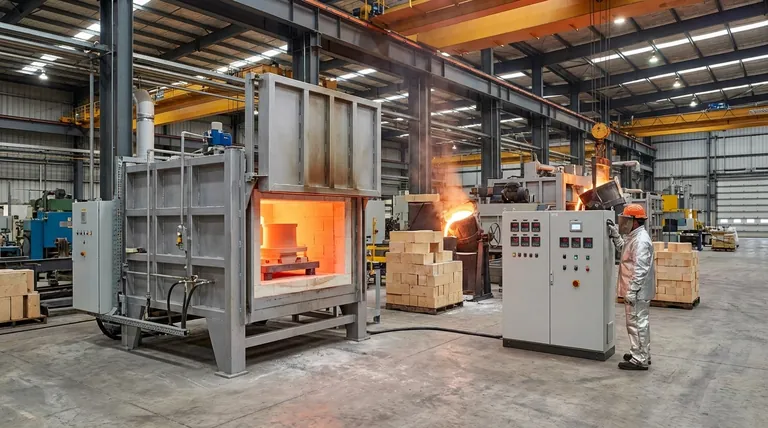
Defining the Industrial Temperature Spectrum
To understand high-temperature applications, it is crucial to see them within the full context of industrial heating. Processes are typically segmented into three distinct categories based on their operational temperature range.
Low-Temperature Processes (Below ~250°C / 482°F)
These processes involve relatively low energy and are used for tasks like drying, curing paints and coatings, and shaping plastics. The goal is often to remove moisture or trigger simple chemical reactions without altering the material's core structure.
Medium-Temperature Processes (~250°C - 750°C / 482°F - 1382°F)
This range is where you find processes like annealing and stress-relieving metals, which modify their internal structure to improve ductility without melting them. It also includes melting plastics and softer, non-ferrous metals like aluminum for casting.
High-Temperature Processes (Above 750°C / 1382°F)
This domain is reserved for tasks that require immense energy to break and reform strong metallic or chemical bonds. It is the realm of primary material creation and refinement.
Key Examples of High-Temperature Processes Explained
High-temperature processes are the backbone of industries that produce foundational materials for our economy.
Metal Casting and Forging
To create parts from steel, iron, or other high-strength alloys, the raw material must first be melted. This requires furnaces that can reach temperatures well over 1,500°C (2,732°F) to turn solid metal into a liquid state that can be poured into molds.
Heat Treatment of Metals
While some heat treatments occur at medium temperatures, many advanced processes do not. Hardening steel, for example, involves heating it to a critical temperature and then rapidly cooling it (quenching) to lock in a more rigid crystalline structure, dramatically increasing its strength and wear resistance.
Advanced Material Manufacturing
The creation of glass, ceramics, and advanced composites is entirely dependent on high temperatures. For instance, sand is transformed into molten glass at around 1,700°C (3,090°F), and industrial ceramics are fired in kilns to achieve their required density and hardness.
Chemical Synthesis and Reactions
Many large-scale chemical reactions are not feasible or are too slow at lower temperatures. High heat acts as a catalyst, providing the necessary activation energy to produce fertilizers, fuels, and other essential chemical compounds efficiently.
Plasma Applications
Plasma, an ionized gas, can reach temperatures of thousands of degrees. In industry, plasma torches are used for precision cutting of thick metals, while plasma spray processes apply durable, heat-resistant coatings onto components like jet engine turbines.
Understanding the Trade-offs
While essential, operating at such extreme temperatures introduces significant technical and economic challenges.
Extreme Energy Consumption
Maintaining temperatures above 750°C requires a tremendous amount of energy, making it a primary operational cost. This drives a constant need for more efficient furnaces, insulation, and heat-recovery systems.
Material and Equipment Demands
Standard materials fail catastrophically at these temperatures. Furnaces, heating elements, and handling equipment must be constructed from specialized refractory materials or superalloys that can withstand the heat and thermal cycling without degrading.
Process Control and Safety
Controlling a high-temperature process with precision is difficult. Minor temperature deviations can ruin a batch of material, leading to costly waste. Furthermore, the immense stored energy creates significant safety hazards that require rigorous engineering controls and protocols.
How This Applies to Your Industry
Your focus determines which aspect of these processes is most relevant to your goals.
- If your primary focus is materials science or metallurgy: The key is how extreme heat alters the crystalline structure and phase of a material to achieve desired properties like hardness, strength, or corrosion resistance.
- If your primary focus is process engineering or manufacturing: Your concern is the efficiency, control, and reliability of the heating equipment itself—ensuring uniform temperature, minimizing energy loss, and maximizing throughput.
- If your primary focus is operations or financial oversight: The critical factors are the total cost of ownership, including massive energy expenditures, equipment maintenance, and the cost of waste from failed process runs.
Ultimately, mastering high-temperature processes is what enables the creation of the modern world's most vital and durable materials.
Summary Table:
| Process Type | Temperature Range | Key Applications |
|---|---|---|
| Metal Casting and Forging | Above 1,500°C | Melting and shaping high-strength alloys |
| Heat Treatment of Metals | Varies, often high | Hardening steel for increased strength |
| Advanced Material Manufacturing | Up to 1,700°C | Producing glass, ceramics, and composites |
| Chemical Synthesis | High temperatures | Efficient production of fertilizers and fuels |
| Plasma Applications | Thousands of degrees | Precision cutting and heat-resistant coatings |
Unlock the full potential of your high-temperature processes with KINTEK! Leveraging exceptional R&D and in-house manufacturing, we provide diverse laboratories with advanced solutions like Muffle, Tube, Rotary Furnaces, Vacuum & Atmosphere Furnaces, and CVD/PECVD Systems. Our strong deep customization capability ensures we precisely meet your unique experimental requirements, enhancing efficiency and reliability. Contact us today to discuss how our tailored high-temperature furnace solutions can drive your innovations forward!
Visual Guide

Related Products
- 2200 ℃ Tungsten Vacuum Heat Treat and Sintering Furnace
- 2200 ℃ Graphite Vacuum Heat Treat Furnace
- 1400℃ High Temperature Laboratory Tube Furnace with Alumina Tube
- 1700℃ High Temperature Laboratory Tube Furnace with Alumina Tube
- 1700℃ High Temperature Muffle Oven Furnace for Laboratory
People Also Ask
- How does a tungsten-heated vacuum sintering furnace prepare (TbxY1-x)2O3 ceramics? Achieve 99%+ Density & Purity
- What wear-resistance enhancements are achieved by powder coating? The Role of Vacuum Sintering Furnaces
- How do compaction pressure and vacuum sintering optimize porous ceramics? Maximize Density & Toughness
- What role does a high-temperature vacuum sintering furnace play in the densification of WC-10(Ni, Ni/Co) alloys?
- What core role does a high-temperature vacuum sintering furnace play in Sm:YAG ceramics? Mastering Optical Clarity



















