Ambient gas pressure is a master control knob for gas-phase sintering. Raising the inert gas pressure inside a high-temperature furnace systematically retards evaporation-condensation and gas diffusion pathways, directly slowing neck growth kinetics. In contrast, operating under high vacuum removes gas-phase diffusion barriers, allowing the material’s native vapor pressure to drive rapid neck development—though crucially without significant bulk densification.
The primary reference confirms: increasing external inert gas pressure reduces the overall neck growth rate and achievable neck radius compared to vacuum sintering at the same temperature. This effect arises because elevated pressure shortens the mean free path of evaporated species, suppressing their transport and shifting mass flow toward solid-state mechanisms.
How Gas-Phase Transport Builds Necks
In the initial stage of sintering, material moves from particle surfaces to the concave neck region. When this occurs via gas-phase transport, two mechanisms dominate.
Evaporation-Condensation: The Vacuum Advantage
At low pressures, the mean free path of vaporized atoms exceeds the interparticle distance. Atoms evaporated from convex surfaces condense directly onto the neck. This process is extremely pressure-sensitive. High vacuum removes gas-phase resistance, so the evaporation rate—and thus neck growth—is governed almost exclusively by the material’s equilibrium vapor pressure at temperature.
Gas Diffusion: The Slow-Down at Higher Pressures
Introducing an inert gas (such as argon) means evaporated atoms must diffuse through a dense medium to reach the neck. The diffusivity of the vapor species (Dg) is inversely proportional to total gas pressure. As pressure rises, the collision frequency increases and the mean free path plummets, drastically reducing transport efficiency. Neck growth that relies on gas diffusion becomes sluggish compared to the free-molecular-flow regime of vacuum.
The Critical Role of Ambient Gas Pressure
The furnace atmosphere directly dictates which transport paths dominate. Change the pressure, and you re-engineer the entire kinetic landscape.
How Pressure Reshapes the Mean Free Path
At high vacuum (e.g., 10⁻³ Pa), the mean free path is often centimeters—far larger than powder particle spacings. Every evaporated atom becomes a neck-building resource. Under an inert gas pressure of a few hundred kPa, the mean free path collapses to tens of nanometers. The same evaporated atom experiences countless collisions, dramatically lowering its probability of reaching the neck and slowing the effective rate of mass delivery.
Vacuum vs. Pressurized Atmosphere: A Kinetic Split
- High vacuum: Evaporation-condensation becomes the primary gas-phase mechanism. Neck growth is rapid and geometrically pronounced, but the process redistributes mass without compact shrinkage, yielding little densification.
- Elevated inert gas pressure: Gas-phase transport is suppressed. The system is effectively forced toward solid-state diffusion paths (lattice, grain boundary) that produce bulk densification. Neck growth rates are lower, but the necks form within a shrinking, compacting structure.
Understanding the Trade-offs
Gas-phase sintering kinetics are not a simple “faster is better” story. The deep need is often densification, not just neck size.
The Paradox of Rapid Neck Growth Without Densification
Vacuum-accelerated evaporation-condensation can build impressive necks early on while leaving pore volume almost untouched. You get a strong skeleton with interconnected pores, but no overall shrinkage. This is ideal for applications like porous filters, but counterproductive if you need a dense, load-bearing part.
Shifting to Densification by Suppressing Vapor Transport
When densification is the goal, elevated inert gas pressure is a deliberate tool. By throttling back vapor-phase mass transport, you compel the system to use lattice and grain boundary diffusion—mechanisms that pull material from the particle interior, collapsing pores and driving shrinkage. The payoff is a denser, stronger sintered body, even though neck growth in the early stage is visually less dramatic.
Surface Oxide Barriers Are Also Pressure-Environment Dependent
Oxide films on metallic powders act as diffusion barriers that block metal-to-metal neck formation. Maintaining a reducing atmosphere or high-purity inert gas under controlled pressure prevents these insulating layers from forming. Without this chemical protection, even optimal pressure control for transport mechanisms will fail to produce robust necks.
Watch Out for Unwanted Volatilization
While vacuum boosts neck growth, it can also cause excessive evaporation of volatile species (e.g., alkali metals, binder residues) if the material’s vapor pressure is high. Pressure management must balance desired neck kinetics with the risk of compositional shift or surface depletion.
Making the Right Choice for Your Process Goal
The optimal ambient gas pressure is never arbitrary. It must match the functional requirement of the final part and the transport behavior of the material.
- If your primary focus is fabricating a porous structure with high permeability: Use high vacuum to maximize evaporation-condensation. This gives rapid, interparticle neck growth without closing porosity or causing bulk shrinkage.
- If your primary focus is achieving full densification and mechanical strength: Introduce an elevated inert gas pressure to suppress vapor transport. This steers mass flow toward grain boundary and lattice diffusion, yielding true shrinkage and pore elimination.
- If your primary focus is processing oxidation-sensitive metals: Prioritize a reducing atmosphere (e.g., hydrogen-containing) or ultra-dry inert gas under appropriate pressure to eliminate surface oxides, ensuring that whatever transport mechanism operates actually connects clean metallic surfaces.
- If your primary focus is maintaining tight compositional control of volatile elements: Use a slight positive pressure of an inert gas to create a local equilibrium that retards preferential evaporation, even if that moderately slows neck growth.
Precision in furnace pressure selection transforms a simple heating cycle into a tool for engineering both microstructure and final component performance.
Summary Table:
| Furnace Atmosphere | Dominant Mechanism | Neck Growth Rate | Bulk Densification | Best For... |
|---|---|---|---|---|
| High Vacuum | Evaporation-Condensation | Rapid / High | Minimal to None | Porous filters, permeable membranes |
| Elevated Inert Pressure | Gas Diffusion & Solid-State | Suppressed / Slower | High (driven by shrinkage) | High-strength, fully dense components |
| Reducing / Controlled | Oxide Removal + Diffusion | Depends on Pressure | High (clean metallic bonds) | Oxidation-sensitive powders |
| Positive Inert Pressure | Controlled Vapor Equilibrium | Moderately Retarded | Targeted Composition Control | Volatile element preservation |
Master Your Sintering Kinetics with KINTEK
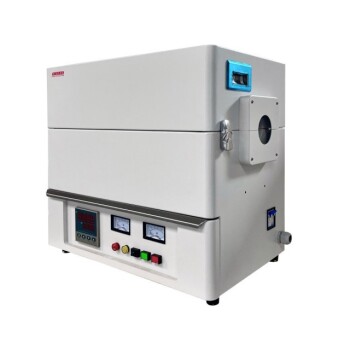
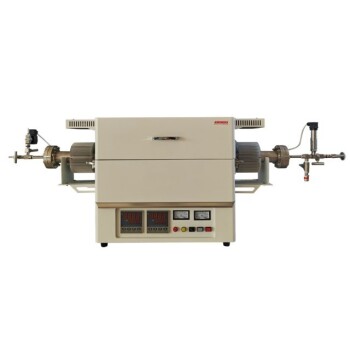
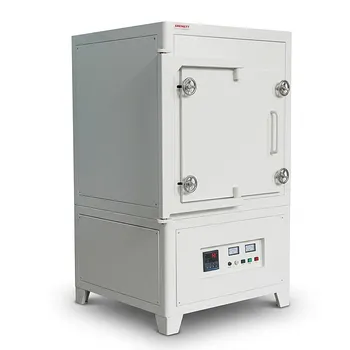
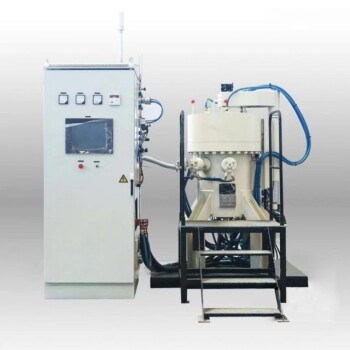
Precise control over furnace atmosphere and pressure is the key to engineering exact microstructures—whether you need high porosity or total bulk densification. KINTEK specializes in premium laboratory equipment and customizable high-temperature furnaces, including vacuum, atmosphere, tube, muffle, CVD, rotary, and induction melting furnaces tailored to your specific process goals.
Ready to elevate your research or production quality? Contact KINTEK today to consult with our high-temperature furnace experts!
Related Products
- 1400℃ High Temperature Laboratory Tube Furnace with Alumina Tube
- 1700℃ High Temperature Laboratory Tube Furnace with Alumina Tube
- 1800℃ High Temperature Muffle Oven Furnace for Laboratory
- 1700℃ High Temperature Muffle Oven Furnace for Laboratory
- 1200℃ Muffle Oven Furnace for Laboratory
People Also Ask
- How does zone-melting in tube furnaces synthesize bismuth micro-wires? Master Single-Crystal Thermoelectric Growth
- How are high-temp tube furnaces used to measure diffusion coefficients per Fick's law? Master Precision Annealing
- How do high-temperature laboratory tube furnaces ensure environmental stability? Precision Thermal Reduction Tips
- How are high-temperature laboratory tube furnaces applied in long-term vacuum homogenization heat treatments for intermetallic samples?
- How are high-temperature tube furnaces applied in testing ceramic-supported alloy membranes? Insights