Scale doesn’t just influence mechanical properties—it redefines them.
When evaluating thin metal films from laboratory vacuum and atmosphere furnaces, indentation size effects cause hardness and yield stress to rise dramatically as the deformation volume shrinks. At the same time, time-dependent creep can distort measured plastic properties, making different thermal processing histories appear to create different material strengths when, in fact, the measurement itself is time-sensitive. Failing to account for both scale-dependent plasticity and creep leads to misjudged residual stress, mechanical stability, and long-term service performance.
Thin films processed in laboratory furnaces exhibit plastic behavior that is strongly scale‑dependent, with hardness surging as contact dimensions drop to tens of nanometers. Simultaneously, creep must be embedded in finite element models to correctly interpret yield‑stress variations caused by different thermal treatments. Only by addressing both phenomena can you trust residual‑stress assessments, stability predictions, and reliability evaluations.
The Nanoscale Mechanics of Furnace-Processed Thin Films
Why Small is Strong: The Indentation Size Effect
When an indenter presses into a polycrystalline film to depths of 100 nm and below, the plastically deformed volume becomes so small that dislocation sources are scarce.
This “dislocation starvation” forces the material to nucleate new dislocations at very high stresses, causing a steep increase in measured hardness—a phenomenon known as the indentation size effect.
Coupled with the film’s fine grain structure, the effect is amplified because grain boundaries further restrict dislocation motion, merging the Hall‑Petch strengthening with the size effect.
The Role of Furnace Atmosphere and Thermal History
Thin films synthesized or annealed in vacuum versus atmospheric furnaces develop distinct microstructures—grain size, texture, and surface oxide character all differ.
A vacuum‑annealed film may retain smaller, more equiaxed grains that intensify the indentation size effect, while an atmosphere‑treated film might exhibit a graded oxide layer that alters dislocation nucleation at the surface.
Thus, the same indentation depth can report different hardness values simply because the thermal history tailored the film’s innate resistance to dislocation motion at small scales.
Thickness Dependence: When the Film Itself Becomes the Constraint
As film thickness shrinks toward the indentation depth, the rigid substrate begins to mechanically constrain the plastic zone.
This through‑thickness confinement raises the apparent hardness, not because the material is intrinsically stronger, but because the deformation field can no longer spread freely.
For films processed in lab‑scale furnaces—often used to create interconnects or MEMS layers only tens to hundreds of nanometers thick—this thickness‑induced hardening must be extracted from the raw data to avoid overestimating the intrinsic material strength.
Creep: The Silent Variable in Mechanical Evaluation
Time-Dependent Deformation at Room Temperature
Creep is not reserved for high temperatures.
Thin metal films contain an abundance of fast‑diffusion paths—grain boundaries, surfaces, and interfaces—that allow atoms to rearrange under sustained stress even at ambient conditions.
During a nanoindentation test, if the load is held constant, the indenter continues to sink deeper over time; neglecting this drift mixes creep strain into what is assumed to be a purely plastic response, producing an artificially low yield stress.
Why Thermal Processing Parameters Alter Creep Response
Different furnace annealing schedules change grain size, dislocation density, and the distribution of residual stress—all of which control creep rates.
A film rapidly cooled from a vacuum furnace may retain a high density of quenched‑in defects that accelerate creep, while a slowly cooled, atmosphere‑annealed film may have a coarser grain structure with fewer fast‑diffusion paths and thus lower creep compliance.
When two films are compared without accounting for creep, an observer might mistakenly attribute differences in yield stress to “better processing” when the real difference lies in how much creep relaxed the stress field during measurement.
Incorporating Creep into Finite Element Models for Accurate Yield‑Stress Extraction
The primary reference underscores that creep behavior “must be incorporated into finite element simulations to accurately rationalize yield stress variations.”
A simulation that models only rate‑independent plasticity will fit a load‑displacement curve poorly once time‑dependent deformation contributes to the total displacement.
By including a creep law—such as power‑law creep with material constants calibrated from hold‑segment data—the finite element model can correctly separate the instantaneous plastic response from the time‑dependent component, revealing the true yield stress free from creep artifacts.
Understanding the Trade-offs
Recognizing scale and time effects is powerful, but integrating them into everyday evaluation brings practical challenges.
Using bulk material parameters for thin films will systematically underestimate the influence of both the size effect and creep, leading to unconservative failure predictions.
However, building a full scale‑dependent, creep‑aware finite element model demands specialized material constants—such as activation volumes and stress exponents—that are difficult to measure directly and often require iterative inverse analysis.
There is also a measurement trade‑off: testing very shallow depths (<20 nm) intensifies the size effect but becomes sensitive to surface roughness and oxide layers.
Deeper indents average out these surface artifacts but begin to feel the substrate, mixing extrinsic and intrinsic signals.
Without careful protocol design, the evaluation can oscillate between under‑ and over‑estimating the film’s true mechanical figure of merit.
Time adds another dimension.
A film that creeps significantly may relax residual stresses before they cause failure, an apparent benefit that masks the underlying plastic weakness.
Conversely, if creep is ignored during a fast indentation test, the extracted yield stress will be inflated because the measurement does not capture the material’s long‑term deformation tendency.
The decision to include or omit creep in your analysis must therefore align with the intended application’s time scale.
Making the Right Choice for Your Evaluation
Your evaluation strategy should mirror the physical reality the film will face.
Here is how to align your approach with your primary objective:
- If your primary focus is process optimization: Use scale‑aware nanoindentation protocols and compare films only at identical indentation depths. This isolates true processing effects from measurement artifacts, letting you tune furnace atmosphere and cooling rates without size‑effect confusion.
- If your primary focus is reliability prediction: Incorporate creep constitutive laws into finite element simulations. This captures stress relaxation over service lifetimes, so your mechanical evaluation reflects long‑term stability rather than a snapshot of instantaneous hardness.
- If your primary focus is fundamental material understanding: Map hardness as a function of both indentation depth and grain size. Such mechanism maps disentangle dislocation‑source hardening from grain‑boundary strengthening, giving you insight into why a particular furnace treatment shifts the size‑effect curve.
By embracing the scale and time dependencies inherent to laboratory‑furnace‑processed thin films, you transform mechanical evaluation from a single‑point measurement into a precise, predictive science.
Summary Table:
| Factor | Core Mechanism | Furnace Processing Influence | Recommended Evaluation Approach |
|---|---|---|---|
| Indentation Size Effect | Dislocation starvation & grain boundary pinning at nanoscale | Vacuum/atmosphere dictates grain size, surface oxidation, & initial dislocation density | Standardize nanoindentation to identical depths to isolate intrinsic material strength |
| Creep Behavior | Time-dependent atomic diffusion along grain boundaries at ambient temp | Annealing schedules & cooling rates alter defect density & stress relaxation rates | Incorporate power-law creep models into FEA to accurately extract true yield stress |
| Substrate Confinement | Rigid substrate restricts plastic zone propagation in thin films | Deposition & heat treatment define film thickness & interface bonding strength | Use scale-aware inverse analysis to decouple substrate influence from film properties |
Precise mechanical evaluation begins with flawless thermal processing. KINTEK specializes in advanced laboratory high-temperature furnaces—including vacuum, controlled atmosphere, muffle, tube, CVD, and induction melting systems—fully customizable to meet your exact thin-film synthesis and heat-treatment requirements. Achieve consistent grain structures, controlled surface oxides, and reliable material properties for your research. Contact KINTEK today to discuss your custom furnace needs with our technical specialists!
Related Products
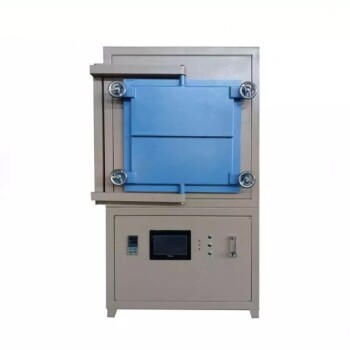
- 1400℃ Controlled Inert Nitrogen Atmosphere Furnace
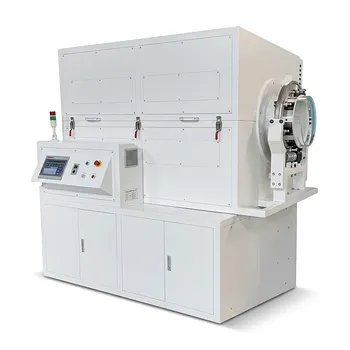
- Laboratory Vacuum Tilt Rotary Tube Furnace Rotating Tube Furnace
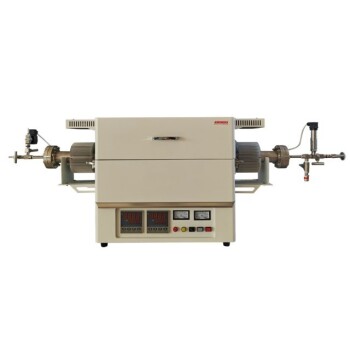
- High Pressure Laboratory Vacuum Tube Furnace
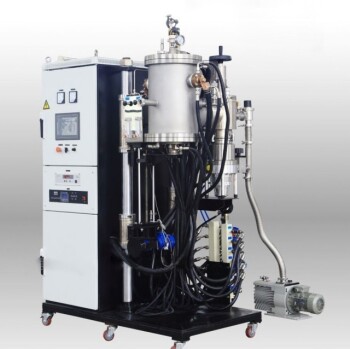
- Small Vacuum Heat Treat and Tungsten Wire Sintering Furnace
- Vacuum Dental Porcelain Sintering Furnace for Dental Laboratories
People Also Ask
- How does nitrogen atmosphere control in high-temperature furnaces prevent the decomposition of silicon nitride during sintering?
- How does oxygen partial pressure control affect ceramic sintering? Master Defect Chemistry
- How do controlled-atmosphere furnaces support polymer pyrolysis? Master SiC & Si3N4 Ceramic Conversion
- Why is thorough binder burnout necessary before sintering advanced ceramics? Ensure Peak Density & Zero Defects
- Why is controlled-atmosphere heating required for functional ceramics and sensors? Master Defect Engineering