The catalyst you choose during sol-gel synthesis doesn’t just tweak the reaction speed—it fundamentally engineers the material’s nanostructure. Under acid‑catalyzed conditions with a low water‑to‑silicon ratio, weakly branched, polymeric sols form with extremely fine pores. Under base‑catalyzed conditions with ample water, highly branched, particulate sols develop with coarser pores. This architectural difference dictates the gel’s density, drying shrinkage, and densification behavior. When you eventually transfer that gel into a high‑temperature laboratory furnace—whether a muffle, tube, or atmosphere furnace—you must tailor every ramp rate, hold time, and gas flow to match the specific structure or risk catastrophic cracking, warping, or incomplete densification.
The core takeaway: Acid‑catalyzed polymeric gels shrink continuously from low temperatures and demand ultra‑slow heating to outgas organics gently. Base‑catalyzed particulate gels hold their shape until high temperatures and then densify by viscous sintering, requiring a different thermal roadmap. Choosing your sol-gel chemistry is choosing your furnace protocol—ignoring that link leads to failed ceramics.
The Chemistry That Shapes the Gel
Acid Catalysis: Building Weakly Branched Polymeric Sols
Under acidic conditions (often HCl) and a low water‑to‑silicon molar ratio (w), hydrolysis outruns condensation. Water attacks the protonated alkoxide via nucleophilic displacement, creating silanol-rich monomers that link into linear or weakly branched chains. The result is a polymeric sol—an entangled, hazy network of loosely connected polymer molecules. This structure translates directly into a gel with fine nanopores, typically only a few nanometers wide, and a residual porosity of about 35–40%.
Base Catalysis: Forging Highly Condensed Particulate Sols
Switch to basic conditions (e.g., ammonia) with a high water‑to‑silicon ratio, and condensation becomes king. Hydroxyl anions and deprotonated silanols drive rapid siloxane bond formation, creating highly cross-linked nanoclusters. Rather than entangling as long chains, these clusters grow into discrete, dense particles or monodisperse spheres. The final gel is a particulate network with large interparticle pores, a residual porosity of 70–80%, and a skeleton resembling a loosely packed glass powder bed.
The Pore Story: Nanoscale vs. Coarse Channels
The pore size and pore volume are the critical handshake between gel chemistry and furnace processing. Polymeric gels (acid) trap residual solvents and hydroxyl groups inside extremely narrow, tortuous nanopores. Particulate gels (base) leave wide, open channels between their tightly condensed particles. These physical differences generate two entirely different shrinkage stories when heat is applied.
Why Gel Structure Dictates Furnace Processing
From Drying to Densification: Shrinkage Chronicles
Acid‑catalyzed polymeric gels begin a continuous, often dramatic linear shrinkage at low temperatures—sometimes as early as 100°C. The skeleton is flexible, and the tiny pores exert immense capillary pressure during solvent evaporation, pulling the network inward. In a furnace, this means the part starts shrinking early and keeps shrinking steadily until full densification.
Base‑catalyzed particulate gels behave more like a packed bed of rigid spheres. Because their pores are already open and the particle contact points are fully cross-linked, they show minimal drying shrinkage. They remain dimensionally stable until reaching temperatures around 1200°C, where the material softens and undergoes viscous sintering. Shrinkage is abrupt and occurs primarily in that high-temperature window.
Preventing Catastrophic Cracking During Burnout
The fine-pored architecture of acid gels creates a fragile danger zone during the organic burnout phase. Residual alcohols and organic hydrolysates must escape through nano‑channels. If the furnace ramp rate is too aggressive, internal pressure ruptures the silica network. The prescription: slow—often 1–2°C/min—initial heating under controlled atmosphere (flowing air or vacuum) to allow gentle outgassing without cracking the part.
Coarse‑pored base gels are far more forgiving during burnout. Their open channels relieve vapor pressure easily, so faster initial ramps can be tolerated. The process engineer’s concern shifts from early cracking to ensuring that pore‑bound hydroxyl groups are fully removed to prevent later bloating at high temperature.
Achieving Full Density Without Warping or Crystallization
Once the volatiles are gone, the gel must sinter to a dense ceramic or glass. Polymeric gels, with their lower initial porosity, can densify at relatively lower temperatures and faster rates—but because they shrink continuously, they are prone to warping if temperature gradients exist across the part. Uniform heating and strict fixture design become essential.
Particulate gels, with their 70–80% porosity, demand higher sintering temperatures to close the large interparticle channels via viscous flow. The ramp through the glass transition region must be carefully profiled to avoid trapping pores or prematurely crystallizing the amorphous phase before full density is reached. A multi‑step schedule with holds at intermediate temperatures often helps.
Understanding the Trade‑offs
The Acid‑Catalyzed Dilemma: Monoliths vs. Fine Pores
You get a highly compactable, low‑porosity precursor that sinters densely and is ideal for thin films, fibers, and dense coatings. But the same fine pores that enable high final density make it excruciatingly difficult to produce a crack‑free monolith thicker than a few millimeters. Drying and early furnace stages demand patience and extraordinary process control.
The Base‑Catalyzed Challenge: Higher Sintering Temperatures
You gain mechanical stability during drying and can produce bulk, crack‑free monoliths or free‑flowing spherical powders with ease. The price is that full densification requires a hotter furnace and longer soak times to close the large pores. That increases energy cost, risks grain growth (in crystalline systems), and can accelerate furnace wear.
How to Apply This to Your Project
The choice of sol-gel chemistry should not be an afterthought—it is the first step in designing your thermal processing protocol. Match your gel synthesis to your furnace capabilities and final application.
- If your primary focus is fiber drawing or ultra‑thin dense films: Use an acid‑catalyzed system with a low water ratio. You will get a polymeric precursor that spins or coats easily, but you must plan for a slow, controlled furnace ramp through 200–600°C to drive off organics without disruption.
- If your primary focus is a bulk, crack‑free monolith (rod, disc, or thick plate): Prefer a base‑catalyzed route with high water content. Expect little shrinkage until high temperature, then design your furnace profile with a long soak near 1200°C to achieve transparency and full density.
- If your primary focus is synthesizing unagglomerated spherical powders for pressing or dispersing: Run the reaction under base catalysis with a very high water‑to‑silicon ratio. The resulting monodisperse particles can be heat‑treated above 800°C in a simple muffle furnace to remove hydroxyls without worrying about cracking.
- If your goal is maximum process throughput and you have a furnace with excellent thermal uniformity: Lean toward a polymeric gel but invest in a rigorously optimized multi‑step debinding schedule. If your furnace is less uniform, the forgiving nature of a particulate gel will save you from warping scrap.
Your sol-gel catalyst is not just a reagent—it is the architect of your material’s response to heat. By understanding the structure it creates, you can command your furnace to deliver a dense, flawless ceramic every time.
Summary Table:
| Feature / Property | Acid-Catalyzed Sol-Gel | Base-Catalyzed Sol-Gel |
|---|---|---|
| Gel Structure | Polymeric (weakly branched linear chains) | Particulate (highly condensed dense clusters) |
| Pore Architecture | Fine nanopores (35–40% porosity) | Coarse, open channels (70–80% porosity) |
| Drying Shrinkage | High, continuous from low temp (~100°C) | Minimal; retains shape until high sintering temp |
| Furnace Ramp Rate | Ultra-slow initial ramp (1–2°C/min) to prevent cracking | Faster initial ramp; forgiving organic burnout |
| Densification Temp | Lower temperatures; continuous shrinkage | Higher temperatures (~1200°C via viscous sintering) |
| Best For | Thin films, fibers, dense coatings | Bulk crack-free monoliths, spherical powders |
Ready to optimize your sol-gel thermal processing and eliminate cracking or warping? At KINTEK, we specialize in high-performance laboratory equipment and consumables, offering a comprehensive range of customizable high-temperature furnaces—including muffle, tube, atmosphere, vacuum, and CVD furnaces—engineered to provide exceptional thermal uniformity and precise ramp control. Whether you require ultra-slow debinding profiles for delicate polymeric gels or high-temperature soak capabilities for particulate ceramics, our technical team is here to tailor the ideal furnace solution for your research. Contact KINTEK today to upgrade your thermal processing!
Related Products
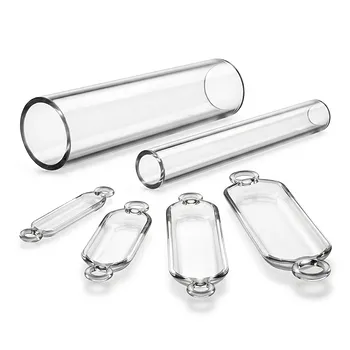
- High Purity Quartz Tube and Quartz Boat for Laboratory Furnaces
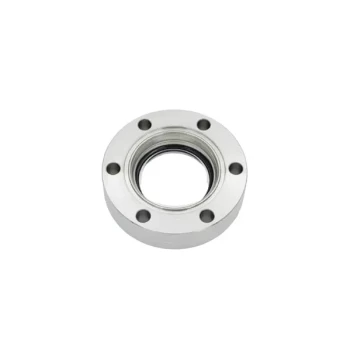
- Ultra High Vacuum CF Observation Window Flange with High Borosilicate Glass Sight Glass
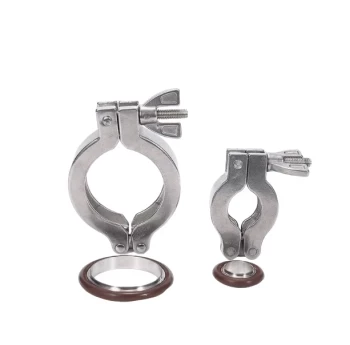
- Stainless Steel Quick Release Vacuum Chain Three Section Clamp
- Vacuum Dental Porcelain Sintering Furnace for Dental Laboratories
- High Temperature Muffle Oven Furnace for Laboratory Debinding and Pre Sintering
People Also Ask
- What tube furnace protocols prevent hydrogen embrittlement in Pd membranes? Safe Heating Guide
- What parameters must be controlled when calcining freeze-dried oxide precursors in a laboratory tube furnace? A Guide
- Why is precise atmosphere control in a laboratory tube furnace required when evaluating palladium membranes?
- What is the relationship between chemical hydrolysis of metal alkoxides and lab tube furnace thermal processing?
- How does pore size influence pore mobility and boundary breakaway during the high-temperature sintering of ceramic compacts in laboratory furnaces?