The effectiveness of a two-stage electric discharge sintering (EDS) process lies in its sequential resolution of a fundamental material problem.
Surface oxide films on metal powders act as tenacious electrical barriers and bonding inhibitors. The first stage applies a high-voltage pulse that triggers local electrical discharges, dielectrically breaking down these insulating layers to create direct metal-to-metal contacts. The second stage then delivers a sustained, high-density current that leverages resistive (Joule) heating to drive rapid densification and strong inter-particle bonding. This staged approach successfully transforms oxide-bearing powders into high-density compacts.
The core challenge with oxidized metal powders is that the oxide layer blocks both current flow and atomic diffusion. Two-stage EDS solves this by first converting the powder from an insulator to a conductor through controlled dielectric breakdown, then precisely delivering thermal energy for consolidation. The process works because it separates the oxide-removal function from the densification function, allowing each to be optimized independently.
The Problem of Surface Oxide Films
Native oxide layers on metal particles are a pervasive barrier to effective sintering. They prevent the intimate metallic contact required for neck formation and mass transport.
Why Oxides Are So Problematic
Oxides are typically electrical insulators and diffusion barriers. In a powder compact, these films raise the initial inter-particle contact resistance dramatically. This makes it difficult to pass a uniform current through the compact, leading to thermal runaway or arcing if not managed. Additionally, the oxide blocks the movement of atoms, so even if heat is applied, densification remains localized and incomplete.
The Inadequacy of Single-Stage Approaches
A single, sustained high-current pulse might attempt to sinter, but the initial high resistance due to oxides causes erratic current distribution. This can lead to hot spots, micro-arcing, and inhomogeneous microstructures. Moreover, standard power regulators can be overwhelmed by the resistance fluctuations from coarse or heavily oxidized powders, making process control impossible.
How Two-Stage EDS Overcomes the Oxide Barrier
The two-stage process directly addresses the oxide issue before heat-intensive densification begins. It turns a problematic insulator into a reliable conductor, then sinters it.
Stage 1: Dielectric Breakdown and Clean Contact Establishment
The first stage applies a high-voltage pulse of very short duration. This voltage exceeds the dielectric strength of the oxide film. The result is an electrical discharge between particle surfaces that destroys the oxide layer. Scientifically, the intense electric field polarizes the dielectric oxide, creating oxygen vacancies that act as charge traps. Once a critical charge density is reached, dielectric breakdown occurs, migrating oxygen away from the contact point and exposing fresh metal.
This immediately creates a network of solid metal-metal necks across the compact. The sharp drop in inter-particle resistance—often within 10–20 microseconds—is the signature that a continuous conductive pathway has been established. Crucially, this stage does not generate enough total energy to cause bulk sintering; it just prepares the powder.
Stage 2: Controlled Densification via Joule Heating
With a low-resistance, interconnected metallic network now in place, the second stage can deliver a high-density electric current over several seconds or minutes. This current flows uniformly through the established necks, generating intense resistive heating. The heat is concentrated precisely at the inter-particle contacts where bonding is needed. This drives thermal softening, plastic deformation, and mass transport under the applied mechanical pressure, leading to rapid densification.
Because the initial resistance is now low and stable, power delivery is predictable. This prevents the hot-spotting and arcing that would occur if the current were applied to an oxidized compact.
The Critical Role of Dynamic Resistance
Understanding the compact’s electrical behavior validates the two-stage logic. Research shows a distinct multi-stage resistance evolution: a sharp instantaneous drop during oxide breakdown (0–20 µs), followed by a gradual decrease as metal contacts form, and finally a leveling off or slight rise after 100–200 µs as the material heats up. A two-pulse system exploits this: the first pulse navigates the unstable high-resistance regime, and the second pulse works on a settled, low-resistance load. This allows the power supply’s circuit parameters to be tuned so that the discharge is aperiodic (R² > 4L/C) during densification, preventing damaging oscillatory energy dissipation.
Understanding the Trade-offs and Pitfalls
While two-stage EDS is powerful, it demands careful control and is not a universal fix for all powder conditions.
Managing Residual Oxide and Contaminants
Dielectric breakdown removes oxide at contact points, but it may not purge the entire powder surface. Some residual oxide or oxygen can remain, potentially redistributing or forming new phases if the temperature is not controlled. In some systems, introducing reducing agents like carbon can chemically lower the reduction temperature of remaining oxides, but this must be compatible with the final material properties.
Risks from Improper Pulse Tuning
The first-stage voltage must be high enough to cause breakdown but not so energetic that it sinters prematurely or causes arcing. If the compaction pressure is not properly regulated, the high-voltage pulse could instead cause superficial discharge damage without establishing clean metal contacts. Furthermore, if the circuit is not tuned to match the compact’s resistance evolution, energy can be wasted or the sample can be structurally damaged. Operators must match the pulsing profile to the powder’s oxide thickness and particle size.
Limitations with Extreme Material States
Very coarse particles or those with exceptionally thick, tenacious oxides may still challenge the process. If the first pulse cannot establish a continuous conductive network, the second pulse will be unevenly distributed. In such cases, a multi-pulse conditioning sequence or mechanical pre-treatment might be necessary. The process is also less effective on powders where the oxide is not merely a surface film but is integrated into the particle’s substructure.
Making the Right Choice for Your Process Goals
Your strategy for implementing two-stage EDS should align with your primary material and quality objectives.
- If your primary focus is achieving near-theoretical density with oxidized powders: Rely on the staged approach to reliably eliminate oxide contact barriers before densification. Tune the first pulse for a definitive, sharp resistance drop.
- If your primary focus is preventing micro-arcing and structural defects: Prioritize circuit parameter tuning to ensure the second-stage discharge is aperiodic. Use real-time resistance monitoring to confirm that a continuous conductive network has formed before triggering the main pulse.
- If your primary focus is synthesizing materials with enhanced chemical reactivity: Consider whether a carefully controlled single high-energy pulse could intentionally retain defect-rich metastable states. However, for pure densification, the two-stage process remains the safe route to homogeneity.
By separating the electrical function of oxide breakdown from the thermal function of sintering, two-stage EDS gives you unprecedented command over an otherwise chaotic process.
Summary Table:
| Stage | Energy/Current Input | Mechanism | Primary Objective |
|---|---|---|---|
| Stage 1 | Short duration, high-voltage pulse | Dielectric breakdown of oxide film | Destroys electrical barriers & creates conductive metal-to-metal contacts |
| Stage 2 | Sustained, high-density current | Resistive (Joule) heating & pressure | Drives plastic deformation, mass transport, and rapid powder densification |
Elevate Your Material Sintering Precision with KINTEK
Overcoming stubborn oxide barriers and achieving near-theoretical density requires reliable, high-precision thermal processing equipment. KINTEK specializes in advanced laboratory equipment and customized high-temperature furnaces—including vacuum, atmosphere, muffle, tube, and induction melting systems engineered to meet demanding research and manufacturing needs.
Whether you are refining pulse sintering processes or scaling novel alloy consolidation, KINTEK provides tailored solutions backed by unmatched technical expertise.
Contact our technical experts today to upgrade your lab’s thermal capabilities!
Related Products
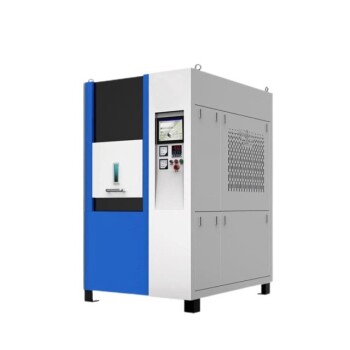
- Spark Plasma Sintering SPS Furnace
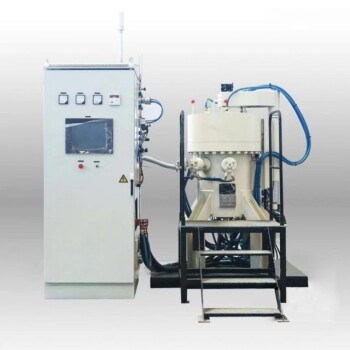
- Vacuum Heat Treat Sintering Furnace with Pressure for Vacuum Sintering
- 9MPa Air Pressure Vacuum Heat Treat and Sintering Furnace
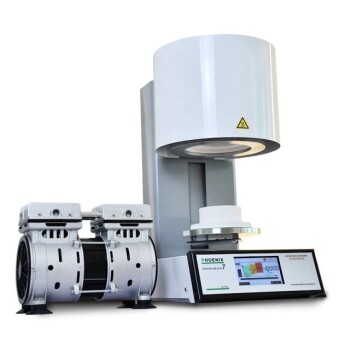
- Vacuum Dental Porcelain Sintering Furnace for Dental Laboratories
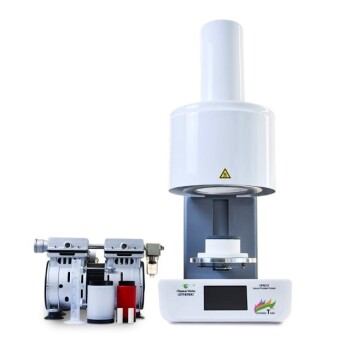
- Dental Porcelain Zirconia Sintering Ceramic Vacuum Press Furnace
People Also Ask
- Why is it necessary to maintain a high vacuum environment during the SPS of SiC? Key to High-Density Ceramics
- How does the heating mechanism of Spark Plasma Sintering (SPS) function? Enhance TiC/SiC Composite Fabrication
- What are the technical advantages of using an SPS sintering furnace? Elevate Al2O3-TiC Material Performance
- What are the advantages of Spark Plasma Sintering (SPS)? Achieve Superior Microstructures
- What are the steps in the discharge plasma sintering process? Master Fast, High-Density Material Consolidation