A high vacuum chamber is essential for titanium dioxide ($TiO_2$) CVD because it eliminates atmospheric contaminants like oxygen and moisture that would otherwise cause uncontrolled reactions. By providing a pristine, low-pressure environment, the vacuum ensures that precursor gases decompose uniformly on the substrate, resulting in thin films with high density, precise thickness, and superior optical performance.
To achieve high-quality $TiO_2$ thin films, a vacuum environment acts as a "pure physical baseline." It removes interfering gas molecules to allow for predictable chemical reactions and the unobstructed transport of materials to the substrate.
Eliminating Chemical Interference and Contamination
Preventing Premature Oxidation
Titanium precursors used in CVD are often highly reactive with ambient oxygen and water vapor. A high vacuum removes these atmospheric elements, preventing the premature oxidation of the precursors before they reach the intended substrate surface.
Ensuring Chemical Purity
Residual air contains nitrogen and carbon-based molecules that can become trapped within the growing film. By maintaining a high vacuum, you ensure the chemical purity of the titanium dioxide lattice, which is critical for maintaining its dielectric and semi-conductive properties.
Removing Adsorbed Surface Impurities
High vacuum systems often require a "pre-bake" phase to eliminate water vapor and carbon oxides clinging to the chamber walls. This process ensures that the base pressure is low enough to prevent these internal contaminants from outgassing and incorporating into the $TiO_2$ film during deposition.
Controlling Vapor Transport and Film Uniformity
Increasing the Mean Free Path
In a high vacuum, the "mean free path"—the average distance a molecule travels before hitting another—is significantly increased. This reduction in molecular collisions allows vaporized precursors to travel in a more direct, predictable path toward the substrate.
Promoting Uniform Decomposition
The controlled low-pressure environment facilitates the uniform decomposition of gaseous precursor molecules. When gas molecules are not scattered by residual air, they distribute evenly across the substrate, ensuring the film has a consistent thickness and density.
Managing Partial Pressure for Stoichiometry
A high vacuum allows researchers to precisely regulate the oxygen partial pressure within the chamber. This control is vital for achieving the correct ratio of titanium to oxygen, ensuring the film reaches its desired crystalline phase (such as anatase or rutile).
Understanding the Trade-offs and Challenges
Equipment Complexity and Cost
Maintaining a high vacuum (often $10^{-3}$ Pa or lower) requires sophisticated pumping systems, such as turbomolecular or oil diffusion pumps. The capital investment and maintenance costs for these systems are significantly higher than for atmospheric-pressure CVD.
Throughput Limitations
High vacuum processes are generally "batch" processes that require time-consuming pump-down cycles. This can limit the speed of production compared to continuous flow systems, making it a challenge for high-volume industrial manufacturing.
Precursor Compatibility
Not all precursors behave well under extreme vacuum; some may volatilize too quickly or require specific carrier gases to maintain stability. Finding the balance between vacuum depth and precursor flow rates requires extensive calibration and process monitoring.
How to Apply This to Your Project
Making the Right Choice for Your Goal
- If your primary focus is optical clarity and refractive index: Prioritize a high-vacuum base pressure to eliminate impurities that cause light scattering and absorption.
- If your primary focus is electrical insulation or conductivity: Ensure the system has been pre-baked to remove residual moisture, which can create "leakage paths" in the $TiO_2$ film.
- If your primary focus is high-speed industrial coating: Consider "Low-Pressure CVD" (LPCVD) as a middle ground that balances film quality with faster cycle times.
- If your primary focus is precise crystalline structure: Use high-vacuum systems to tightly control the oxygen-to-precursor ratio, which dictates whether the film becomes anatase or rutile.
Ultimately, the high vacuum chamber serves as the fundamental gatekeeper of purity, ensuring that the resulting titanium dioxide film meets the rigorous standards required for modern technical applications.
Summary Table:
| Key Factor | Role of High Vacuum | Benefit to TiO2 Film |
|---|---|---|
| Purity | Eliminates O2, moisture, and N2 contaminants | High dielectric & semi-conductive performance |
| Uniformity | Increases mean free path of precursor molecules | Consistent thickness & density across substrate |
| Stoichiometry | Precise control of oxygen partial pressure | Accurate crystalline phase (Anatase vs. Rutile) |
| Surface Quality | Removes adsorbed impurities through pre-baking | Reduced light scattering and superior optical clarity |
Optimize Your CVD Process with KINTEK Precision
Achieving the perfect titanium dioxide thin film requires absolute control over your thermal and vacuum environment. KINTEK specializes in high-performance laboratory equipment, offering a comprehensive range of CVD systems, vacuum furnaces, and customizable high-temperature furnaces designed to meet the most rigorous research standards.
Whether you are focusing on optical clarity, electrical insulation, or precise crystalline structures, our experts are ready to help you select or customize the ideal furnace for your application.
Ready to elevate your material science results?
Contact KINTEK Today to explore our high-temperature solutions and receive a tailored consultation for your laboratory needs.
References
- Dilshod Nematov. Titanium Dioxide and Photocatalysis: A Detailed Overview of the Synthesis, Applications, Challenges, Advances and Prospects for Sustainable Development. DOI: 10.53964/jmge.2024006
This article is also based on technical information from Kintek Furnace Knowledge Base .
Related Products
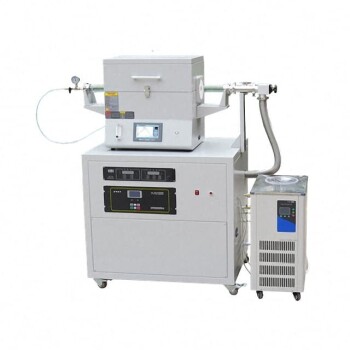
- Split Chamber CVD Tube Furnace with Vacuum Station CVD Machine
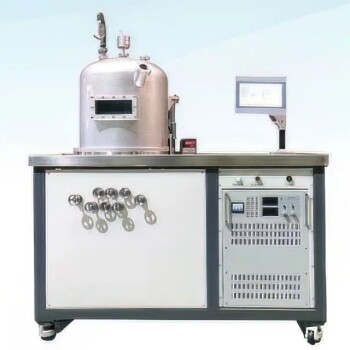
- Custom Made Versatile CVD Tube Furnace Chemical Vapor Deposition CVD Equipment Machine
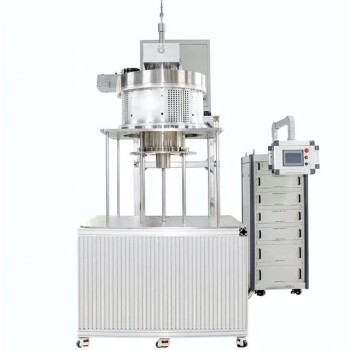
- HFCVD Machine System Equipment for Drawing Die Nano Diamond Coating
- Multi Heating Zones CVD Tube Furnace Machine for Chemical Vapor Deposition Equipment
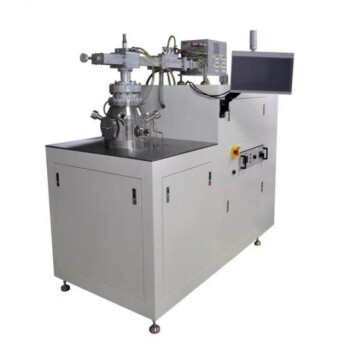
- 915MHz MPCVD Diamond Machine Microwave Plasma Chemical Vapor Deposition System Reactor
People Also Ask
- What role does a Tube Furnace play in the CVD growth of carbon nanotubes? Achieve High-Purity CNT Synthesis
- What are the advantages of using a CVD tube furnace for preparing gate dielectrics? Achieve High-Quality Thin Films for Transistors
- How does a CVD tube furnace achieve high purity in gate media preparation? Master Precision Control for Flawless Films
- What are the operational and maintenance requirements for a CVD tube furnace? Ensure Precision for Thin Film Deposition
- What are the benefits of developing new precursor materials for CVD tube furnaces? Unlock Advanced Thin-Film Synthesis