For oxide ceramics, introducing water vapor into a controlled atmosphere furnace is a powerful tool to actively tune sintering kinetics.
The impact is not uniform—moisture can dramatically enhance final-stage densification while suppressing grain coarsening in alumina, and it can accelerate overall densification in magnesia by boosting surface and interfacial transport. In both cases, water vapor fundamentally shifts the balance between the two competing processes of densification and grain growth, enabling higher density at finer grain sizes.
The true leverage of water vapor lies in its ability to decouple the densification rate from the grain growth rate, essentially re-writing the material’s trajectory on the density–grain-size map. For alumina, it sharpens that trajectory toward full density with minimal coarsening; for magnesia, it simply drives the whole sintering process faster. This makes moisture management a critical process variable for tailoring oxide-ceramic microstructures.
Why Water Vapor Changes Everything for Oxide Ceramics
The Densification–Coarsening Trade-off
Sintering is a race between two thermally activated processes: densification (pore elimination via mass transport) and coarsening (grain growth that enlarges the average grain size). The final microstructure—and thus properties like strength, translucency, and dielectric performance—depends on which process wins.
Dry atmospheres often let grain boundary mobility outpace pore removal, trapping pores inside large grains and leaving residual porosity. Introducing water vapor can tip the balance back toward densification by altering the active transport mechanisms.
How Moisture Influences Alumina (Al₂O₃)
In alumina, adding water vapor to a forming-gas or hydrogen atmosphere during the final stage of sintering yields a two-fold benefit:
- Enhanced densification rate: Water molecules adsorb on alumina surfaces, forming hydroxyl groups. These surface hydroxyls promote faster surface and grain boundary diffusion, the primary pathways for pore removal. Pores shrink more efficiently.
- Suppressed grain coarsening: Despite the faster diffusion, grain boundary mobility does not increase proportionally. The result is a higher relative density for any given grain size. The density–grain size trajectory is pushed upward, making it possible to approach theoretical density while keeping grains exceptionally fine.
This decoupling is rare and valuable: you get the best of both worlds—density and fine microstructure—without a post-sintering hot isostatic pressing step.
The Magnesia (MgO) Response
Magnesia behaves differently but equally dramatically. When sintered in a humidified atmosphere versus dry air:
- Accelerated overall densification occurs because water vapor enhances surface diffusion and interfacial energy transport. These mechanisms directly feed into pore-shrinkage processes, especially during the intermediate stage when interconnected pores still dominate.
- The rapid mass flow allows the body to reach higher densities faster, but grain coarsening may also be accelerated. Here, the effect is less about decoupling and more about speeding up the entire sintering timeline, which can be practical for production throughput if grain size targets allow.
The Underlying Mechanism: Surface Hydroxyls and Defect Chemistry
Surface Chemistry as a Process Switch
The key mechanistic step in both cases is the chemisorption of water vapor onto oxide surfaces, creating a high concentration of hydroxyl groups. These hydroxyls:
- Mobile the surface layer, effectively reducing the activation energy for surface diffusion.
- Influence grain boundary structure, sometimes forming a transient liquid-like film that enhances grain boundary diffusion without promoting massive grain boundary migration.
- Alter vacancy concentrations at surfaces and interfaces, which is the currency of mass transport.
Since the rate-limiting step for sintering often involves the slow diffusion of the slowest species (often oxygen anions in oxides), any modification that accelerates this diffusion will accelerate densification. Water vapor provides that acceleration.
Connecting to Stoichiometry and Vacancy Populations
The supplementary principle that point defect concentration governs volume diffusion adds another layer. Water vapor may also nudge the local oxygen partial pressure, subtly shifting the stoichiometry. In some oxides, this creates an excess of oxygen vacancies that boost volume diffusion. While the primary effect of water is on surface/grain-boundary diffusion, the indirect vacancy contribution cannot be ignored, especially in reducible oxides.
For alumina and magnesia, the dominant effect is surface-mediated, but the integration with defect chemistry explains why atmosphere control is indispensable—you need both the right moisture level and the right base gas environment to stabilize the desired defect population.
Understanding the Trade-offs and Limitations
Not a Universal Accelerant
Water vapor is not a magic bullet. Its effect is strongly system-dependent. In some oxide ceramics, excessive moisture can:
- Promote undesirable volatilization of certain components, disturbing the stoichiometry and leaving behind pores.
- Cause pore trapping if surface diffusion is enhanced more than grain boundary diffusion in the late stages, prematurely pinching off pore channels before they can empty.
- React with additives such as sintering aids, potentially forming secondary phases that degrade grain boundary cohesion.
Process Control Demands Precision
The benefits only arise when moisture is introduced at the right concentration and the right sintering stage. A high-temperature atmosphere furnace capable of delivering precise dew-point control becomes essential. Too little moisture yields no effect; too much can cause exaggerated grain growth or harmful phase transitions. The process window can be narrow, especially for submicron powders where capillary forces are high.
Interactions with Trapped Gases
Supplementary references emphasize that the final-gas composition inside closed pores dictates the ultimate density limit. If water vapor introduces hydrogen (from dissociation) that becomes trapped, it can diffuse out more easily than nitrogen, so that’s often good. But if the atmosphere also contains insoluble species, the gain from water vapor may be capped by backpressure from trapped gases. Always consider the entire gas mixture, not just the moisture content.
Making the Right Choice for Your Ceramic
Your choice to humidify the furnace atmosphere must be aligned with your specific material and target microstructure. Use the following goal-based guidelines to decide.
- If your primary focus is achieving near‑theoretical density with ultra‑fine grain size (e.g., translucent alumina): Introduce a controlled water vapor level in hydrogen or forming gas during the final sintering stage. This strategy leverages the alumina decoupling effect to maximize density while suppressing grain coarsening.
- If your primary focus is accelerating cycle times for a robust oxide like MgO where final grain size is less critical: Humidify the atmosphere from the intermediate stage onward. The enhanced surface diffusion will shorten the sintering schedule, though you may accept slightly larger grains.
- If your primary focus is avoiding trapped-gas porosity in a mixed‑gas environment: Use humidity alongside a gas composition that ensures the entrapped species can dissolve and diffuse out (e.g., hydrogen or oxygen). Water vapor alone cannot rescue a pore filled with insoluble nitrogen.
- If your primary focus is reproducibility and research‑grade microstructures: Invest in a furnace with automated dew‑point control and log the moisture profile along with temperature. This turns water vapor from a nuisance variable into a finely tuned process lever.
Embrace water vapor as a precise rheostat for sintering kinetics—when you control it, you control the very architecture of your ceramic.
Summary Table:
| Ceramic Material | Primary Effect of Water Vapor | Microstructural Outcome | Ideal Application Stage |
|---|---|---|---|
| Alumina (Al₂O₃) | Decouples densification from grain growth via enhanced boundary diffusion | High theoretical density with ultra-fine grain size | Final sintering stage |
| Magnesia (MgO) | Accelerates overall mass transport & surface energy transfer | Rapid densification and reduced cycle times | Intermediate to final stage |
| Reducible / Mixed Oxides | Modifies oxygen vacancy populations and point defect concentrations | Tailored defect chemistry and optimized stoichiometry | Process-dependent |
Optimize Your Ceramic Sintering Microstructures with KINTEK
Precision atmosphere and dew-point control are essential for unlocking the full benefits of water vapor in oxide ceramic sintering. KINTEK offers industry-leading laboratory equipment and customizable high-temperature furnaces—including controlled atmosphere, muffle, tube, vacuum, and CVD furnaces designed to meet rigorous research and production demands.
Whether you need fine-grained translucent alumina or accelerated processing schedules for advanced ceramics, our engineering team can build the exact furnace configuration tailored to your thermal process.
Contact KINTEK Today to Enhance Your Lab's Atmosphere Furnace Capability
Related Products
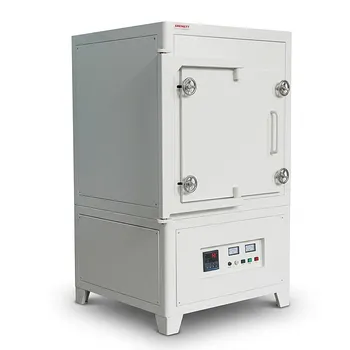
- 1200℃ Controlled Inert Nitrogen Atmosphere Furnace
- 1400℃ Controlled Inert Nitrogen Atmosphere Furnace
- 1700℃ Controlled Inert Nitrogen Atmosphere Furnace
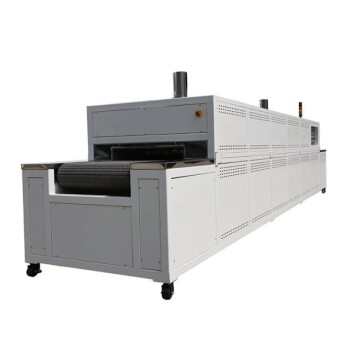
- Mesh Belt Controlled Atmosphere Furnace Inert Nitrogen Atmosphere Furnace
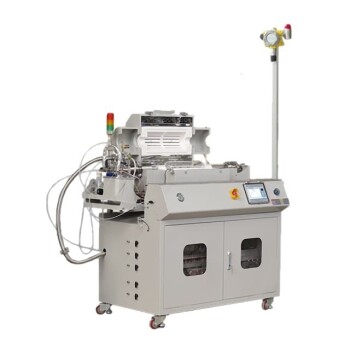
- Controlled Inert Nitrogen Hydrogen Atmosphere Furnace
People Also Ask
- What controlled-atmosphere furnace conditions are required for sintering powder metallurgy copper alloy compacts? Ideal Setup
- How does a vacuum or controlled atmosphere furnace facilitate sessile-drop experiments? Optimize Alloy Wetting Analysis
- How does introducing reactive gases into a controlled atmosphere furnace affect ceramic densification and coarsening?
- What are the core steps in powder metallurgy, and why is a controlled atmosphere furnace necessary for sintering metal alloys?
- How Sintering Temp Affects Density & Resistivity of Cu-Oxide Composites