The core steps of powder metallurgy are mixing, compacting, and sintering—and a controlled atmosphere furnace is essential during sintering to protect metal particles from oxidation, enable atomic diffusion, and lock in the precise microstructure that gives the final component its strength and functionality.
Powder metallurgy transforms loose metal powders into high-performance parts, but the sintering step is where the true magic happens. Without a precisely controlled atmosphere, oxidation and contamination would destroy the interparticle bonding needed for density, conductivity, and strength. The furnace atmosphere doesn't just prevent rust—it actively shapes the chemistry and microstructure of the finished alloy.
The Three Pillars of Powder Metallurgy
The surface-level question points straight to a simple, three-stage process. Each step builds on the last, but the final one—sintering—is where the controlled atmosphere becomes irreplaceable.
Mixing the Precursors
Elemental or pre‑alloyed metal powders are blended with lubricants and other additives to create a homogeneous feedstock. This step ensures uniform composition and flowability during compaction.
Compaction into the ‘Green’ State
The powder mix is pressed in a rigid die at room temperature, typically at pressures around 300 MPa for copper alloys. The result is a “green compact” that holds its shape through mechanical interlocking and cold welding, but has minimal strength.
Sintering: The Thermal Metamorphosis
The green compact is heated to a high temperature—often 70–90% of the metal’s melting point—in a controlled atmosphere furnace. Heat triggers atomic diffusion, forming sintering necks between particles that eliminate pores and create a dense, metallurgically bonded solid. Without the right atmosphere, this entire transformation would fail.
Why a Controlled Atmosphere Furnace is Non‑Negotiable
The deep need behind the question is about understanding the furnace’s true role. It’s not just an “oven with fancy gas.” It’s a precision thermal‑chemical reactor that dictates the material’s final properties.
The Oxidation Threat During High‑Temperature Processing
Metal powders have an enormous surface‑area‑to‑volume ratio. At sintering temperatures—850 °C for copper alloys or 1125 °C for steel—exposure to oxygen would cause instantaneous, catastrophic oxidation. A controlled atmosphere furnace floods the chamber with inert or reducing gases (like dry hydrogen, nitrogen‑hydrogen blends, or argon) to create an oxygen‑free bubble around the compact. This answers the surface need directly: the furnace prevents oxidation that would otherwise destroy the part before it could ever become useful.
Beyond Oxidation: The Multifaceted Role of Atmosphere
The real genius of the controlled atmosphere is its multitasking. It presides over a chain of thermochemical events that define metallurgical quality.
Delubrication: Burning Off Without Burning Up
During the heat‑up phase, the atmosphere must efficiently remove the binder and lubricant residues from the green compact. A carefully managed gas flow sweeps away decomposition products without leaving carbon soot or ash that would weaken the bond.
Oxide Reduction and Surface Cleaning
Even trace oxide films on powder particles block diffusion. Reducing atmospheres—like the high‑purity dry hydrogen used for copper alloys—chemically strip these oxides, exposing clean metal surfaces. This is a prerequisite for neck formation, the microscopic bridges that grow between particles to build strength.
Heat Transfer and Thermal Uniformity
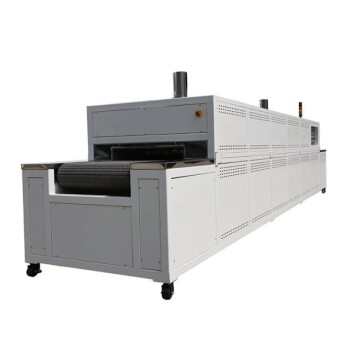
The atmosphere is the invisible conveyor of heat. Fast, uniform heating prevents thermal gradients that cause distortion or uneven sintering. The thermal conductivity of the gas mixture and its flow pattern inside a horizontal tube furnace or belt furnace directly impact part‑to‑part consistency.
Interstitial Element Control and Sinter‑Hardening
Beyond oxidation, the atmosphere controls the uptake and loss of interstitial elements like carbon and nitrogen. In steel sintering, a 90% H₂ / 10% N₂ atmosphere can prevent decarburization (carbon loss) while allowing controlled cooling rates for sinter‑hardening—turning the sintering furnace into a combined heat‑treatment station.
Case in Point: Chromium‑Alloyed Steels
Chromium has a voracious appetite for oxygen and carbon. Sintering Cr‑alloyed PM steel under a standard atmosphere turns chromium into useless oxides while stripping carbon from the matrix. An ultra‑dry, oxygen‑free atmosphere with a precisely controlled carbon potential is mandatory. Only then can solid‑state diffusion of chromium into the iron matrix lower its chemical activity and suppress oxidation, yielding a tough, hardenable steel.
Understanding the Trade‑offs
A controlled atmosphere furnace is not a plug‑and‑play solution. It demands rigorous operational discipline and carries real engineering compromises.
- Cost and complexity: High‑purity gases, dew‑point monitors, and atmosphere‑tight furnace construction raise capital and operating expenses significantly.
- Gas selection is sensitive: Using hydrogen with reactive powders (e.g., titanium) can cause hydride formation and embrittlement. Argon may be safer but is expensive and lacks the oxide‑reducing power of H₂.
- Decarburization risk: Even slightly moist atmospheres can decarburize steels, ruining hardenability. The atmosphere must be matched to the alloy’s thermodynamic needs.
- Flow rate and uniformity: Poor gas distribution creates dead zones with erratic properties. Achieving laminar flow across a continuous belt furnace requires careful engineering.
- Process window limitations: Solid‑state sintering of reactive matrix composites (aluminum, titanium, magnesium) requires staying strictly below the matrix liquidus to prevent fiber degradation. This narrow temperature window demands exceptional furnace control.
Making the Right Choice for Your Goal
Your application dictates the atmosphere strategy. Match the furnace environment to your deep need—not just your material.
- If your primary focus is electrical conductivity (e.g., copper‑nickel‑aluminum alloys): Use a dry hydrogen atmosphere at 850 °C for complete oxide removal and pore‑free sintering, maximizing IACS values.
- If your primary focus is mechanical strength and toughness in steel parts: Opt for a nitrogen‑hydrogen reducing atmosphere with precise carbon potential control to avoid decarburization and enable sinter‑hardening.
- If your primary focus is processing chromium‑alloyed PM steels: Invest in ultra‑dry, oxygen‑free atmospheres and dew‑point monitoring to unlock chromium’s strengthening potential without oxidation.
- If your primary focus is advanced composites with reactive fibers: Stick to solid‑state sintering under high‑purity inert gas, staying below the matrix liquidus to preserve fiber integrity and uniform dispersion.
A controlled atmosphere furnace is not a peripheral accessory—it is the beating heart of the powder metallurgy process, transforming fragile green compacts into engineered, functional materials.
Summary Table:
| Process Stage / Atmosphere Role | Core Mechanism & Function | Material & Performance Benefit |
|---|---|---|
| 1. Powder Mixing | Blending elemental powders with lubricants/additives | Ensures uniform chemical composition and flowability |
| 2. Compacting | Cold pressing powder mix in dies (~300 MPa) | Creates shape-retaining 'green compact' via mechanical interlocking |
| 3. Sintering | Heating to 70–90% of melting temp to drive atomic diffusion | Forms necking between particles, eliminating pores and gaining strength |
| Oxidation Protection | Flooding chamber with inert/reducing gas (H₂, N₂, Ar) | Prevents catastrophic oxidation at high temperatures |
| Delubrication & Surface Cleaning | Thermal decomposition & oxide stripping by dry H₂ | Removes binder residues and exposes pristine metal surfaces for bonding |
| Microstructure & Carbon Control | Precise gas ratio and dew-point management | Prevents decarburization and enables integrated sinter-hardening |
Optimize your powder metallurgy sintering and achieve defect-free, high-density metal components with KINTEK. As trusted specialists in laboratory equipment and consumables, KINTEK offers a comprehensive range of high-temperature furnaces—including atmosphere, tube, vacuum, muffle, CVD, rotary, and induction melting furnaces—all fully customizable to meet your exact gas control, temperature uniformity, and alloy requirements. Elevate your material research and manufacturing quality—contact our furnace experts today!
Related Products
- 1200℃ Controlled Inert Nitrogen Atmosphere Furnace
- 1400℃ Controlled Inert Nitrogen Atmosphere Furnace
- 1700℃ Controlled Inert Nitrogen Atmosphere Furnace
- Mesh Belt Controlled Atmosphere Furnace Inert Nitrogen Atmosphere Furnace
- Controlled Inert Nitrogen Hydrogen Atmosphere Furnace
People Also Ask
- What controlled-atmosphere furnace conditions are required for sintering powder metallurgy copper alloy compacts? Ideal Setup
- Why is a controlled atmosphere furnace required for 316L debinding? Ensure Structural Integrity & Zero Cracks
- What are the four main types of controlled atmospheres used in these furnaces? Optimize Your Heat Treatment Processes
- How does a vacuum or controlled atmosphere furnace facilitate sessile-drop experiments? Optimize Alloy Wetting Analysis
- What are the operational advantages of using a controlled atmosphere furnace? Boost Quality and Efficiency in Heat Treatment