
Ultimately, the primary benefit of precise temperature control in a channel induction furnace is metallurgical and operational consistency. It allows you to reliably achieve desired metal properties, minimize material and energy waste, and drastically improve the quality and repeatability of your final product. This shifts the melting process from an art based on operator experience to a science based on exact parameters.
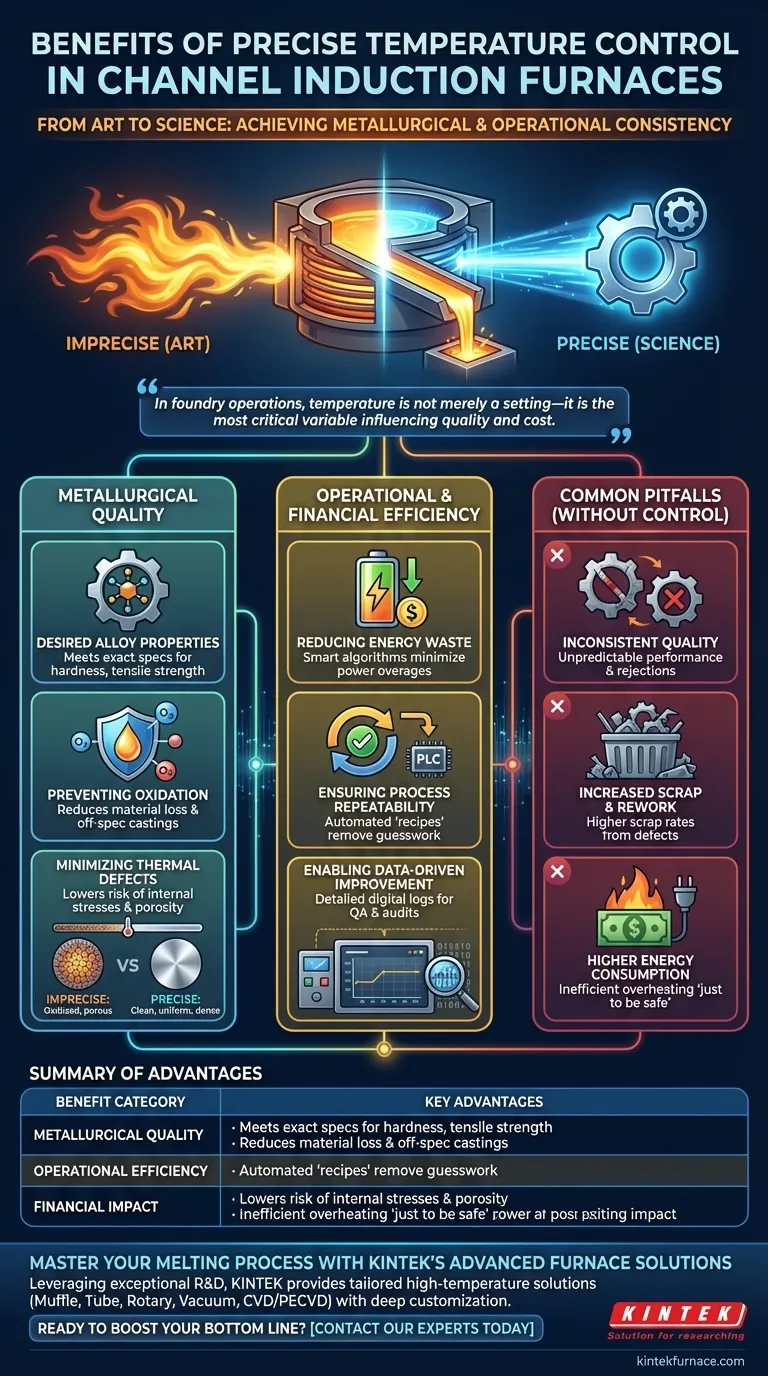
In foundry operations, temperature is not merely a setting—it is the most critical variable influencing quality and cost. Precise control transforms the furnace from a simple melting device into an engineering tool that directly reduces defects, lowers energy consumption, and guarantees repeatable results.
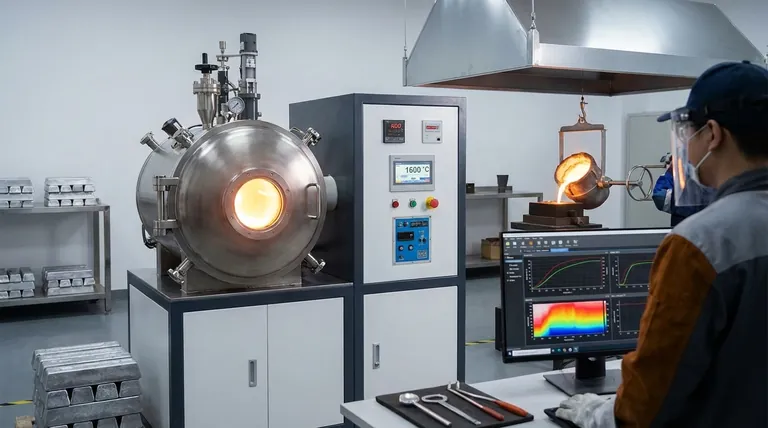
The Impact on Metallurgical Quality
The most profound benefits of precise temperature control are seen in the metal itself. The final characteristics of a cast part are determined by its thermal history, which begins in the furnace.
Achieving Desired Alloy Properties
Every alloy has an ideal casting temperature window. Even minor deviations can alter the final microstructure, impacting mechanical properties like hardness, tensile strength, and ductility. Precise control ensures the metal is poured at the exact temperature required to meet engineering specifications.
Preventing Oxidation and Decarburization
Overheating the molten bath is a common and costly mistake. It accelerates the rate of oxidation, burning off valuable and expensive alloying elements. This not only wastes material but also changes the chemical composition of the final product, leading to off-spec castings.
Minimizing Thermal Defects
Precise control systems maintain a very small temperature difference between the core of the molten metal and its surface. This thermal uniformity reduces the risk of internal stresses, gas porosity, and other defects that can form during solidification.
Driving Operational and Financial Efficiency
Beyond quality, precise control is a powerful lever for improving your bottom line. It targets the two largest cost centers in a foundry: energy and scrap.
Reducing Energy Waste
An induction furnace that constantly overshoots its target temperature is wasting significant amounts of electricity. Modern control systems use sophisticated algorithms to apply power intelligently, reaching the setpoint quickly and holding it there with minimal energy input, preventing costly overages.
Ensuring Process Repeatability
Systems integrated with a PLC (Programmable Logic Controller) allow you to automate the entire heating process. You can program and save specific "recipes" for different alloys, removing operator guesswork and ensuring every batch is produced under identical conditions.
Enabling Data-Driven Improvement
Automated control systems create a detailed digital record of every melt cycle. This data is invaluable for quality assurance, process analysis, and troubleshooting. It provides a clear, objective log for internal audits or to demonstrate compliance with customer requirements.
Common Pitfalls Without Precise Control
Operating without precise, automated temperature control exposes a facility to significant and unnecessary risks. These issues often compound, eroding profitability and reputation.
Inconsistent Product Quality
Relying on manual control or outdated systems inevitably leads to batch-to-batch variation. This inconsistency results in unpredictable product performance and a higher likelihood of customer rejections.
Increased Scrap and Rework
Pouring metal that is too hot or too cold is a primary cause of casting defects. This leads directly to increased scrap rates, forcing costly remelts or time-consuming rework.
Higher Energy Consumption
Without a system that prevents it, operators often default to overheating the metal "just to be safe." This practice serves as an expensive and inefficient buffer, leading to consistently higher energy bills.
How to Apply This to Your Operation
When evaluating furnace technology or process upgrades, your decision should be guided by your specific operational goals.
- If your primary focus is producing high-specification alloys: Prioritize a control system that guarantees minimal temperature variance to ensure you consistently hit precise metallurgical targets.
- If your primary focus is reducing operational costs: Look for systems that combine precise control with advanced power management to minimize energy consumption and scrap rates.
- If your primary focus is process consistency and traceability: Invest in PLC-based controls that offer robust recipe management and detailed data logging for unparalleled quality assurance.
By mastering temperature, you gain control over the quality, efficiency, and profitability of your entire casting process.
Summary Table:
| Benefit Category | Key Advantages |
|---|---|
| Metallurgical Quality | Achieves desired alloy properties, prevents oxidation, minimizes thermal defects |
| Operational Efficiency | Reduces energy waste, ensures process repeatability, enables data-driven improvement |
| Financial Impact | Lowers scrap and rework costs, decreases energy consumption, improves profitability |
Master Your Melting Process with KINTEK's Advanced Furnace Solutions
Leveraging exceptional R&D and in-house manufacturing, KINTEK provides foundries and metal producers with advanced high-temperature furnace solutions tailored for precise thermal control. Our product line, including Muffle, Tube, Rotary Furnaces, Vacuum & Atmosphere Furnaces, and CVD/PECVD Systems, is complemented by our strong deep customization capability to precisely meet your unique operational requirements.
Ready to achieve metallurgical consistency, reduce waste, and boost your bottom line? Contact our experts today to discuss how our customized furnace solutions can transform your casting process from an art into a science.
Visual Guide
Related Products
- 600T Vacuum Induction Hot Press Vacuum Heat Treat and Sintering Furnace
- Vacuum Induction Melting Furnace
- Multi Heating Zones CVD Tube Furnace Machine for Chemical Vapor Deposition Equipment
- Vacuum Sealed Continuous Working Rotary Tube Furnace Rotating Tube Furnace
- 1200℃ Controlled Inert Nitrogen Atmosphere Furnace
People Also Ask
- Why use Vacuum Hot Press (VHP) for ZnS Ceramics? Achieve Superior IR Transparency and Mechanical Strength
- How does a vacuum hot press sintering furnace mitigate copper sintering swelling? Solve Fe-Cu Expansion Issues
- What are the key advantages of vacuum hot press sintering furnaces? Achieve Superior Density and Purity in Materials
- How does the vacuum environment in a vacuum hot press sintering furnace protect chromium-containing ceramics? Find out.
- What are the benefits of using a vacuum hot press sintering furnace for the preparation of SiCw/2024 aluminum matrix composites? Achieve High-Performance Aerospace Materials



















