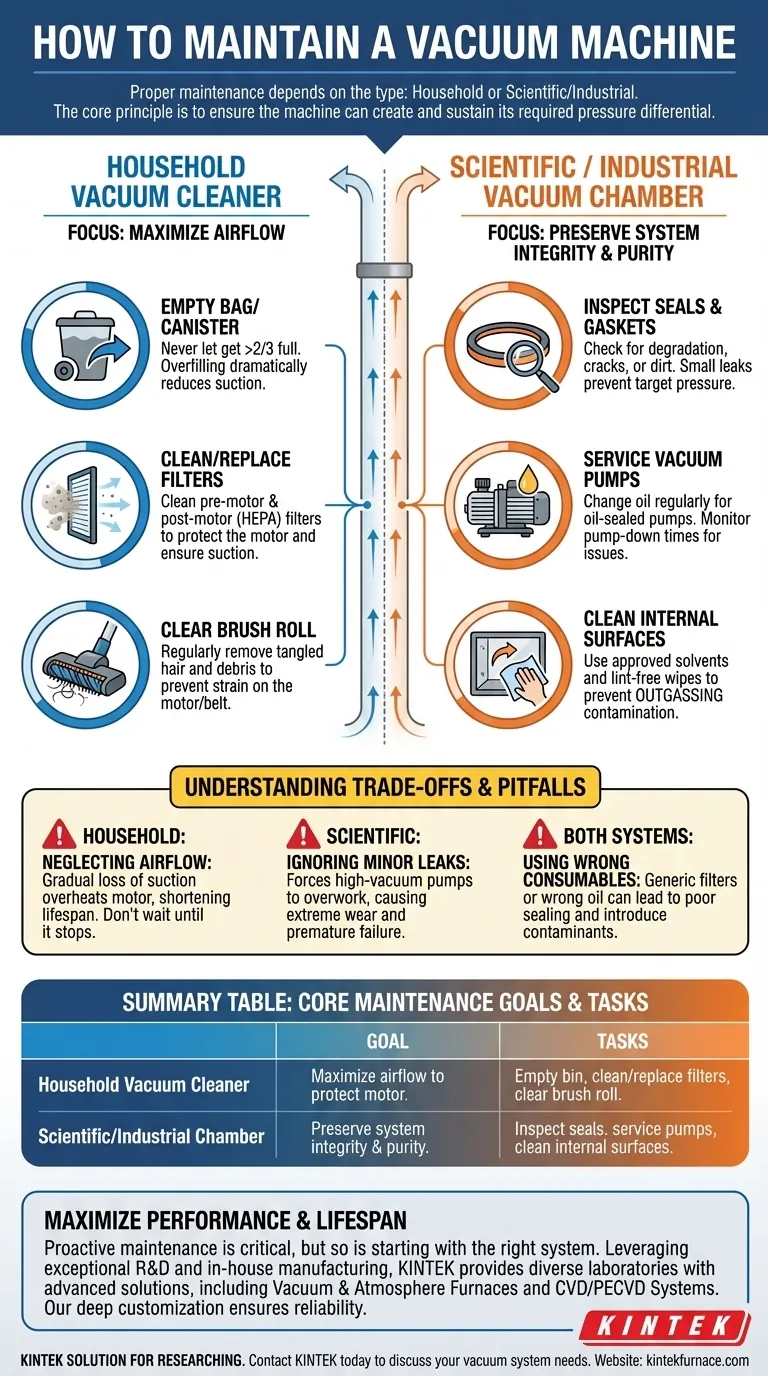
To properly maintain a vacuum machine, you must first identify its type, as the procedures are entirely different. For a household vacuum cleaner, the most critical tasks are regularly emptying the dirt canister and cleaning the filters to ensure proper airflow. For a scientific or industrial vacuum chamber, maintenance focuses on preserving system integrity by inspecting seals for leaks and servicing the pumps that create the low-pressure environment.
The core principle of all vacuum system maintenance is the same: ensure the machine can create and sustain its required pressure differential. Whether this means preventing clogs in a cleaner or sealing leaks in a chamber, the goal is to reduce strain and guarantee performance.

Understanding Vacuum Cleaner Maintenance
A vacuum cleaner’s performance is entirely dependent on the volume of air it can move. Every maintenance task is designed to maximize this airflow, which protects the motor and ensures strong suction.
The Core Principle: Unobstructed Airflow
Your vacuum's motor creates suction by pulling air through the machine. Any clog, blockage, or dirty filter forces the motor to work harder, generating excess heat and leading to premature failure.
Emptying the Bag or Canister
Never let the bag or canister get more than two-thirds full. An overfilled container dramatically reduces suction power long before it appears "full" and can cause fine dust to be forced into the motor compartment.
Cleaning and Replacing Filters
Vacuums have multiple filters, typically a pre-motor filter to protect the engine from dust and a post-motor (often HEPA) filter to clean the exhaust air. Clogged filters starve the motor of air, so they should be cleaned or replaced according to the manufacturer's schedule—or more often in dusty environments.
Clearing the Brush Roll
The spinning brush roll (or beater bar) is essential for agitating carpet fibers. Regularly cut away tangled hair, string, and debris. A tangled brush roll cannot spin effectively and can strain or burn out its dedicated motor or drive belt.
Maintaining a Scientific or Industrial Vacuum Chamber
For a high-vacuum chamber, maintenance shifts from airflow to system purity and integrity. The goal is to remove molecules from a sealed environment, so preventing them from entering (leaks) or being introduced (outgassing) is paramount.
The Core Principle: System Integrity
A vacuum chamber's performance is measured by the low pressure (or "high vacuum") it can achieve and hold. This requires a perfectly sealed system and clean internal surfaces.
Seal and Gasket Inspection
The most common point of failure is a leak at a seal, flange, or viewport. O-rings and gaskets made of elastomers can degrade, crack, or become dirty over time. A small, invisible leak can prevent the system from reaching its target pressure.
Vacuum Pump Maintenance
The pumps are the heart of the system. For oil-sealed rotary vane pumps (a common type of roughing pump), changing the oil is critical. Contaminated oil has a higher vapor pressure, limiting the vacuum level the pump can achieve. Monitor pump-down times; a sudden increase can indicate a leak or a pump issue.
Chamber Cleanliness and Outgassing
Any material, including fingerprints or cleaning residue, on the chamber's internal surfaces can release molecules under vacuum. This phenomenon, called outgassing, raises the chamber pressure and can contaminate your experiment or process. Always use approved, low-vapor-pressure solvents (like isopropyl alcohol) and lint-free wipes for cleaning.
Understanding the Trade-offs and Pitfalls
Neglecting maintenance has direct consequences, but they manifest differently in each system. Understanding these specific risks helps prioritize your efforts.
For Vacuum Cleaners: "If It's Sucking, It's Working"
This is a dangerous misconception. A gradual loss of suction is the first sign of a clogged filter or a developing blockage. Ignoring it forces the motor to overheat, significantly shortening the lifespan of the appliance.
For Vacuum Chambers: Neglecting Minor Leaks
A "small" leak may seem insignificant if the pumps can overcome it, but this is deceptive. It forces the high-vacuum pumps (like turbomolecular or diffusion pumps) to work constantly against a gas load they aren't designed for, causing extreme wear and premature failure.
For Both Systems: Using the Wrong Consumables
Using a generic filter in a vacuum cleaner can lead to poor sealing and allow dust into the motor. Using the wrong oil in a vacuum pump or an unapproved cleaning agent in a chamber can introduce contaminants that are nearly impossible to remove, ruining the system's performance.
A Maintenance Checklist for Your Goal
Your maintenance strategy should be guided by the primary function of your equipment.
- If your primary focus is a household vacuum cleaner: Prioritize consistent airflow. Regularly empty the bin, wash or replace the filters, and keep the brush roll free of debris.
- If your primary focus is a scientific vacuum chamber: Prioritize system integrity. Routinely inspect all seals for leaks, follow the maintenance schedule for your specific pumps, and maintain rigorous internal cleanliness to prevent outgassing.
Proactive and correct maintenance is the definitive factor in ensuring the long-term reliability and performance of any vacuum system.
Summary Table:
| Vacuum System Type | Core Maintenance Goal | Key Maintenance Tasks |
|---|---|---|
| Household Vacuum Cleaner | Maximize airflow to protect motor and suction | - Empty bag/canister regularly - Clean/replace filters - Clear brush roll of debris |
| Scientific/Industrial Chamber | Preserve system integrity and purity | - Inspect seals and gaskets for leaks - Service vacuum pumps (e.g., change oil) - Clean internal surfaces to prevent outgassing |
Maximize the performance and lifespan of your laboratory equipment. Proper maintenance is critical, but so is starting with the right, high-integrity vacuum system for your specific application. Leveraging exceptional R&D and in-house manufacturing, KINTEK provides diverse laboratories with advanced high-temperature furnace solutions, including Vacuum & Atmosphere Furnaces and CVD/PECVD Systems. Our strong deep customization capability allows us to precisely meet unique experimental requirements, ensuring your system is built for reliability from the start.
Contact KINTEK today to discuss your vacuum system needs and discover how our tailored solutions can enhance your research and development.
Visual Guide
Related Products
- Vacuum Hot Press Furnace Machine for Lamination and Heating
- Vacuum Hot Press Furnace Machine Heated Vacuum Press
- Vacuum Hot Press Furnace Machine Heated Vacuum Press Tube Furnace
- Split Chamber CVD Tube Furnace with Vacuum Station CVD Machine
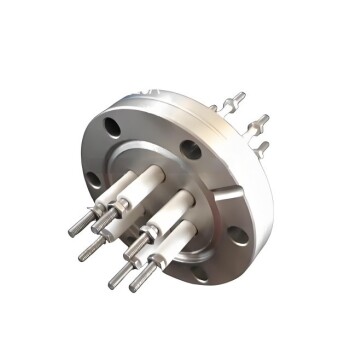
- Ultra Vacuum Electrode Feedthrough Connector Flange Power Lead for High Precision Applications
People Also Ask
- What are the primary components of a vacuum hot press furnace? Master the Core Systems for Precise Material Processing
- What are the benefits of the vacuum environment system in a vacuum hot press furnace? Unlock High-Density Sintering
- What safety features are incorporated in vacuum hot press furnaces? Ensure Operator and Equipment Protection
- What industries benefit from the use of vacuum hot press furnaces? Unlock High-Performance Materials for Your Industry
- What temperature control features do vacuum hot press furnaces have? Achieve Precision in High-Temp Material Processing