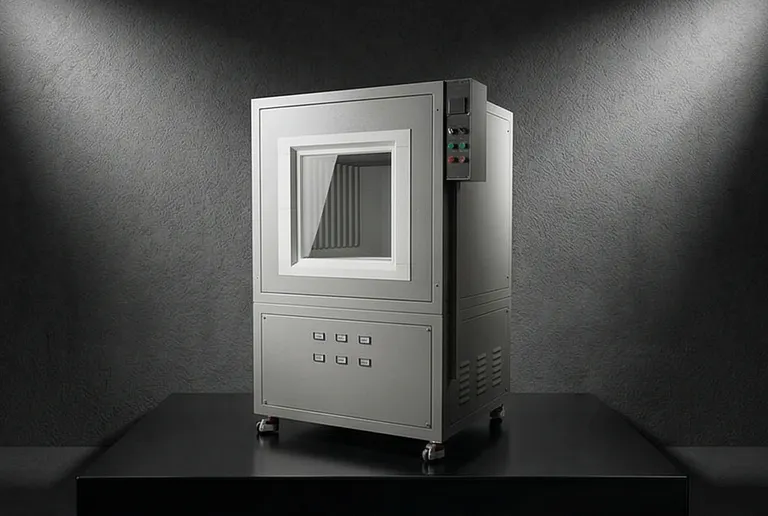
The Invisible Flaw in High-Performance Metallurgy
You have spent weeks perfecting the composition of a Ti-35Nb (Titanium-Niobium) alloy, a material prized for its exceptional biocompatibility and low elastic modulus. The chemical processing is complete, the samples are cleaned, and they are ready for the next stage of fabrication or mechanical testing.
However, when you pull the samples from storage a few days later, you notice subtle, uneven discolorations or "water stains" on the surface. During high-vacuum sintering or sensitive surface analysis, these samples behave unpredictably. Despite following the primary metallurgical protocols, the final product shows signs of interstitial contamination or poor surface adhesion.
Where did the process fail? It didn’t fail in the high-temperature furnace; it failed in the transition.
The Common Struggle: The "Good Enough" Drying Method
In many busy laboratories, the post-cleaning drying phase is often treated as an afterthought. Because Ti-35Nb is a robust, high-melting-point alloy, researchers sometimes assume that "air drying" on a benchtop or using a quick blast of compressed air is sufficient.
This oversight leads to several recurring frustrations:
- Persistent Water Stains: Evaporation at room temperature is rarely uniform, leaving behind mineral traces or "tide marks" that interfere with surface characterization.
- Latent Oxidation: Even at room temperature, residual moisture trapped in the micro-porosity or surface texture of the alloy can trigger localized, uneven oxidation.
- Inconsistent Vacuum Performance: If samples aren't bone-dry before entering a vacuum furnace for sintering, residual solvents can outgas, compromising the vacuum level and potentially contaminating the furnace environment.
The cost isn't just a few ruined samples; it’s the weeks of lost R&D time and the high price of Niobium and Titanium wasted on failed runs.
The Root Cause: Why Moisture is the Enemy of Ti-Nb
To understand why these failures happen, we must look at the surface chemistry of Titanium-based alloys. Titanium is highly reactive. When a Ti-35Nb sample is cleaned or chemically processed, its surface is in a state of high energy.
Residual moisture and solvents are not just "sitting" on the surface; they are interacting with it. If moisture is removed too slowly or unevenly, it creates a gradient where oxygen can penetrate the surface layer inconsistently. This leads to the "uneven oxidation" mentioned in technical standards.
The industry-standard solution is a controlled drying environment at approximately 60ºC. This temperature is the "Goldilocks zone": it is high enough to significantly increase the vapor pressure of water and common laboratory solvents, ensuring rapid and total removal, yet low enough to avoid triggering the phase transformations or heavy thermal oxidation that occur at higher temperatures.
The Tool for Precision: KINTEK Laboratory Ovens
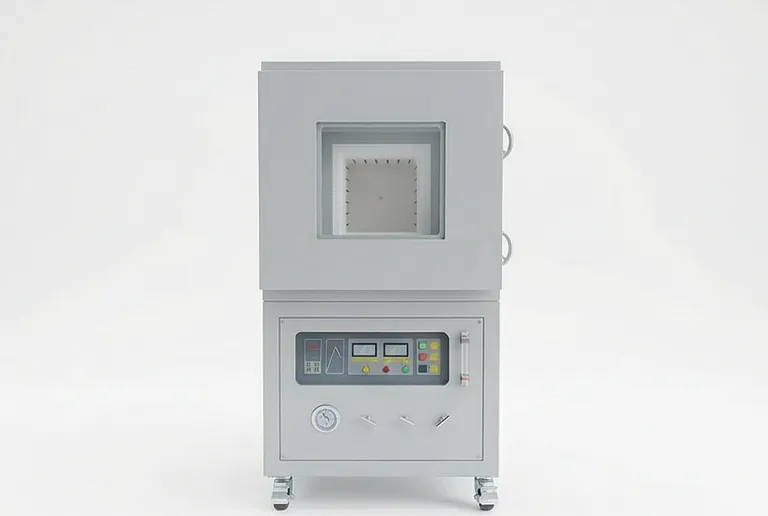
Achieving a consistent 60ºC across every square inch of a sample tray is not as simple as it sounds. A standard household-grade heating element lacks the uniformity required for sensitive metallurgy.
This is where the KINTEK Laboratory Oven becomes an essential component of the Ti-35Nb manufacturing workflow. Our ovens are not merely "heating boxes"; they are precision-engineered environments designed to address the specific vulnerabilities of advanced materials:
- Thermal Uniformity: Our ovens ensure that every sample, whether placed in the center or the corner of the rack, experiences the exact 60ºC required for stable drying.
- Controlled Atmosphere: By rapidly removing moisture-laden air, our systems prevent the "sauna effect" that can occur in poorly ventilated units, which otherwise leads to surface spotting.
- Customizable Profiles: Because Ti-35Nb workflows often vary, KINTEK offers customizable settings to ensure that the drying cycle integrates perfectly with your specific cleaning agents and subsequent fabrication steps.
Beyond the Fix: New Possibilities in Alloy Research
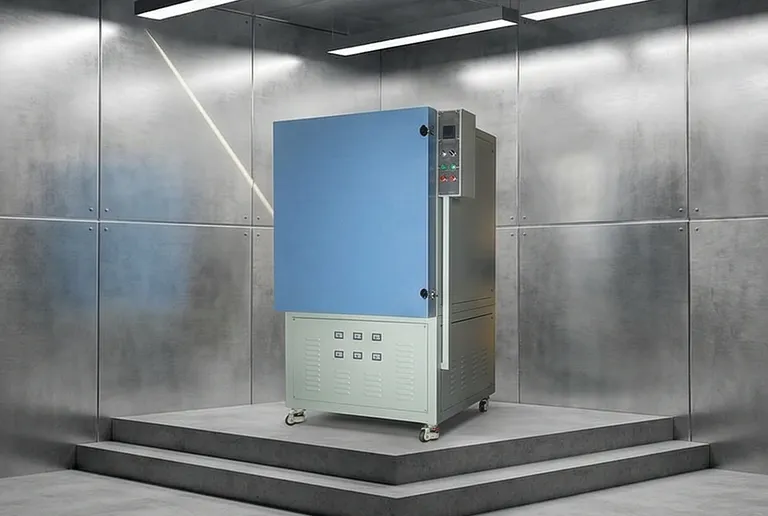
When you eliminate the variable of "residual moisture," your entire research or production line changes. You stop fighting surface defects and start exploring the true potential of the material.
With a guaranteed dry and stable sample, you can:
- Achieve Superior Surface Finishes: Ensure that coatings and surface treatments bond perfectly every time.
- Accelerate Testing Cycles: Move from cleaning to testing with total confidence, reducing the "quarantine" time for samples.
- Enhance Data Reliability: In biocompatibility testing for medical implants, surface purity is everything. A controlled drying stage ensures your results reflect the alloy’s properties, not its contaminants.
By mastering the "simple" 60ºC drying stage, you secure the foundation for every high-temperature process that follows.
At KINTEK, we understand that in high-stakes metallurgy, there is no such thing as a "minor" step. Whether you are developing the next generation of medical implants or aerospace components, your success depends on the precision of your equipment at every degree. Our team of experts is ready to help you configure a drying and heating solution tailored to the unique demands of your Ti-35Nb workflow or any other advanced material challenge.
Contact Our Experts today to discuss your project requirements and ensure your laboratory is equipped for excellence.
Related Products
- 1700℃ High Temperature Muffle Oven Furnace for Laboratory
- High Temperature Muffle Oven Furnace for Laboratory Debinding and Pre Sintering
- Laboratory Muffle Oven Furnace with Bottom Lifting
- 1800℃ High Temperature Muffle Oven Furnace for Laboratory
- 1400℃ Muffle Oven Furnace for Laboratory
Related Articles
- Why High-Purity Gas Fails Your High-Temp Brazing—And How Mono-Silane Doping Fixes It
- Why Your High-Temperature Experiments Fail: The Hidden Flaw in Your Furnace
- The Hidden Saboteur in Your HT-LiCoO2 Synthesis: Why Precise Ramp Rates Can Make or Break Your Battery Materials
- Beyond the Alarm: The Hidden Safety Risks in Your High-Temperature Furnace
- Your Furnace Meets Spec, So Why Are Your Results Inconsistent?








