The Challenge of Turning Biomass into "Black Gold"
In the quest for sustainable electronics and high-performance catalysts, the promise of biomass-derived silver-decorated graphene is immense. It transforms agricultural waste into a high-value material, combining the conductivity of graphene with the catalytic power of silver nanoparticles.
However, many researchers find themselves in a frustrating loop. One batch of synthesized material shows excellent conductivity, while the next displays "clumped" silver particles, incomplete carbonization, or fragile graphene sheets. You’ve followed the protocol—impregnating your biomass with silver nitrate and setting the furnace—but the results remain unpredictable. Why does a process that looks simple on paper become so difficult to replicate in the lab?
The Cost of "Close-Enough" Temperature Control
When graphene synthesis fails to meet specifications, the immediate reaction is often to tweak the chemical precursor ratios or gas flow rates. But these are rarely the root causes.
The struggle usually lies in the thermal environment itself. If your furnace has even slight temperature gradients, the silver nanoparticles won't distribute evenly; they will migrate and agglomerate into large, useless chunks. Meanwhile, the biomass may only partially carbonize, leaving behind impurities that degrade the final product’s performance.
For a research lab or a pilot production facility, these "failed batches" represent more than just lost time. They mean delayed project milestones, wasted expensive reagents like silver nitrate, and a lack of data integrity that can stall publications or product development.
The Root of the Problem: Precision in the "Transition Zone"
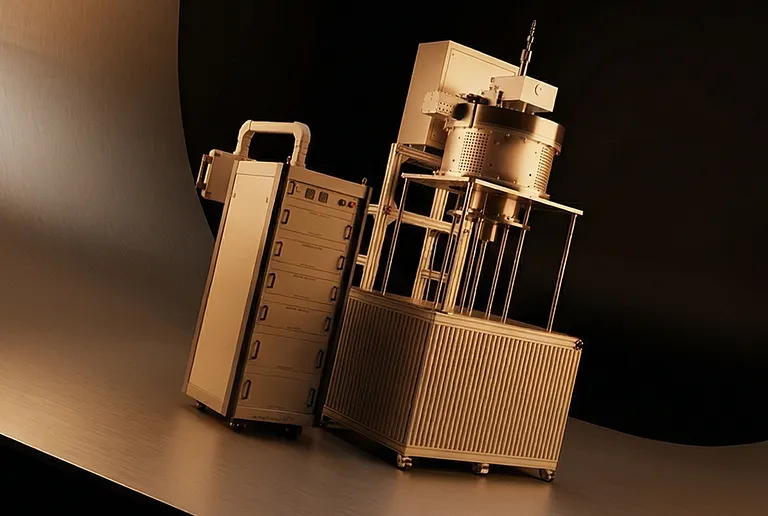
The synthesis of silver-decorated graphene occurs in a critical window between 600°C and 800°C. In this range, two complex processes happen simultaneously: the thermal exfoliation of graphene and the reduction of silver ions into nanoparticles.
The secret to success isn't just "heat"—it is thermal stability and vacuum control.
Traditional heating elements often suffer from "hot spots" or slow response times. If the environment shifts by even a few degrees, the rate of graphene formation changes, leading to inconsistent thickness. Furthermore, without a controlled vacuum or refined Atmospheric Pressure Chemical Vapor Deposition (APCVD) environment, unwanted oxidation occurs.
To achieve a uniform "decoration" of silver on the graphene surface, you need a stable thermodynamic environment. This allows the silver to anchor to the graphene lattice at the exact moment of formation, preventing the particles from grouping together.
The Solution: Why Silicon Carbide Is the Bridge to Success
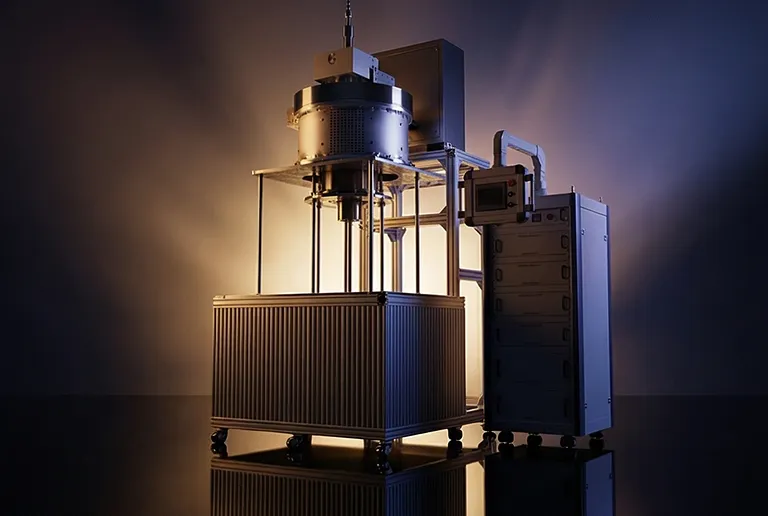
To solve these fundamental physics challenges, modern laboratories are moving away from standard muffle furnaces and toward specialized APCVD reactors—specifically those utilizing Silicon Carbide (SiC) resistance vacuum furnaces.
At KINTEK, we design these systems to act as a precision instrument rather than just a heat source. Here is why the technology works:
- SiC Heating Elements: Unlike standard metallic elements, Silicon Carbide provides exceptional temperature uniformity across the entire chamber. This ensures that every milligram of biomass experiences the exact same thermal profile, leading to 100% complete carbonization.
- Integrated APCVD Capabilities: Our systems allow for the precise control of argon and hydrogen flow ratios alongside vacuum regulation. This "stable thermodynamic environment" is what enables the controllable synthesis of high-quality, large-area graphene films.
- The 1050°C Advantage: While silver decoration happens at lower temperatures, our furnaces are built to handle the higher 1050°C thresholds required for high-purity single-crystal bilayer graphene, giving your lab the versatility to move between different grades of material synthesis.
Beyond the Fix: Scalable Sustainability
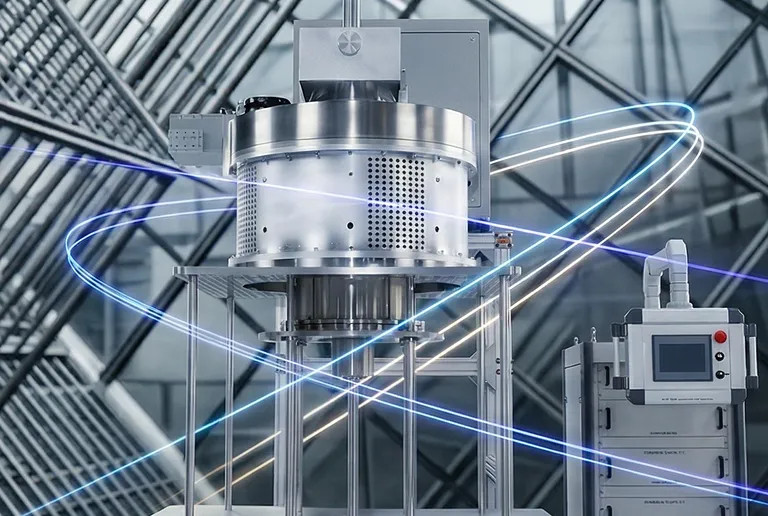
When you solve the problem of thermal inconsistency, the "impossible" becomes routine. By mastering the heat distribution within an APCVD reactor, you move from experimental "one-offs" to a reliable, scalable process.
Imagine being able to produce high-quality, silver-decorated graphene from varied biomass sources with total confidence in the resulting conductivity and nanoparticle distribution. This stability opens the door to more advanced research, such as alkali metal intercalation or the development of next-generation green sensors, without the shadow of data variance.
Solving the thermal puzzle is about more than just buying a furnace; it’s about securing the future of your material research. At KINTEK, we specialize in tailoring high-temperature solutions to meet the unique demands of your complex synthesis projects. From customizable tube furnaces to high-vacuum APCVD systems, our team is ready to help you eliminate the variables that hold your research back. Let’s discuss how we can bring precision to your next project. Contact Our Experts
Related Products
- Inclined Rotary Plasma Enhanced Chemical Deposition PECVD Tube Furnace Machine
- Inclined Rotary Plasma Enhanced Chemical Deposition PECVD Tube Furnace Machine
- Slide PECVD Tube Furnace with Liquid Gasifier PECVD Machine
- MPCVD Machine System Reactor Bell-jar Resonator for Lab and Diamond Growth
- Custom Made Versatile CVD Tube Furnace Chemical Vapor Deposition CVD Equipment Machine
Related Articles
- Mastering the Void: How Tube Furnaces Engineer Predictable Outcomes
- Your Furnace Isn't Just a Heater: Why 'Good Enough' Equipment Is Sabotaging Your Advanced Materials Research
- Why Your Tube Furnace Is Failing Your Experiments (And It’s Not the Temperature)
- The Controlled Universe: Mastering Temperature and Atmosphere in a 70mm Tube Furnace
- Beyond Heat: The Unseen Power of Environmental Control in Tube Furnaces