The defining operational challenge of cosintering multilayer metal-ceramic packages is the management of incompatible shrinkage behaviors. In a high-temperature furnace, the ceramic dielectric and metallic conductor layers sinter at different onset temperatures and densify at mismatched rates. This generates intense transient stresses that manifest as anisotropic shrinkage, warping (camber), microstructural cracking, delamination, and trapped porosity near interfaces. A precisely engineered furnace heating schedule directly combats warping by synchronizing the effective shrinkage rates of each layer—through controlled heating rates, targeted dwell temperatures, and uniform thermal profiles—allowing the entire laminate to densify as one coherent body instead of tearing itself apart.
The root cause of cosintering defects is the mismatch in unconstrained densification kinetics between dissimilar materials. Preventing component warping is not about making every layer sinter identically—it’s about using a calibrated furnace heating schedule to harmonize their shrinkage pathways so that transient stresses remain below the threshold for permanent distortion or failure.
The Core Operational Challenges in Cosintering
Every layer in a multilayer package has its own ideal sintering trajectory. When those trajectories collide inside a furnace, the system fights itself.
The Origin of Mismatch Stresses
The primary driver of failure is differential free-sintering kinetics. The faster-sintering layer attempts to shrink, but the slower-sintering layer acts as a physical constraint. This generates in-plane tensile stresses in the faster layer and compressive counter-stresses in the slower one. These compatibility stresses retard overall densification and, if they exceed the material’s green strength, produce permanent defects.
- Onset temperature mismatch: One material begins densifying hundreds of degrees before the other.
- Volumetric shrinkage gap: Total shrinkage can differ by several percent, concentrating strain at interfaces.
- Rate mismatch: Even if final shrinkages are similar, temporary gaps in densification rate create dangerous transient stress spikes.
From Stress to Structural Flaws
These mismatch stresses do not remain abstract—they drive four distinct physical failure modes.
- Warping (camber): Asymmetric stress distributions bend the entire component out of plane, violating dimensional tolerances.
- Cracking and microstructural flaws: Tensile stresses exceed the material’s fracture strength, creating cracks that compromise electrical and mechanical integrity.
- Delamination: Interfacial shear stresses separate the conductor from the dielectric, destroying circuit functionality.
- Trapped porosity: Constrained shrinkage near interfaces stalls pore closure, leaving voids that weaken the package and trap contaminants.
How Furnace Heating Schedules Prevent Warping
A heating schedule is not just a ramp to peak temperature. It is the primary lever for harmonizing the dissimilar shrinkage kinetics that cause warping, cracking, and delamination. By carefully programming heating rates, dwell points, and soak times, you actively guide the stress state of the entire laminate.
Aligning the Effective Shrinkage Rate
A well-designed thermal profile transforms the sintering mismatch into a manageable condition. The goal is to let the slower-sintering layer initiate densification earlier or allow the faster layer to densify more gradually, so their effective shrinkage rates overlap during the critical intermediate temperature window where defects nucleate.
- Controlled heating rates: Slower ramps in vulnerable temperature ranges give the lagging layer time to catch up kinetically, reducing transient stress amplitude.
- Strategic intermediate dwells: A hold at a temperature just below the main densification onset of the faster layer can pre-sinter the slower layer (or initiate binder burn-out uniformly), bringing their starting points closer together.
- Terminal soak optimization: Adjusting the maximum temperature and hold time can drive the densification of the slower layer to completion without over-firing the faster layer—preventing residual stress that would warp the part during cooling.
Eradicating Thermal Gradients for Uniform Shrinkage
A heating schedule is only as good as the furnace’s ability to execute it uniformly across the entire part. Thermal gradients inside the furnace hot zone create patches of different sintering rates within a single layer, leading to localized warpage and net-shape distortion even when the overall schedule is theoretically sound.
- Multi-zone heating elements and high-grade insulation minimize temperature variations.
- Uniform thermal distribution ensures that every region of the component sees the same heating history, guaranteeing synchronized shrinkage across complex geometries with varying cross-sections.
Atmosphere Integration as a Heating Schedule Partner
Metal-ceramic packages often require specific gas environments to protect internal conductors from oxidation and to ensure proper binder burn-out. The heating schedule must be synchronized with atmosphere control to prevent warping.
- The binder removal ramp must be slow enough to avoid pressure build-up and micro-cracking, while the atmosphere flows ensure clean pyrolysis.
- Reducing or inert gas flows must be introduced at the correct thermal window to prevent oxidation of metallic conductors without disrupting the sintering kinetics of the ceramic.
Understanding the Limitations of Thermal Control Alone
While heating schedules are essential, they cannot overcome a fundamentally incompatible material system. If the intrinsic densification mismatch is too large, no amount of dwell-time tuning will fully prevent warping.
- Over-constrained sintering: In cases where a rigid substrate physically constrains lateral shrinkage, the process shifts to a thickness-dominated shrinkage mode. Furnace scheduling becomes critical to relieve stresses, but it cannot eliminate the root mismatch—it only manages the consequences.
- Need for complementary strategies: Even with a perfect thermal profile, you must address green-state uniformity. Inconsistent particle packing, large particle size variations, or lack of a transient liquid-phase additive (like a glassy second phase for viscous stress relaxation) can still cause warping.
- Extended cycle times: Aggressive slowing of ramps and addition of dwells can push cycle times beyond economic viability, creating a trade-off between dimensional yield and throughput.
Making the Right Choice for Your Production Goal
Thermal scheduling is a powerful but context-dependent tool. Apply it according to your primary driver.
- If your primary focus is maximizing dimensional yield: Invest heavily in a furnace with multi-zone control and uniform insulation, and design a schedule with slow ramps and intermediate dwells aligned to the exact densification curves of your materials. This directly combats warping.
- If your primary focus is reducing cycle time: Start by matching green-state particle packing and powder characteristics to narrow the intrinsic sintering gap, then apply the fastest heating schedule that still maintains a safe margin below the critical mismatch stress threshold.
- If your primary focus is prototyping a new material set: Use a research-grade furnace with precise atmosphere control to map out the free-sintering curves of each layer, and iterate on your heating schedule until the effective shrinkage rates overlap without introducing gradient-driven distortion.
A furnace heating schedule is your most dynamic tool for transforming a warping-prone stack of dissimilar materials into a flat, functional multilayer package—provided you use it to choreograph shrinkage, not just apply heat.
Summary Table:
| Operational Challenge | Root Cause & Defect Mode | Furnace Heating Schedule Solution |
|---|---|---|
| Differential Densification | Onset temperature and shrinkage rate mismatch | Controlled Ramps: Synchronizes sintering kinetics during critical thermal windows |
| Component Warping (Camber) | Asymmetric stress across layers bending the package | Intermediate Dwells: Pre-sinters slower layers and harmonizes shrinkage pathways |
| Thermal Gradients | Non-uniform heating causing localized warpage | Multi-Zone Profiles: Ensures identical thermal history across complex geometries |
| Delamination & Cracking | Interfacial shear and tensile stress spikes | Atmosphere Integration: Coordinates binder burn-out and gas flow to relieve stress |
Ready to eliminate component warping and achieve flawless cosintering yield?
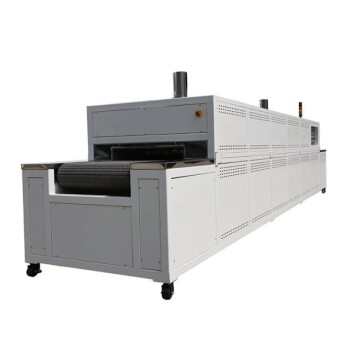
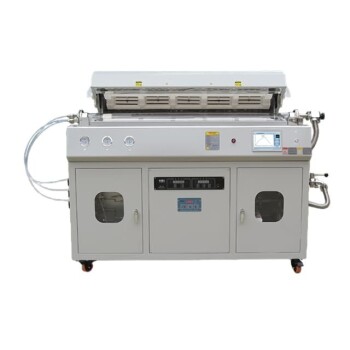
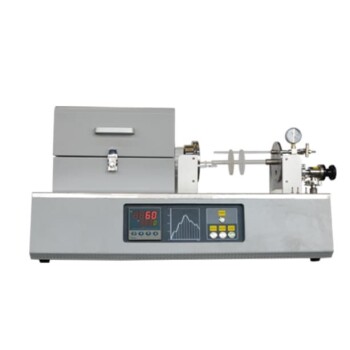
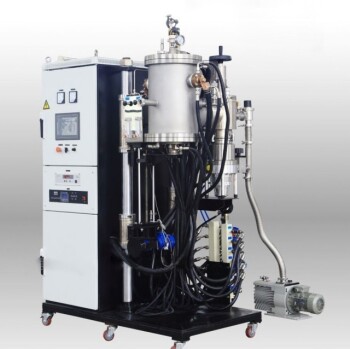
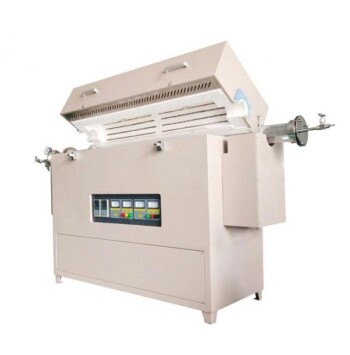
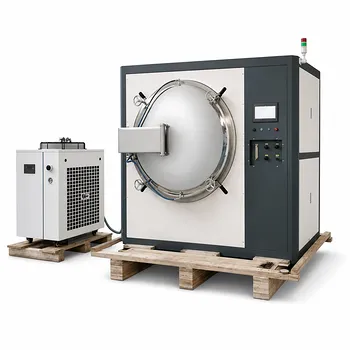
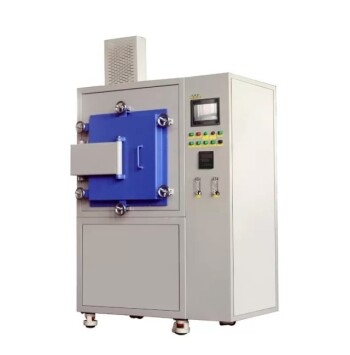
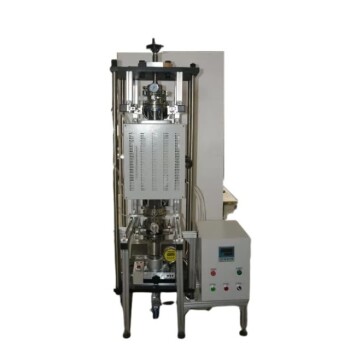
At KINTEK, we specialize in premium laboratory equipment and consumables engineered for demanding high-temperature applications. Whether you need high-temperature muffle, tube, atmosphere, vacuum, CVD, rotary, or induction melting furnaces, our systems are fully customizable to meet your exact material kinetics and profile demands. With precise multi-zone control and uniform thermal profiles, KINTEK furnaces empower you to eliminate transient stresses and harmonize shrinkage across complex multilayer packages.
Contact our thermal processing experts today to discover how a customized KINTEK furnace solution can optimize your sintering results!
Related Products
- High Temperature Muffle Oven Furnace for Laboratory Debinding and Pre Sintering
- 1700℃ High Temperature Laboratory Tube Furnace with Alumina Tube
- Mesh Belt Controlled Atmosphere Furnace Inert Nitrogen Atmosphere Furnace
- 1200℃ Controlled Inert Nitrogen Atmosphere Furnace
- 1200℃ Muffle Oven Furnace for Laboratory
People Also Ask
- What thermal phenomena occur during polymer binder burnout in ceramic green bodies? Lab Furnace Guide
- Why is controlled heat treatment in a muffle furnace necessary for calcined clay? Achieve Optimal Pozzolanic Activity
- What role does a high-temperature muffle furnace play in STFO synthesis? Achieve Pure Perovskite Results
- How does a high-temperature muffle furnace facilitate the formation of LaNbxAl1−xO3+δ perovskite structures? Key Roles
- What role does a high-temperature muffle furnace play in the formation of biochar catalysts? Master Catalyst Synthesis