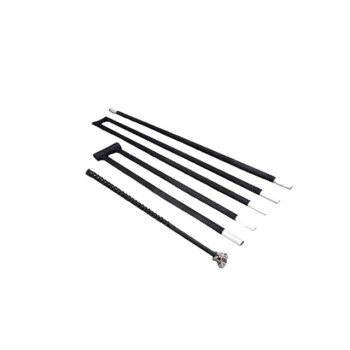
The electric furnace serves as the primary thermal regulator for the initial chemical transformations of the raw composite material. It provides the controlled heating required to decompose volatiles in the corn stalks while driving critical dehydration and cross-linking reactions between phosphoric acid and biomass molecules. This foundational stage establishes a preliminary carbon skeleton and initiates the bonding process between Kaolin layers and the developing carbonized products.
The electric furnace acts as a bridge between raw precursors and a structured composite, using low-temperature heat to orchestrate the foundational chemical bonds necessary for high-performance material formation.
Facilitating the Decomposition of Biomass Volatiles
Managing Outgassing and Structural Integrity
During the initial heating phase, the electric furnace provides a stable thermal environment to release volatile organic compounds from the corn stalk components. This controlled release prevents rapid gas expansion that could compromise the physical integrity of the Kaolin-biomass matrix.
Establishing the Preliminary Carbon Skeleton
As volatiles escape, the remaining organic matter begins to reorganize into a preliminary carbon skeleton. The electric furnace ensures this transition happens gradually, allowing the carbon to settle into a stable form that will eventually support the final material's pore structure.
Mediating Phosphoric Acid Reactions
Dehydration and Cross-linking Dynamics
The furnace facilitates the interaction between phosphoric acid and biomass molecules, guiding essential dehydration and cross-linking reactions. This chemical "weaving" is vital because it transforms the soft biomass into a more rigid, polymerized structure that can survive higher temperatures.
Initiating Kaolin-Carbon Interfacial Bonding
While the carbon skeleton forms, the furnace provides the heat necessary to start the interfacial bonding between the Kaolin layers and the carbonized products. This initial contact is the "glue" that ensures the final composite acts as a single, integrated material rather than a loose mixture of clay and charcoal.
Understanding the Trade-offs
Heating Rate vs. Pore Development
A common pitfall in this stage is applying heat too rapidly, which can lead to a collapsed pore structure or uneven carbonization. The controlled thermal field of an electric furnace is chosen specifically to avoid the "skinning" effect, where the exterior carbonizes while the interior remains raw.
Low-Temperature Preparation vs. High-Temperature Calcination
It is critical to distinguish the role of the electric furnace in low-temperature carbonization from the high-temperature calcination often performed in a muffle furnace. While the electric furnace builds the molecular foundation, the muffle furnace is typically reserved for final shaping, complete carbonization, and the etching of a rich micropore distribution at much higher temperatures.
Applying These Insights to Your Process
Choosing the right thermal profile and equipment depends on the specific characteristics required for your final composite material.
- If your primary focus is maximizing surface area: Ensure the electric furnace stage is long enough to complete the cross-linking reactions, as this creates a stable precursor for later high-temperature etching.
- If your primary focus is structural stability: Focus on the precise control of the heating rate to prevent internal stresses between the Kaolin layers and the expanding carbon skeleton.
- If your primary focus is reactivity (Geopolymerization): Be aware that while the electric furnace handles carbonization here, a higher temperature (approx. 750°C) is required later to transform Kaolin into highly reactive metakaolin.
The electric furnace provides the essential, controlled environment needed to transform raw organic and mineral inputs into a cohesive, carbonized precursor.
Summary Table:
| Function | Key Process | Significance for Composites |
|---|---|---|
| Thermal Regulation | Controlled outgassing | Prevents structural collapse from rapid gas expansion. |
| Structural Framework | Carbon skeleton formation | Establishes the foundation for stable pore structures. |
| Chemical Mediation | Dehydration & Cross-linking | Facilitates phosphoric acid reactions for a rigid matrix. |
| Interfacial Bonding | Kaolin-Carbon contact | Acts as the "glue" to create a single, integrated material. |
Precision Thermal Solutions for Advanced Material Science
Achieving the perfect Kaolin/carbon composite requires more than just heat—it requires precision, stability, and control. KINTEK specializes in high-performance laboratory equipment, offering a comprehensive range of high-temperature furnaces, including muffle, tube, rotary, vacuum, CVD, atmosphere, and induction melting models.
Whether you are managing low-temperature volatile decomposition or high-temperature metakaolin transformation, our customizable furnaces are designed to meet your unique research specifications.
Ready to optimize your carbonization process? Contact KINTEK today to discover how our expertise can enhance your laboratory's efficiency and material performance!
References
- Yanxia Liu. The Study on Kaolin/corn Stalk Composite Adsorbent Materials Prepared by H3PO4 Activation Method. DOI: 10.54097/ajst.v4i2.3871
This article is also based on technical information from Kintek Furnace Knowledge Base .
Related Products
- Electric Rotary Kiln Small Rotary Furnace for Activated Carbon Regeneration
- Electric Rotary Kiln Small Rotary Furnace Biomass Pyrolysis Plant Rotating Furnace
- Electric Rotary Kiln Pyrolysis Furnace Plant Machine Small Rotary Kiln Calciner
- Spark Plasma Sintering SPS Furnace
- Electric Rotary Kiln Continuous Working Small Rotary Furnace Kiln for Pyrolysis Plant Heating
People Also Ask
- What are the main applications of a rotary kiln electric furnace? Achieve Uniform Heat Treatment for Powders
- What are the key components of a rotary kiln electric furnace? Unlock Efficient Thermal Processing
- What is the significance of the refractory lining in a rotary kiln electric furnace? Unlock Efficiency and Longevity
- What advantages do electric rotary kilns offer over fuel-based kilns? Boost Efficiency and Purity in Your Process
- What materials can be processed in an electric rotary kiln? Versatile Solutions for Advanced Materials