
In short, box furnaces have an excellent reputation built on more than 70 years of manufacturing history. They are widely regarded as reliable, long-lasting, and high-quality pieces of equipment, consistently placed at the upper end of the quality spectrum due to their robust construction and use of premium components.
The core reason for this strong reputation is a design philosophy that prioritizes long-term performance and process repeatability over cutting costs. This is achieved through specific engineering choices in construction, heating elements, and control systems.
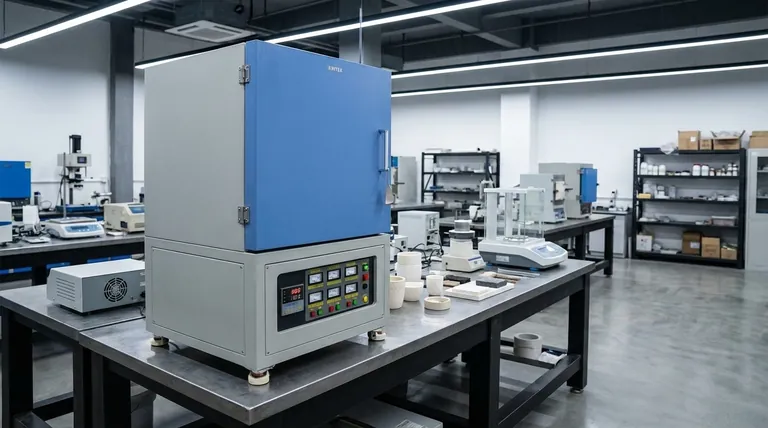
The Foundations of Box Furnace Quality
The reputation of a box furnace is not accidental. It is the direct result of deliberate design and material choices intended to withstand demanding industrial and laboratory environments for decades.
Robust Physical Construction
Box furnaces are built with an "extra sturdy" double-shell construction. This design serves two key purposes: it provides the physical durability needed for long-term industrial use and helps reduce the external surface temperature of the furnace, improving operator safety and energy efficiency.
Advanced Heating Elements
They utilize modular plate heating elements, which are known for their longevity. This design also uniquely avoids the typical watt loading limitations found in lesser furnaces, allowing for rapid heat-up times and the ability to process dense loads without over-stressing the components.
High-Performance Insulation
The use of high-quality, energy-saving insulation is a critical feature. This not only maximizes thermal performance and ensures temperature uniformity but also contributes to lower long-term operating costs by minimizing heat loss.
Performance, Precision, and Repeatability
Beyond simple durability, a box furnace's reputation is cemented by its ability to deliver precise, repeatable results. This is non-negotiable in the high-stakes fields where they are commonly used.
Precision Temperature Control
A key feature is the ability to fully program heating and cooling rates. This, combined with highly uniform temperature control throughout the chamber, ensures that every process cycle is identical. This process repeatability is essential for quality control in manufacturing and for valid results in research.
Designed for Demanding Workloads
Features like rapid heat-up, quick response times, and the capacity for dense loads mean these furnaces are true workhorses. They are engineered to perform consistently under pressure without degradation, which is why they are trusted for critical production schedules.
Common High-Stakes Applications
Box furnaces are the standard for thermal processes where failure is not an option. This includes:
- Annealing & Tempering: Relieving stress and improving toughness in metal parts for aerospace and automotive industries.
- Hardening: Creating mission-critical, durable steel components.
- Sintering & Firing: Bonding materials and firing ceramics in materials research, electronics, and metallurgy where precision is paramount.
Understanding the Trade-offs
While box furnaces offer superior reliability, this comes with considerations that are important for any purchasing decision. Their position at the "upper end of the quality spectrum" has clear implications.
Higher Initial Investment
The use of premium components, advanced insulation, and heavy-duty construction means that high-quality box furnaces typically require a larger upfront capital investment compared to lighter-duty or lower-quality alternatives.
Infrastructure and Space Requirements
Their "extra sturdy construction" translates to significant weight and a larger physical footprint. You must ensure your facility has the necessary space, structural support, and electrical service to accommodate an industrial-grade unit.
Operational Complexity
While powerful, "fully programmable control" systems have a steeper learning curve than simple analog controls. Proper training is necessary to leverage the furnace's full capabilities for precision and repeatability.
Making the Right Choice for Your Goal
To select the right equipment, you must align its capabilities with your primary objective.
- If your primary focus is long-term reliability and process consistency: A high-quality box furnace is a sound investment that pays for itself through dependable performance and longevity.
- If your primary focus is minimizing initial cost: Be prepared to accept compromises in component lifespan, temperature uniformity, and overall durability with lower-tier options.
- If your primary focus is operational safety and efficiency: Prioritize models with documented features like double-shell construction and advanced, energy-saving insulation.
Ultimately, choosing a well-built box furnace is an investment in predictable outcomes and operational confidence.
Summary Table:
| Feature | Benefit |
|---|---|
| Robust Double-Shell Construction | Ensures durability, safety, and energy efficiency |
| Modular Plate Heating Elements | Provides longevity, rapid heat-up, and handles dense loads |
| High-Performance Insulation | Maximizes thermal uniformity and reduces operating costs |
| Precision Temperature Control | Guarantees process repeatability for consistent results |
| Designed for Demanding Workloads | Supports critical applications like annealing and sintering |
Upgrade your lab's thermal processing with KINTEK's advanced high-temperature furnace solutions! Leveraging exceptional R&D and in-house manufacturing, we offer a diverse product line—including Muffle, Tube, Rotary Furnaces, Vacuum & Atmosphere Furnaces, and CVD/PECVD Systems—tailored for industries like aerospace, automotive, and materials research. Our strong deep customization capability ensures we precisely meet your unique experimental requirements, delivering reliability, precision, and long-term value. Don't settle for less—contact us today to discuss how we can enhance your operations and achieve predictable outcomes!
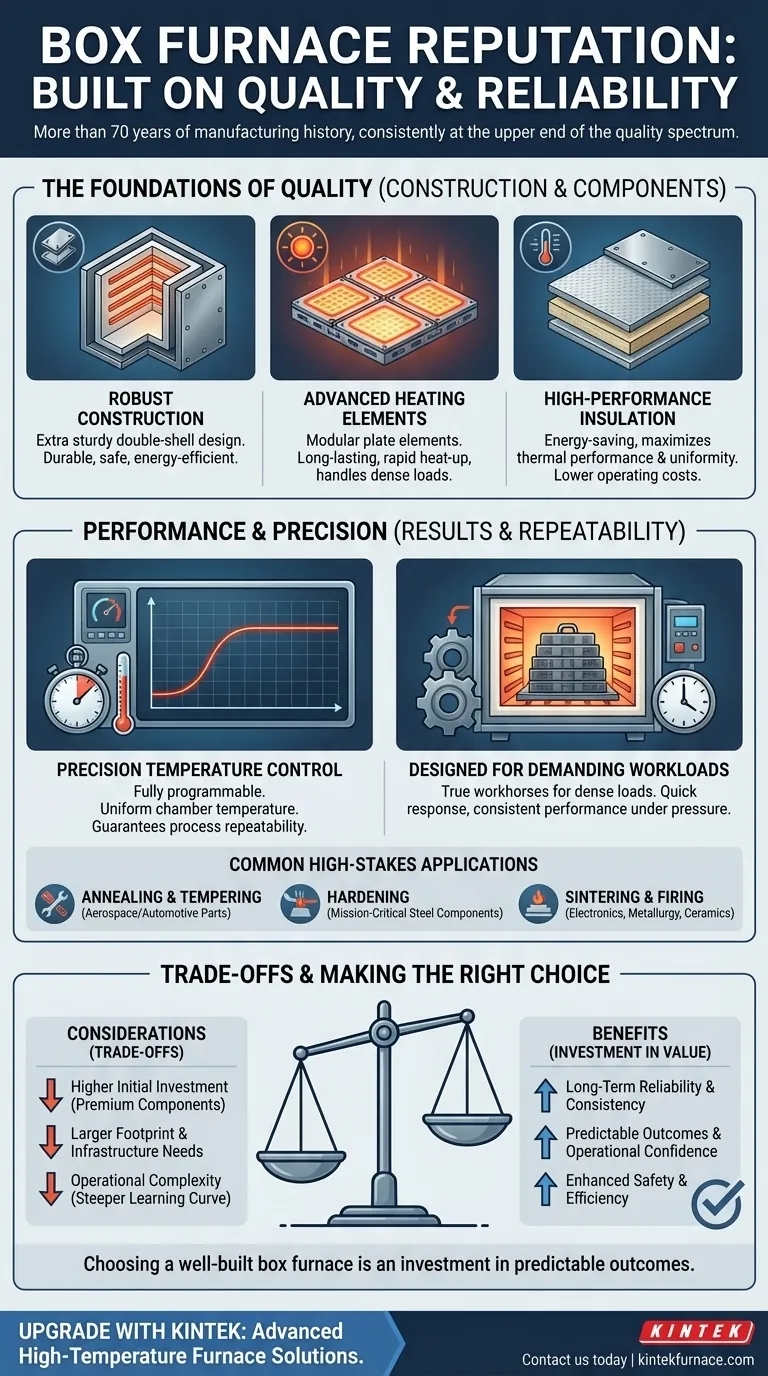
Visual Guide
Related Products
- Vacuum Hot Press Furnace Machine Heated Vacuum Press Tube Furnace
- Mesh Belt Controlled Atmosphere Furnace Inert Nitrogen Atmosphere Furnace
- Vacuum Heat Treat Sintering Furnace with Pressure for Vacuum Sintering
- 600T Vacuum Induction Hot Press Vacuum Heat Treat and Sintering Furnace
- Vacuum Hot Press Furnace Machine Heated Vacuum Press
People Also Ask
- Why use Vacuum Hot Press (VHP) for ZnS Ceramics? Achieve Superior IR Transparency and Mechanical Strength
- What safety features are incorporated in vacuum hot press furnaces? Ensure Operator and Equipment Protection
- What are the benefits of the vacuum environment system in a vacuum hot press furnace? Unlock High-Density Sintering
- What considerations guide the selection of heating elements and pressurization methods for a vacuum hot press furnace?
- Why is a high vacuum environment crucial when preparing copper-carbon nanotube composites in a vacuum hot press furnace? Achieve Superior Composite Integrity



















