
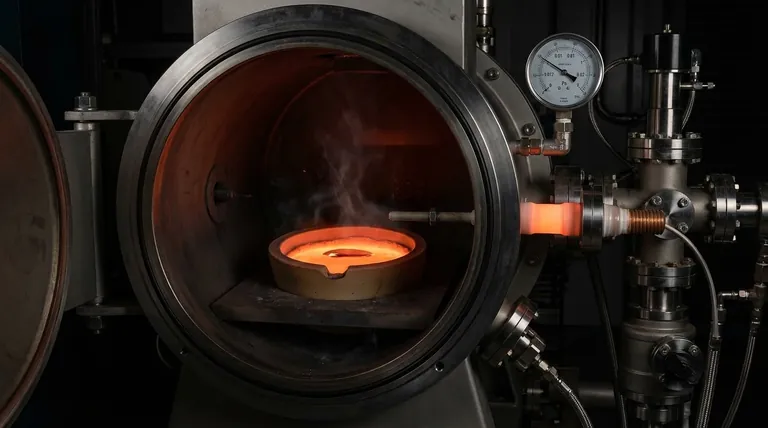
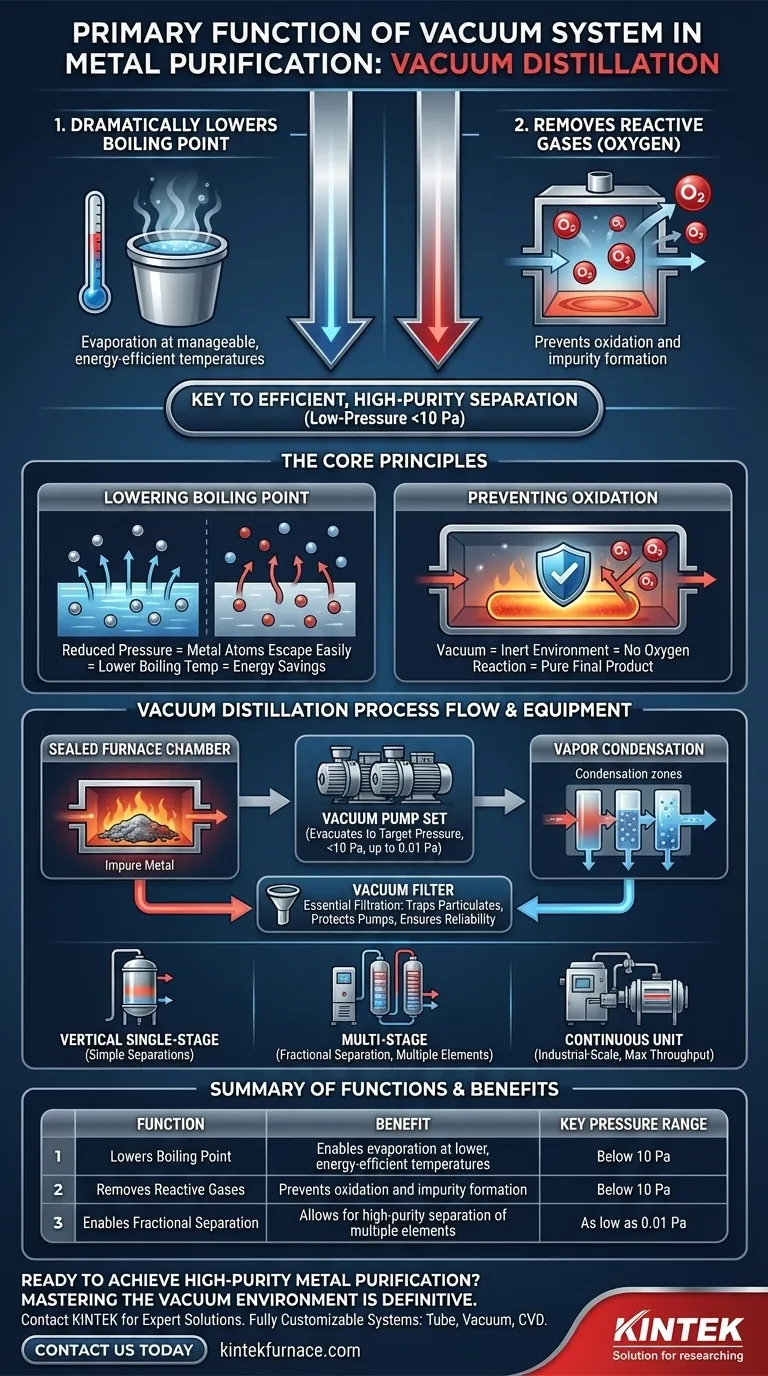
The primary function of the vacuum system in metal purification is twofold: it dramatically lowers the boiling point of the metal to allow for evaporation at manageable temperatures, and it removes reactive gases like oxygen to prevent the formation of impurities through oxidation. This low-pressure environment, often below 10 Pascals (Pa), is the key to an efficient and high-purity separation process.
The vacuum system doesn't just create an empty space; it fundamentally alters the physical and chemical conditions within the furnace, making it possible to separate metals from impurities with high precision and at lower, more energy-efficient temperatures.
The Core Principles: Why Vacuum is Essential
To understand vacuum distillation, you must grasp the two fundamental problems it solves: the energy cost of reaching a metal's boiling point and the chemical reactivity of hot metals. The vacuum system addresses both directly.
Lowering the Boiling Point
The boiling point of any liquid, including molten metal, is the temperature at which its vapor pressure equals the pressure of the surrounding environment. By using a vacuum system to remove most of the air, we drastically reduce the ambient pressure inside the furnace.
This low-pressure environment makes it significantly easier for metal atoms to escape the liquid surface and enter a gaseous state. As a result, the metal boils at a much lower temperature than it would at normal atmospheric pressure, accelerating the rate of evaporation and saving considerable energy.
Preventing High-Temperature Oxidation
Most metals are highly reactive with oxygen, especially at the elevated temperatures required for distillation. If performed in a standard atmosphere, the hot metal would quickly oxidize, forming new compounds that act as impurities and reduce the final yield.
The vacuum system purges the furnace of oxygen and other reactive gases. This creates an inert environment that protects the metal's integrity, ensuring the final condensed product is pure and free from unwanted oxide layers.
A Look Inside the Equipment
The principles of vacuum distillation are realized through a set of specialized components working in concert. While designs vary, the core elements remain consistent.
The Furnace and Pumping System
The process takes place within a sealed furnace chamber connected to a powerful vacuum pump set. These pumps are responsible for evacuating the chamber to the target pressure, sometimes as low as 0.01 Pa, creating the necessary conditions for distillation.
Variations in Furnace Design
Different purification goals require different equipment. A vertical single-stage furnace is used for simple separations. For more complex fractional separations, multi-stage furnaces use several condensation zones at different temperatures to separate multiple elements in a single batch.
For industrial-scale work, continuous vacuum distillation units allow for uninterrupted feeding and discharge, maximizing throughput.
Common Pitfalls and Operational Realities
Achieving and maintaining a deep vacuum in an industrial setting presents significant practical challenges that are critical to the success of the operation.
The Danger of Particulate Contamination
During evacuation, the high-velocity gas flow can carry fine dust and metal particles from the raw material. This is especially true when processing materials like hazardous waste containing fine magnesium.
These solid particles can be drawn into the delicate mechanical parts of the vacuum pumps, causing rapid wear, component failure, and costly downtime.
The Critical Role of Filtration
To prevent pump damage, a vacuum filter is always installed between the furnace and the pumps. This device contains filter media designed specifically to trap solid particulate matter before it can cause harm.
Proper filtration is not an optional accessory; it is essential for protecting the vacuum pumps and ensuring the long-term stability and reliability of the entire purification system.
Making the Right Choice for Your Goal
The specific application of vacuum distillation dictates the type of equipment and the operational parameters you should prioritize.
- If your primary focus is achieving the highest possible purity: A multi-stage condensation furnace capable of reaching extremely low pressures (deep vacuum) is the optimal choice for fractional separation.
- If your primary focus is industrial-scale throughput: A continuous vacuum distillation system with robust, automated feeding and a heavy-duty filtration system is required.
- If your primary focus is basic purification or process research: A simpler vertical or horizontal tube-type vacuum furnace offers a more flexible and cost-effective solution.
Ultimately, mastering the vacuum environment is the definitive factor in achieving successful, high-purity metal separation.
Summary Table:
| Function | Benefit | Key Pressure Range |
|---|---|---|
| Lowers Boiling Point | Enables evaporation at lower, energy-efficient temperatures | Below 10 Pa |
| Removes Reactive Gases | Prevents oxidation and impurity formation | Below 10 Pa |
| Enables Fractional Separation | Allows for high-purity separation of multiple elements | As low as 0.01 Pa |
Ready to Achieve High-Purity Metal Purification?
Mastering the vacuum environment is the definitive factor in successful metal separation. Whether your goal is research, achieving the highest purity, or industrial-scale throughput, the right equipment is critical.
KINTEK's expert R&D and manufacturing team can provide the solution you need. We offer a range of high-temperature vacuum furnaces, including Tube, Vacuum, and CVD systems, all fully customizable to meet your unique purification challenges.
Let us help you enhance your process efficiency and product purity.
Contact us today to discuss your specific requirements!
Visual Guide
Related Products
- Magnesium Extraction and Purification Condensing Tube Furnace
- Vacuum Induction Melting Furnace
- Small Vacuum Heat Treat and Tungsten Wire Sintering Furnace
- Vacuum Heat Treat Sintering Furnace with Pressure for Vacuum Sintering
- Vacuum Heat Treat Sintering Furnace Molybdenum Wire Vacuum Sintering Furnace
People Also Ask
- What are the advantages of using a condensing tube furnace for magnesium extraction? Achieve High Purity and Efficient Metal Recovery
- What are the disadvantages of tube furnace cracking when processing heavy raw materials? Avoid Costly Downtime and Inefficiency
- What advanced control features do modern tube furnaces have? Precision Temperature, Atmosphere, and Data Control
- How does a tube furnace facilitate the conversion of ZIF67/MXene into CoS@C/MXene? Mastering Thermal Synthesis
- What factors should be considered when selecting between a tube furnace and a box furnace? Optimize Your Lab's Thermal Processing










