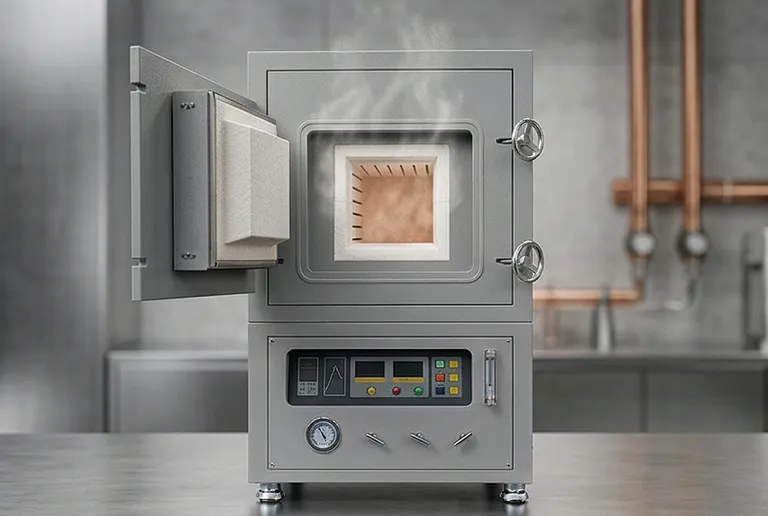
The Frustration of the "High-Strength" Failure
You’ve invested in premium Maraging steel powder, optimized your 3D printing parameters, or perfected your machining process. On paper, the component should be nearly indestructible. Yet, when it undergoes stress testing, it falls short. Perhaps it’s too brittle, or worse, it lacks the signature tensile strength that makes Maraging steel the "gold standard" for aerospace and high-performance tooling.
For many engineers and researchers, the "final step"—heat treatment—often feels like a black box. You follow the datasheet, set the temperature, and wait. But when the results come back inconsistent, with one batch hitting the mark and the next failing, the culprit is rarely the steel itself. The problem lies in the invisible dynamics of the thermal field.
The Common Struggle: Why "Close Enough" Temperatures Fail
When Maraging steel doesn't meet its specifications, the typical reaction is to extend the soaking time or slightly nudge the temperature up. However, these "quick fixes" often lead to a cycle of frustration.
Inconsistencies in heat treatment don't just result in a few rejected parts; they have cascading business consequences. Project timelines slip as you re-run cycles. Material costs balloon as expensive alloys are scrapped. Most critically, if a part with non-uniform strength makes it into the field, the risk of catastrophic fatigue failure becomes a liability.
The reality is that Maraging steel is not like standard carbon steel. It doesn't rely on a violent "quench" to get hard; it relies on a delicate, time-sensitive dance of atoms called precipitation hardening.
The Root Cause: The Physics of the Nanometer Scale
To understand why your parts are underperforming, we have to look at the microstructure. Maraging steel reaches its extreme strength during the "aging" stage, typically between 490°C and 500°C.
At this precise temperature window, something remarkable happens: nanometer-scale intermetallic compounds begin to precipitate and distribute themselves uniformly throughout the steel matrix. Think of these precipitates as "micro-anchors" that prevent the metal's internal structure from sliding under pressure.
The catch? The window is incredibly narrow.
- If the temperature is too low: The "anchors" never form, leaving the steel soft.
- If the temperature is too high (even by 10-15°C): The precipitates grow too large or the matrix begins to revert to austenite. This is known as "overaging," and it causes the strength to plummet.
Most standard industrial furnaces suffer from "hot spots" or "cold corners." A 5°C deviation across the chamber means one side of your part is strengthening while the other is already overaging. You aren't just heating a part; you are trying to manage a chemical reaction that requires absolute thermal equilibrium.
The Solution: The Furnace as a Precision Instrument
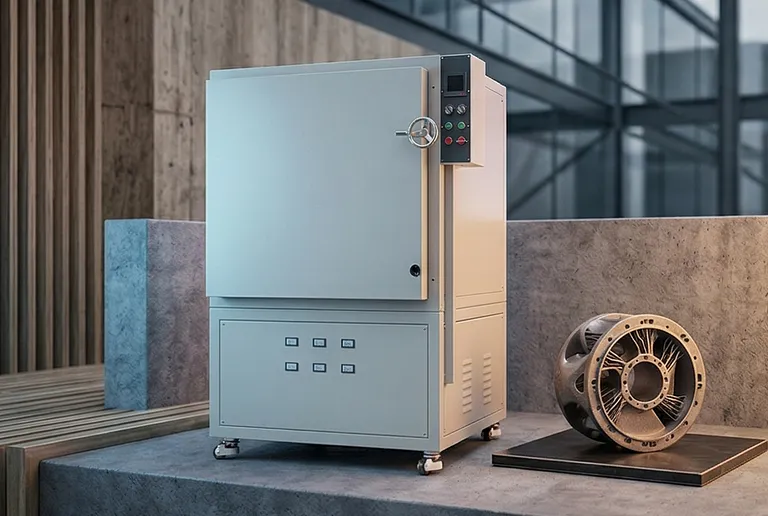
Achieving the theoretical limits of Maraging steel requires more than just a heater; it requires a Precision Box Resistance Furnace designed for scientific-grade stability.
At KINTEK, our furnaces are engineered to solve the exact problem of thermal non-uniformity. By creating an extremely stable thermal field, we ensure that every square millimeter of your component experiences the exact same 490°C–500°C environment.
Our systems go beyond simple heating:
- Uniform Precipitation: Our advanced heating element placement ensures that those nanometer-scale strengthening phases develop at the same rate throughout the part.
- Sophisticated Control: Similar to how we manage complex Ti-Ni-Co alloys or the homogenization of superalloys at 1200°C, our box furnaces provide the "thermal stillness" required for delicate metallurgical transformations.
- Repeatability: Whether it’s a single prototype or a batch of die-casting inserts, the furnace delivers a consistent environment, ensuring that your 42 HRC or high-tensile targets are met every single time.
Beyond the Fix: Unlocking New Engineering Potential
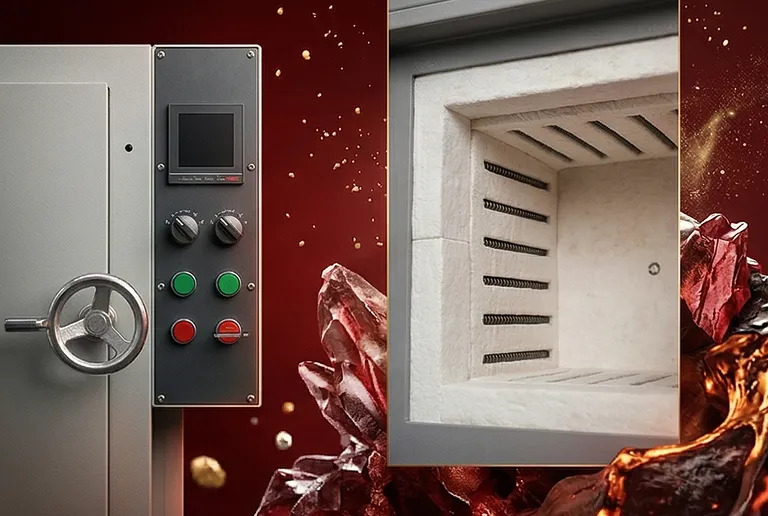
When you solve the problem of thermal instability, you do more than just "fix" a part—you unlock new possibilities for your projects.
With a reliable, precision aging process, you can push the boundaries of Additive Manufacturing (3D printing), creating complex, lightweight geometries that were previously impossible to heat-treat uniformly. You can accelerate your R&D cycles, knowing that your experimental results are based on precise science rather than equipment variance. From restoring scintillation in ceramics to releasing residual stresses in high-entropy alloy coatings, a precision thermal field is the foundation of modern material science.
Stop guessing at your heat treatment results and start engineering with certainty. Whether you are struggling with inconsistent hardness in Maraging steel or need to optimize the fatigue life of complex tool steels, our technical team is ready to help you calibrate the perfect solution. Contact Our Experts today to discuss your specific high-temperature requirements.
Related Products
- Mesh Belt Controlled Atmosphere Furnace Inert Nitrogen Atmosphere Furnace
- 1200℃ Controlled Inert Nitrogen Atmosphere Furnace
- High Pressure Laboratory Vacuum Tube Furnace
- Vacuum Heat Treat Sintering Furnace with Pressure for Vacuum Sintering
- Multi Zone Laboratory Quartz Tube Furnace Tubular Furnace
Related Articles
- The Invisible Contaminant: Why Your Furnace Atmosphere is Sabotaging Your Results
- Why Your Silicon Carbide Ceramics Are Brittle: The Invisible Role of Argon Atmosphere
- Why Your Galfenol Sheets Fail to Recrystallize—And How Precise Atmosphere Control Unlocks High Performance
- The Hidden Flaw in Your Heat Treatment: It’s Not the Temperature, It’s the Air
- Why Your High-Temp Experiments Fail: It’s Not the Heat, It’s the Atmosphere













